Quick myth to bust before we even start: Hades and the Underworld are not Greek mythology’s version of Satan and Hell. That mix-up has stuck around for centuries, mostly thanks to later Christian writers borrowing spooky imagery wherever they found it convenient. The real Hades is stranger, weirdly bureaucratic, and honestly a lot less evil than his reputation suggests.
So let’s actually walk through it: who Hades is, what his underworld actually looks like, who’s guarding the door, and why this “god of death” spends most of his myths just… running a very orderly, very gloomy administrative office, mostly minding his own business while his relatives cause chaos on the surface.

Wait, Who Actually Is Hades?
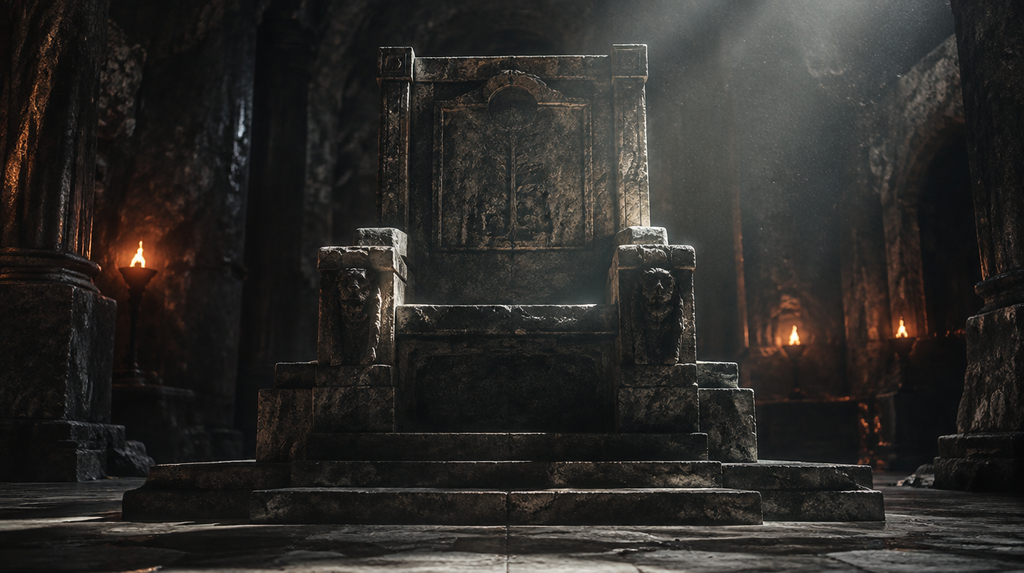
Hades is one of the “big three” brothers, alongside Zeus and Poseidon, who divided up the universe after defeating the Titans. Zeus took the sky. Poseidon took the sea. Hades got, well, everything underground, the least glamorous slice of the cosmic pie by most standards.
That includes the dead. It also includes, less famously, every precious metal buried in the earth, gold, silver, the works, everything humans have ever dug a mine looking for. Which is why Hades sometimes goes by another name entirely: Plouton, meaning “the wealthy one.” Yes, the god of death is technically also the god of striking it rich, if you’re willing to dig for it.
Here’s the thing most people skip: Hades almost never leaves his realm. Unlike Zeus, he’s not out causing chaos on the surface. Unlike Ares, he’s not picking fights. He mostly just… stays down there, running the place, showing up on the surface world in myth so rarely that scholars can list nearly every instance from memory. Ancient Greeks genuinely respected him for it. A god who takes his job seriously and doesn’t cause drama? Rare, apparently, even on Olympus.
The Underworld Isn’t One Place. It’s Several.
This is where a lot of modern retellings get lazy. “The Underworld” sounds like a single gloomy basement. It’s actually more like a whole country, with distinct regions for distinct kinds of afterlife.
| Region | What Happens There |
|---|---|
| Asphodel Meadows | Default destination for ordinary souls, neither heroic nor wicked |
| Elysium | Reserved for heroes and the exceptionally virtuous |
| Tartarus | A deep abyss for punishing the truly monstrous |
| Fields of Punishment | Where lesser wrongdoers face fitting consequences |
Most people, in the ancient Greek imagination, ended up in the Asphodel Meadows. Not tortured, not rewarded, just… there. A grey, quiet, faded version of existence. Honestly, it’s one of the more unsettling parts of Greek mythology once you sit with it: eternity wasn’t promised to be good or bad. For most people, it was just muted.
Tartarus’s Most Famous (and Most Miserable) Residents
If the Asphodel Meadows is the underworld’s waiting room, Tartarus is where the truly stubborn cases end up, and a handful of them became legendary for exactly how creative their punishments got, each one a lesson in irony as much as consequence.
- Sisyphus, a king who tried to cheat death twice, was sentenced to push a boulder up a hill for eternity, only to watch it roll back down every single time, right before reaching the top, an eternity of effort that never once pays off
- Tantalus, who committed an act so horrifying even the gods were disgusted, stands in a pool of water beneath fruit-laden branches, both forever just out of reach whenever he tries to eat or drink, the water receding and the branches lifting the instant he moves toward either
- Ixion, punished for attempting to seduce Hera, was bound to a perpetually spinning wheel of fire, condemned to spin through the sky forever as a warning to anyone tempted to overreach the same way
Notice the pattern? These aren’t random torments. Each punishment mirrors the crime almost poetically, endless labor for endless ambition, endless hunger for endless greed, endless spinning for a man who couldn’t stop chasing something he shouldn’t have wanted. Greek myths loved a well-aimed irony, and Tartarus is where that irony got literal, sentence after eternal sentence.
Five Rivers, and You Really Don’t Want to Swim in Most of Them
To reach any part of the underworld, souls had to cross water. Specifically, one, or several, of five rivers, each with its own unpleasant specialty.
- Styx — the river of oaths, so sacred that even gods swore unbreakable promises on it
- Acheron — the river of woe, the main crossing point ferried by Charon
- Lethe — the river of forgetfulness; drink from it, and your memories of life are gone
- Phlegethon — a river of literal fire
- Cocytus — the river of wailing and lamentation
Lethe is the one that trips people up. Some traditions say souls drank from it specifically to forget their mortal life before being reborn, tying directly into ideas of reincarnation that show up in later Greek philosophy, particularly in Plato’s writing on the soul’s journey. Forget everything, start clean. Kind of poetic, kind of terrifying, depending on how you look at it.

Meet the Staff: Charon, Cerberus, and the Judges
Every good bureaucracy needs personnel, and the underworld had a surprisingly organized one.
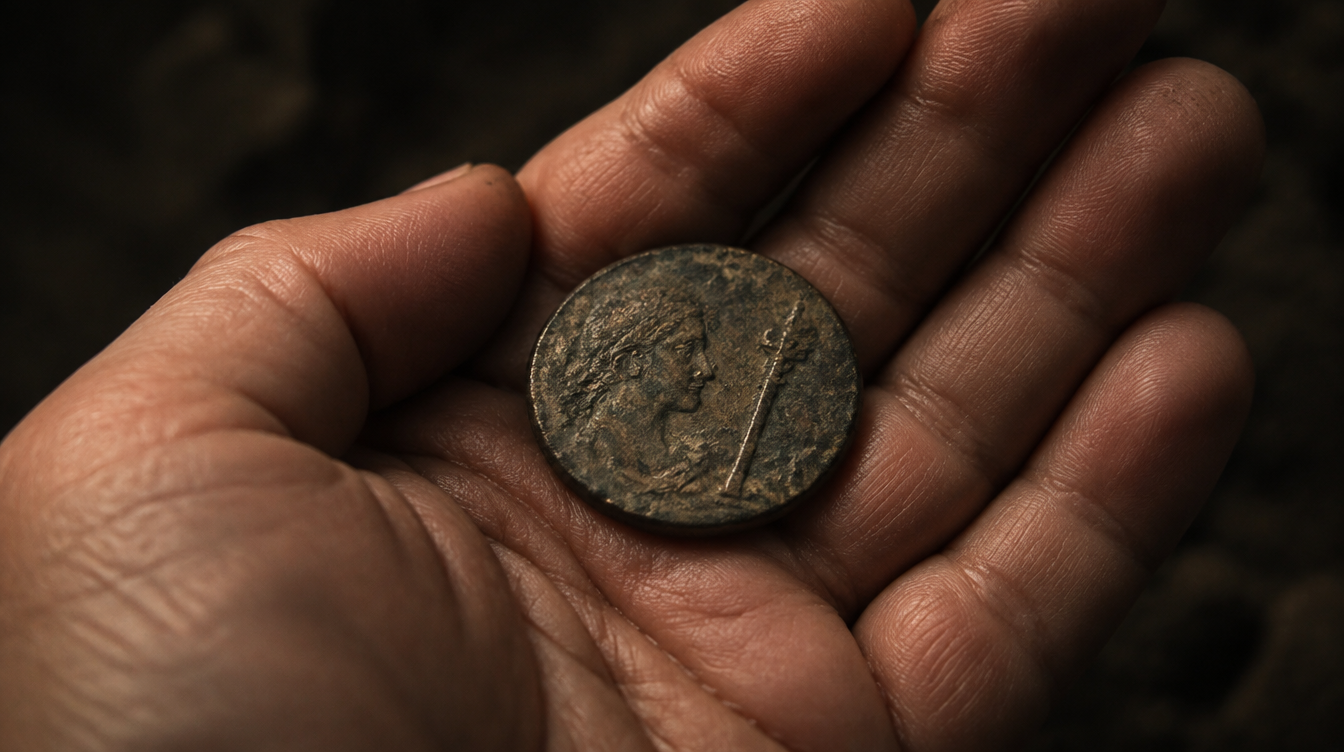
Charon, the ferryman, rows souls across the river Acheron, but only if they can pay. This is exactly why ancient Greeks buried their dead with a coin placed under the tongue or over the eyes, literal fare for the ferry, a custom taken seriously enough that skipping it was considered a genuine failure by the family left behind. Show up broke, and you’re stuck wandering the riverbank for a hundred years. Bureaucracy, remember?
Cerberus, the three-headed dog, guards the gates. Here’s the twist most people don’t know: Cerberus isn’t there to keep souls out. He’s there to keep them in. Getting into the underworld is easy, practically automatic once you’re dead. Leaving is the hard part, and Cerberus makes sure nobody sneaks back out uninvited, no matter how many heads it takes to watch every angle at once.
The three judges, Minos, Rhadamanthus, and Aeacus, all former mortal kings known for their fairness in life, evaluate each soul and assign them to their appropriate region. Think of it less like divine punishment and more like an extremely serious intake interview, conducted by three men who took their reputations for justice very personally while they were alive.
Hold On, Isn’t Thanatos the God of Death?
Here’s a mix-up even some ancient sources got tangled on. Hades rules the underworld. He is not, technically, the personification of death itself. That job belongs to Thanatos, a lesser deity who represents the actual moment of dying.
Think of it like a company org chart. Thanatos handles the individual event, the specific instant someone dies, brief and personal. Hades runs the entire facility everyone ends up in afterward, an entirely different scale of responsibility. They’re related, sure, but they’re not interchangeable, no matter how often modern retellings smash them into one character for simplicity.
Thanatos even shows up as his own character in a few myths, most memorably getting outwitted and literally chained up by the cunning king Sisyphus, which is, incidentally, one of the reasons Sisyphus ended up with that boulder problem in the first place. Cheating death by imprisoning Death himself, quite literally, tends to have consequences that catch up eventually.
So… Is Hades Actually Evil?
Genuinely, no. And this is the part that surprises people most.
Compared to Zeus’s endless affairs, or Ares’s love of pointless violence, Hades is one of the more stable, rule-following figures in the entire pantheon. He doesn’t manipulate mortals for fun. He doesn’t play favorites. He runs his domain with a kind of grim consistency that, honestly, a lot of the other gods could learn from, Zeus especially.
His most controversial moment, taking Persephone as his wife, gets more complicated the closer you look. In our deep dive into Persephone and the origin myth, we cover how Zeus arranged the whole thing behind everyone’s back, Hades included in that arrangement rather than acting entirely alone, making the “villain” framing a lot murkier than the short version usually implies. Later sources also describe Hades and Persephone ruling together as a genuinely functional pair, not a captor and a captive, with Persephone regularly depicted exercising real authority of her own within the underworld’s affairs.
Why He Got Turned Into a Cartoon Villain Anyway
If Hades wasn’t actually evil, why does pop culture keep casting him as the bad guy? Blame a mix of things, none of which have much to do with the actual ancient myths.
- Christian influence reshaped how later Western culture pictured the afterlife, and “ruler of the dead” got flattened into “devil” over centuries of retelling, a conflation that stuck around long after anyone remembered where it started
- Storytelling convenience — myths need villains, and “guy in charge of the scary underground place” is an easy default, accuracy aside, especially for a modern audience that already expects an underworld ruler to be the antagonist
- Zero screen time — Hades barely appears in most surviving Greek myths, which means popular culture had to invent a personality for him from almost nothing, and “sinister” was the easy choice when the source material left such a blank slate
Ancient Greeks themselves rarely even said his name out loud, calling him by softer titles instead, not because they thought he was evil, but out of respect, and maybe a little superstition. Saying his name too casually felt like tempting fate, so euphemisms did the job instead, letting them talk about him without risking his attention.
The One Time Someone Actually Escaped
Almost nobody leaves the underworld once they arrive. That’s the whole point of Cerberus, standing guard at that one specific exit. But a handful of myths bend the rule, and they’re some of the most quietly devastating stories in Greek mythology.
Orpheus, a musician so skilled he could charm literal rocks, descended into the underworld to retrieve his dead wife Eurydice, who had died from a snakebite shortly after their wedding. He walked straight past Cerberus, playing music so beautiful the three-headed guardian simply let him through, and played for Hades and Persephone directly, moving them enough to agree: Eurydice could follow him back to the surface, on one condition. He couldn’t look back at her until they both reached daylight.
He looked back. One step too early, right at the threshold, unable to resist the urge to check she was actually still behind him. She vanished, permanently this time, pulled back into the shadows before he could even reach for her.
It’s a brutal ending, and it’s stayed brutal for a reason: even Hades, the supposed villain, kept his word and gave a mortal a genuine, fair shot at beating death. Orpheus is the one who broke the deal, undone not by trickery from the underworld, but by his own very human doubt.
A Few Quick Myths About Hades, Cleared Up
Since we’re already myth-busting, let’s knock out a few more while we’re here:
- “Hades is the god of evil.” No, that’s more of a job title mix-up. He’s the god of the dead and of the underworld, not a personification of evil itself, and Greek religion never really had a single figure who filled that “ultimate evil” role at all.
- “Nobody worshipped Hades.” Not quite true. He had actual cult worship, particularly tied to agriculture and wealth from the earth, since crops literally grow out of the ground he ruled, and sanctuaries dedicated to him existed, even if he wasn’t as widely celebrated as Zeus or Athena.
- “Hades and Pluto are different gods.” They’re the same figure. Pluto is simply the Roman name for Hades, adopted directly from his Greek epithet Plouton, and the two names get used almost interchangeably in later classical literature.
For more on the wider family Hades belonged to, our guides to the 12 Olympian Gods and Zeus, King of the Gods cover the brothers who split the cosmos between them. For further reading, Wikipedia’s entries on Hades and Cerberus offer more background on the sources behind these myths.
Illustrations in this article were created using AI in a photorealistic style.
Want to hold a piece of this history in your hands? Visit our official shop for digital albums, CDs, and restored vinyl records celebrating the golden era of rebetiko.