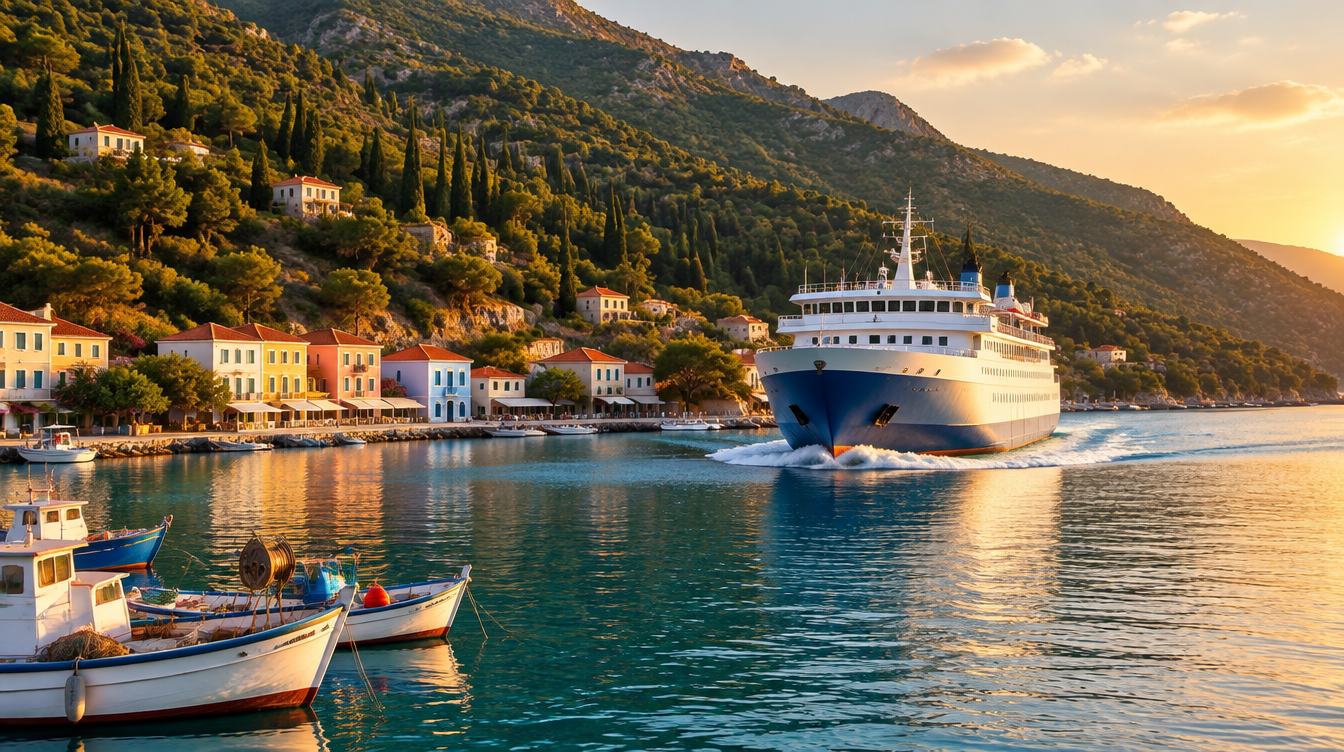
Ferries to Ithaca do not run on a famous schedule, and the island does not have an airport. That is exactly why it feels like a place you have to earn. Every traveler who reaches Ithaca arrives by sea, just as Odysseus did after twenty years of wandering.
This guide covers both halves of the story: who Odysseus was to this island, and how to reach it today. We will look at the main ferries to Ithaca, the little shuttle crossings, what to see once you arrive, and how to plan a calm, unhurried trip.
Ithaca is small, green and quiet. It rewards people who like villages, harbors and stories more than nightlife.
Table of Contents
Quick Facts
- Where: Ionian Sea, between the Greek mainland and Kefalonia
- Size: about 96 square kilometers, roughly 30 km long
- Main port: Vathy, which sits inside a deep bay
- Other ports: Piso Aetos, Frikes and Kioni
- Airport: none; the closest ones are on Kefalonia and Lefkada
- Famous for: being Odysseus’s home in Homer’s Odyssey
Who Was Odysseus to Ithaca?
In Homer’s Odyssey, Odysseus is the king of Ithaca. He leaves for the Trojan War, then spends ten more years trying to sail home. His wife Penelope waits, his son Telemachus grows up, and dozens of unwelcome suitors crowd into his house.
When he finally arrives, he comes in disguise, as a beggar. The first person to welcome him is his loyal swineherd Eumaeus, who feeds a stranger without asking his name. It is a perfect scene of Greek hospitality, and our article on filoxenia, the Greek tradition of hospitality explains why that ancient custom still shapes the way Greeks greet guests today.
If you want the full background on the epic, Wikipedia has a good overview of the Odyssey and of the island itself, Ithaca.
The monsters Odysseus meets along the way, from the Cyclops to Scylla, are ranked in our guide to Greek mythology monsters, a good companion read before you sail.
Ferries to Ithaca: Your Four Main Options
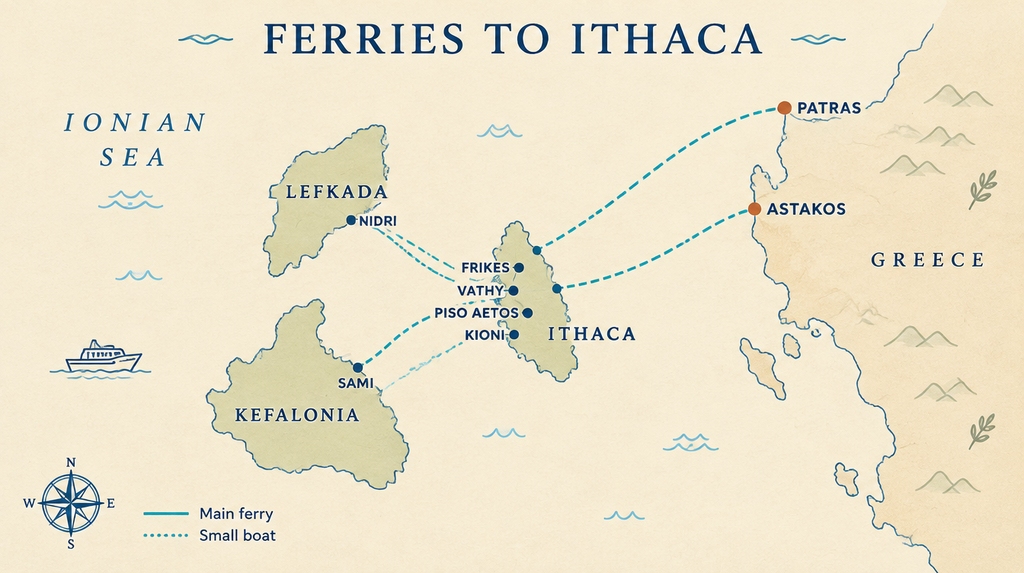
Here is the first thing to know: there is no single “Ithaca ferry”. Ithaca can be reached from several places, and the best choice depends on where you are starting. This table summarizes the main options. Understanding the ferries to Ithaca starts with knowing where you are leaving from.
| Route | Starting Point | Best For | Crossing Style |
|---|---|---|---|
| Patras to Vathy | Patras, on the mainland | Travelers coming from Athens by road or bus | Larger ferry, often with a stop in Kefalonia |
| Astakos to Vathy | Astakos, on the mainland | Drivers wanting a shorter crossing | Regular car ferry |
| Sami to Piso Aetos | Sami, on Kefalonia | Visitors already on Kefalonia | Short shuttle crossing |
| Nidri to Frikes | Nidri, on Lefkada | Island-hoppers in the Ionian | Small seasonal boat |
Schedules change by season and operator, so always confirm the current timetable with the ferry company before you travel. Services are far more frequent in summer, and some small routes only run in the warm months. The same rule applies to every one of the ferries to Ithaca.
Your Journey, Step by Step
Let’s walk through a typical trip, from Athens to a seat at a harbor taverna in Ithaca. Think of it as a short script you can follow. Here is how most travelers handle the ferries to Ithaca from start to finish.
Step 1: Leave Athens by bus or car. The journey west is a long day on the road. Buses leave for Patras and for Astakos from major stations, and the drive itself passes some pretty coastal scenery.
Step 2: Choose your port. If you rely on public transport, Patras is the easiest. If you are driving, Astakos gives a shorter sea crossing and a quieter feel. Whichever port you pick, the ferries to Ithaca are easy to follow once you know where to board.
Step 3: Board early. Greek ferries load fast, and cars are usually directed by crew with sharp whistles and quick hand signals. Be ready, and keep your ticket and ID close.
Step 4: Take a seat on deck. The Ionian is usually gentler than the Aegean. If the weather is clear, stay outside for the approach to Ithaca, when the island’s green hills rise out of the water. This is the part of the ferries to Ithaca journey that most people remember.
Step 5: Arrive in Vathy. The harbor is long and sheltered, with a waterfront promenade lined with cafés. After a long day, this is a very good place to arrive.
Which Port Should You Choose?
Ithaca’s ports each have their own character, so your arrival point shapes your trip. Your port also decides which ferries to Ithaca make the most sense for your trip.
Vathy is the main town and the busiest port, with shops, restaurants and the island’s main bus connections. It is the most practical base.
Piso Aetos is a tiny, quiet landing where the shuttle from Kefalonia arrives. It is not a town; it is simply a pier with a road leading up into the hills.
Frikes is a pretty little harbor in the north, with a few tavernas and a relaxed pace. Small boats from Lefkada tie up here.
Kioni is the postcard village. Whitewashed and red-roofed houses curve around a small bay, and yachts rest at anchor. It is more of a destination than a port.
Following Odysseus: Five Stops on the Island
Once you have landed, the fun begins. Ithaca does not have grand ruins like Delphi or Knossos. Its appeal is quieter: places where the story feels real, even when archaeologists cannot prove it. It is a pleasant way to spend a day after the ferries to Ithaca bring you ashore.
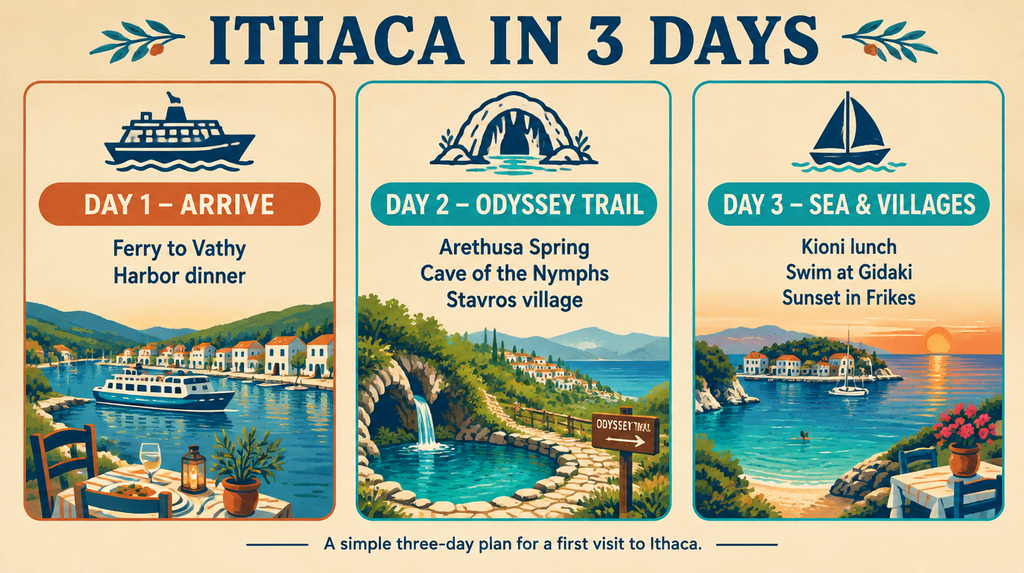
1. The Arethusa Spring (Perapigadi). In the Odyssey, Odysseus meets Eumaeus near a spring called Arethusa. Today, a spring with that name is shown near a rocky cliff in the south of the island. A path leads there, and the views over the sea are lovely.
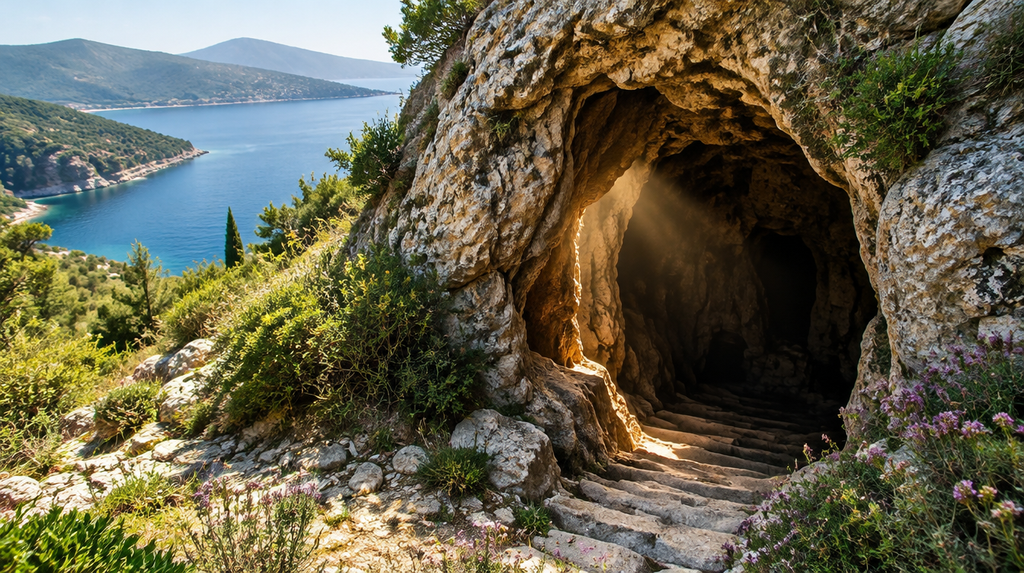
2. The Cave of the Nymphs. Near Vathy, a cave associated with the Homeric story is the traditional spot where Odysseus hid the gifts he had been given. The site is a short walk from the town.
3. The Archaeological Museum of Vathy. A small but pleasant museum that displays finds from the island, including objects linked with ancient worship at the so-called “Cave of Loizos”.
4. Stavros. A village in the northern part of the island, with a small museum and a statue of Odysseus. Some archaeologists have suggested that remains here are the site of the hero’s palace, although this remains debated.
5. Kioni and Frikes. Not Homeric sites in themselves, but the loveliest places on the island for a slow lunch by the water, with views of the sea Odysseus once crossed.
Is This Really Odysseus’s Ithaca?
Here is a surprise: scholars have argued for more than two thousand years about whether modern Ithaca is the same island Homer described. Some of the geography in the poem does not match perfectly. Homer describes Ithaca as lying “farthest out” toward the west, for instance, and some have suggested that he meant a different island in the neighborhood, such as Lefkada or even part of Kefalonia.
The debate has never been settled. In the 19th century, the German businessman and amateur archaeologist Heinrich Schliemann, famous for his work at Troy, dug on Ithaca looking for traces of Odysseus. He found interesting remains, but nothing that proved the case.
For a traveler, the answer hardly matters. Greeks have treated this island as Odysseus’s home for centuries, and the sense of walking through a story is real. Poems do not need maps to be true.
Rapid-Fire Questions Before You Go
Is Ithaca easy to visit without a car? Partly. Buses link Vathy with a few villages, but they are infrequent. Many visitors rent a small car or scooter for a day or two.
How many days do you need? Three or four days is a comfortable length. The island is too small to need more, and too slow-paced to rush.
When is the best time to visit? May, June and September give warm weather, clear sea and fewer crowds. July and August are hot and busy.
Are the beaches good? Yes, but they are mostly pebble coves with very clear water rather than long sandy strips. Gidaki and Filiatro are two names that come up often.
Is Ithaca good for families? Yes, if your children enjoy boats and swimming. There is little in the way of amusement parks or loud entertainment.
What should I eat? Fresh fish, local cheese, olives and simple home-style dishes. Our guide to the Mediterranean diet, the Greek way of eating explains why this kind of food is so central to island life.
The Ionian Table: What to Eat and Drink
The Ionian islands share a food culture shaped by centuries of Venetian influence. That means you may find a few dishes that taste a little different from the rest of Greece, with tomato-based sauces and slow-cooked meats, along with the usual grilled fish and fresh vegetables.
On nearby Kefalonia, a white grape called Robola produces crisp, citrusy wine that goes very well with seafood. Our guide to Greek wine, grapes and regions covers it, along with many other varieties worth trying.
Whatever you order, expect generous portions and a friendly, unhurried waiter. A meal in a harbor taverna is part of the trip, not a pause in it.
Imagine the Arrival: A Traveler’s Diary
Day 1, late afternoon. The ferry slows as the engines drop their note. Ahead, the hills of Ithaca are darker green than I expected, and the water inside the bay is flat as a plate. A man beside me points at the shore and says only one word: “Spiti,” home.
I came for the sights, but the first thing I notice is the quiet. Nobody hurries off the boat. A woman in a straw hat waits at the pier for her daughter. A fisherman mends a net. A waiter sets out chairs at the first café, as if the day were just beginning.
I carry my bag along the waterfront and understand why Homer chose this place for the end of a story. After a long sea, a harbor like this looks like forgiveness.
This is the feeling that the best ferries to Ithaca deliver, and why many repeat visitors say that the arrival is the best part of the whole trip.
Practical Tips for Taking the Ferry
A few small habits make the sea crossing easier.
- Buy tickets in advance in summer. Cars especially can sell out on popular days.
- Arrive at the port early. Boarding can begin well before departure.
- Carry cash and a card. Small ports do not always have ticket offices that take both.
- Watch the wind. Strong winds can delay or cancel crossings. Keep a buffer day on both ends of your trip.
- Pack a light jacket. Even in summer, the deck can be breezy.
- Check which port your ferry uses. Some routes arrive at Vathy, others at Piso Aetos or Frikes, and the distance between them is considerable.
Why Ithaca Stays With You
Ithaca is not a place of big attractions. It is a place of small, repeated pleasures: a slow ferry, a sunlit harbor, a plate of fish, a walk to a spring that may or may not be the one Homer meant. Let the ferries to Ithaca be the start of the story, not just the transport.
The Greek poet Constantine Cavafy wrote a famous poem about the island, saying that the journey itself matters more than the destination. Anyone who has stood on the deck of a ferry as the hills of Ithaca appear out of the haze understands what he meant.
So if you plan your trip carefully, choose your ferry well and leave time to wander, you will find that getting there is a large part of the story.
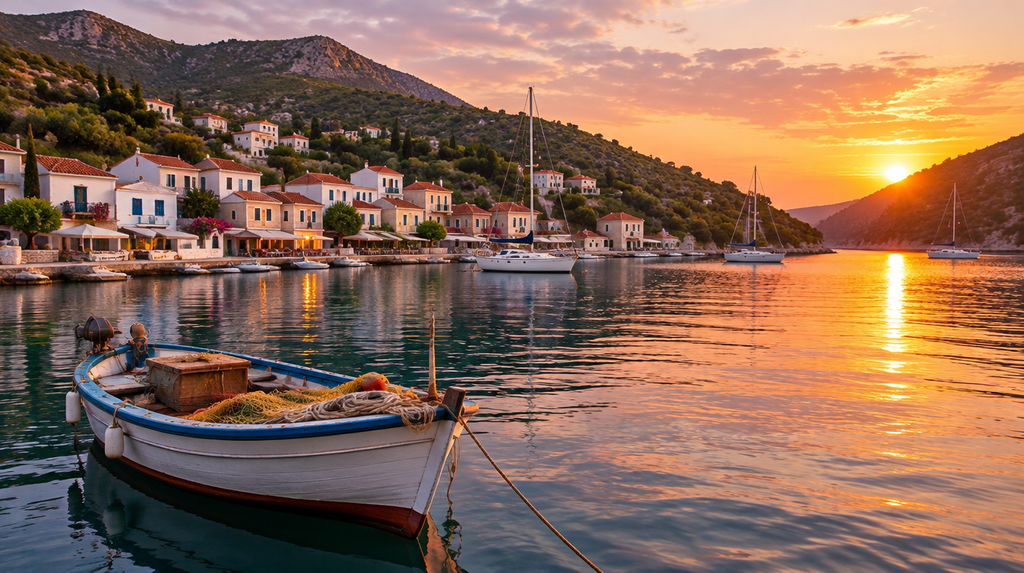
Illustrations in this article were created using AI in a photorealistic style.
Want to hold a piece of this history in your hands? Visit our official shop for digital albums, CDs, and restored vinyl records celebrating the golden era of rebetiko.