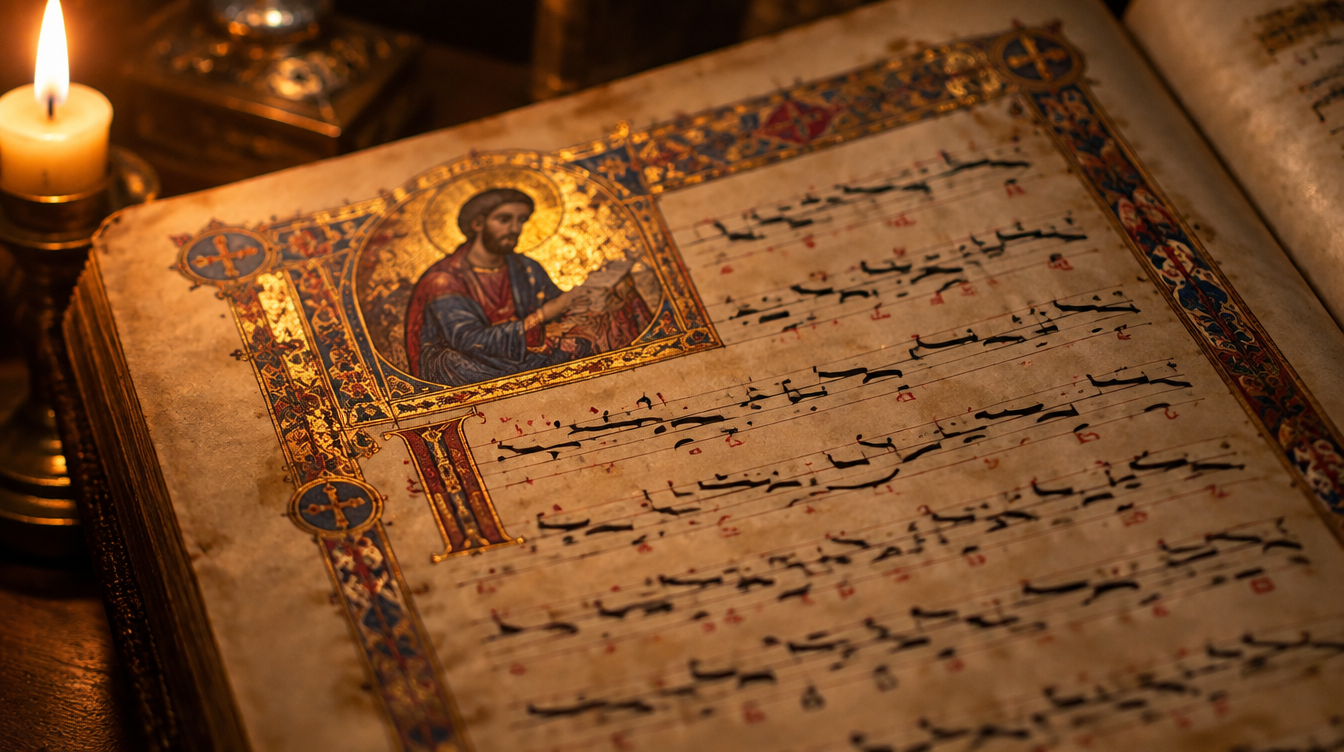
If you know a Romanos, a Romana, or an Ananias, today is their October 1 Name Day, and the name behind it, Saint Romanos the Melodist, deserves a lot more fame outside Greece than he actually gets, especially given how much of the country’s musical DNA can arguably be traced back to what he was doing fifteen centuries ago.
Here’s who he was, why a thousand-year-old hymn writer still matters to anyone interested in Greek music, and what else is worth knowing about today’s giorti.
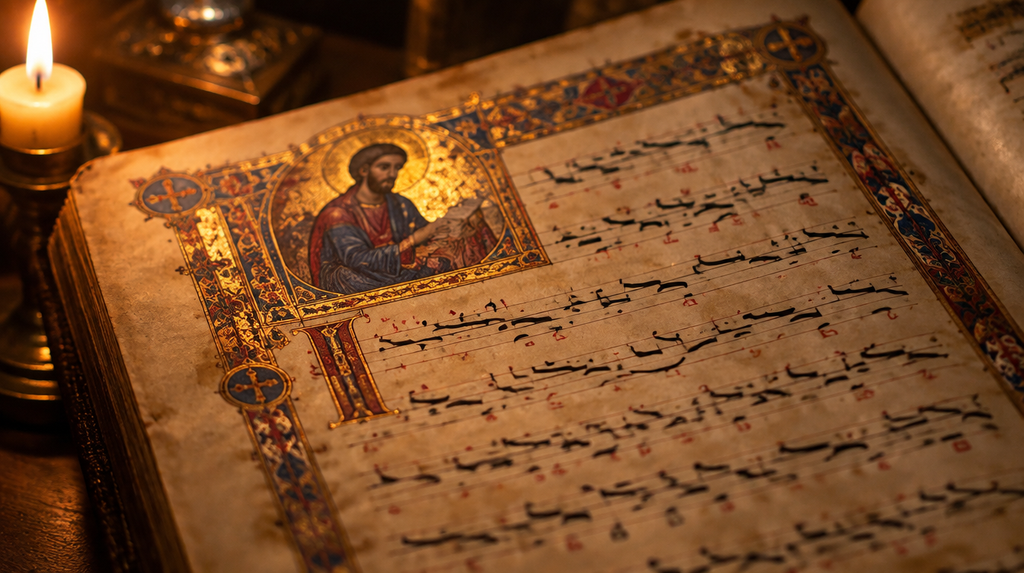
Who Was Romanos the Melodist?
Romanos was a sixth-century deacon, born in Syria and later based in Constantinople, where he served at the Hagia Sophia during the reign of Emperor Justinian. By most historical accounts, he became the single most important hymn-writer in the entire history of Byzantine Christianity, a title that still holds up today.
Legend has it that Romanos wasn’t naturally gifted at composing or chanting early in his career, and was reportedly mocked by other clergy for it. Then came the turning point: on Christmas Eve, the Theotokos appeared to him in a dream and handed him a scroll, instructing him to eat it. He woke up and, for the first time, began composing hymns with remarkable skill, going on to write the famous Kontakion of the Nativity that same night.The Hymn Still Sung Every Christmas
That Nativity Kontakion, often known by its opening line “On this day the Virgin gives birth to the Transcendent One,” is still chanted in Orthodox churches around the world every Christmas, well over a thousand years after Romanos supposedly wrote it in a single night. Few pieces of music from that era have survived with anywhere close to that kind of staying power.
Romanos went on to write an estimated sixty to eighty more surviving kontakia, covering everything from the Prodigal Son to the Last Judgment, each one structured as a kind of musical sermon meant to pull an entire congregation into the story being told rather than just inform them of it, closer to musical theater than a dry recitation, with Romanos himself often voicing different characters within a single piece to heighten the drama.
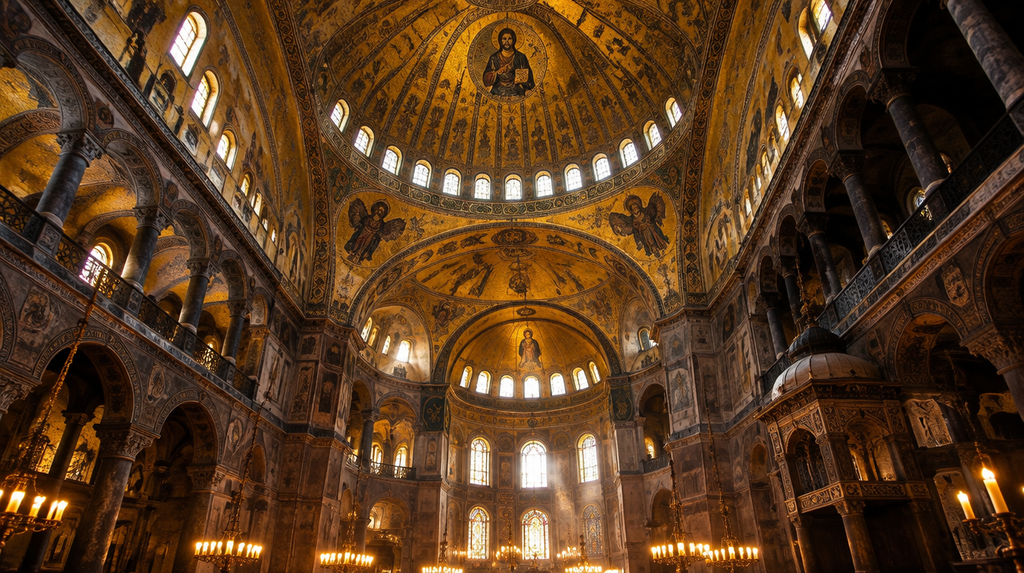
Why This Matters for Greek Music History
For a site built around the story of Greek music, Romanos is worth a moment of real attention. Centuries before rebetiko ever picked up a bouzouki in the tavernas of Piraeus, before the first rebetiko verse was ever sung in a smoky back room, Romanos was already shaping how Greek voices carried melody and meaning together in a single breath, long before anyone thought to write any of it down formally.
Byzantine hymnography, the tradition Romanos helped define, established patterns of modal scales, call-and-response structure, and emotionally driven vocal delivery that echoed through Greek music for the next fifteen centuries. Some musicologists trace a loose cultural lineage from this tradition toward the Eastern-inflected scales later heard in rebetiko itself, a connection that rarely makes it into casual conversations about the genre’s Ottoman-era roots, but sits right alongside them.Who Else Shares the October 1 Name Day?
Romanos isn’t the only name on today’s calendar. October 1 also honors Saint Ananias the Apostle, known for baptizing Saul of Tarsus in Damascus, who went on to become the Apostle Paul, one of Christianity’s most consequential conversions. Names celebrating today include Romanos, Romana, Romani, Ananias, Ninos, Theresios, and Theresia, a mix wide enough that most Greek families have at least one person marking the day.
If any of those are on your guest list today, the standard “Chronia Polla” works perfectly fine, and if you want to go the extra mile, mentioning that you know who Romanos the Melodist actually was tends to land surprisingly well with older relatives.
For the full etiquette behind this entire custom, the open-door visits, the reciprocal gift-giving, the reason nobody needs an invitation, our deep dive on the Greek Name Day tradition covers it all.
The Eight Modes That Shaped a Millennium of Greek Music
Romanos composed within a system called the Octoechos, the “eight modes,” a structured set of melodic scales still used in Orthodox chanting today. Each mode carries its own emotional character, some bright and triumphant, others somber and introspective, and a hymn’s mode was chosen deliberately to match the mood of what was being sung.
That system didn’t stay confined to churches. Over the following centuries, as Byzantine culture spread across the Eastern Mediterranean and absorbed influences from Persian, Arabic, and later Ottoman musical traditions, elements of this modal thinking filtered into secular Greek music as well, surviving political upheaval, empire collapse, and centuries of foreign occupation along the way. By the time rebetiko emerged in the port neighborhoods of early twentieth-century Piraeus, built on its own dromoi, or musical modes borrowed heavily from Ottoman makam, the underlying idea, that a specific scale carries a specific emotional weight, had already been part of Greek musical thinking for well over a thousand years.
None of this makes rebetiko a direct descendant of Byzantine chant in any strict technical sense. The two traditions developed through very different paths, religious versus secular, formal versus improvised in smoky back-room tavernas, worship versus rebellion against polite society. But the shared instinct, that melody itself should carry feeling before the lyrics even arrive, runs through both, a thread worth noticing the next time a liturgy and a rebetiko record end up sounding more emotionally related than their surface differences would suggest.For further reading on Romanos himself, Wikipedia’s entry on Romanos the Melodist traces his life and surviving body of work in more detail.
Illustrations in this article were created using AI in a photorealistic style.
Want to hold a piece of this history in your hands? Visit our official shop for digital albums, CDs, and restored vinyl records celebrating the golden era of rebetiko.