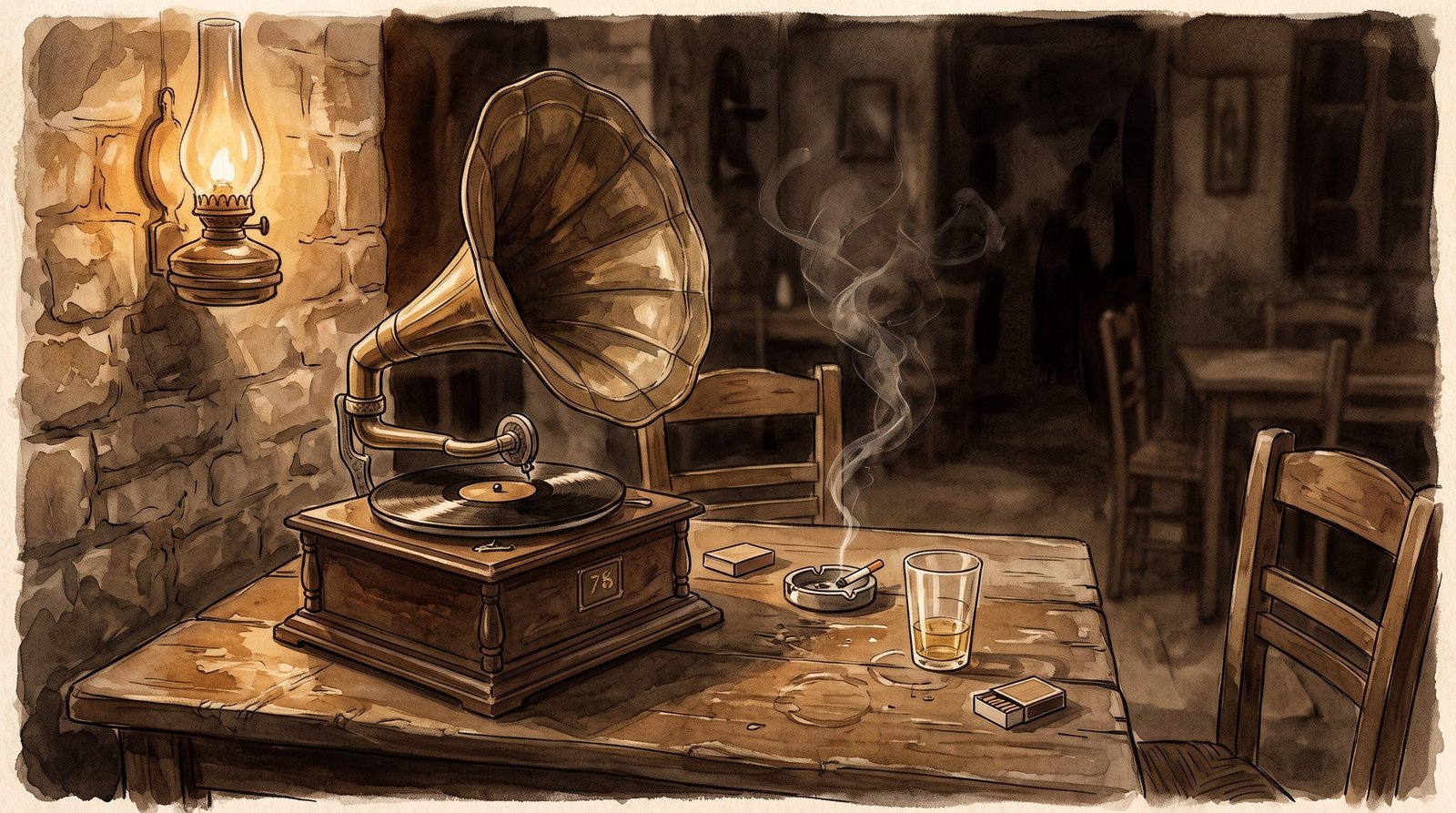
There are musicians who shape a genre, and there are musicians who become the genre itself. Markos Vamvakaris belongs firmly to the second category. Long before rebetiko found its way into concert halls and museum exhibitions, it lived in the smoke-filled tavernas of Piraeus, carried by men who had little else to their name but a bouzouki, a rough voice, and a story worth singing. Vamvakaris was the first to put that world on record — and in doing so, he gave an entire underground culture a face, a sound, and a name that would outlive him by a century.
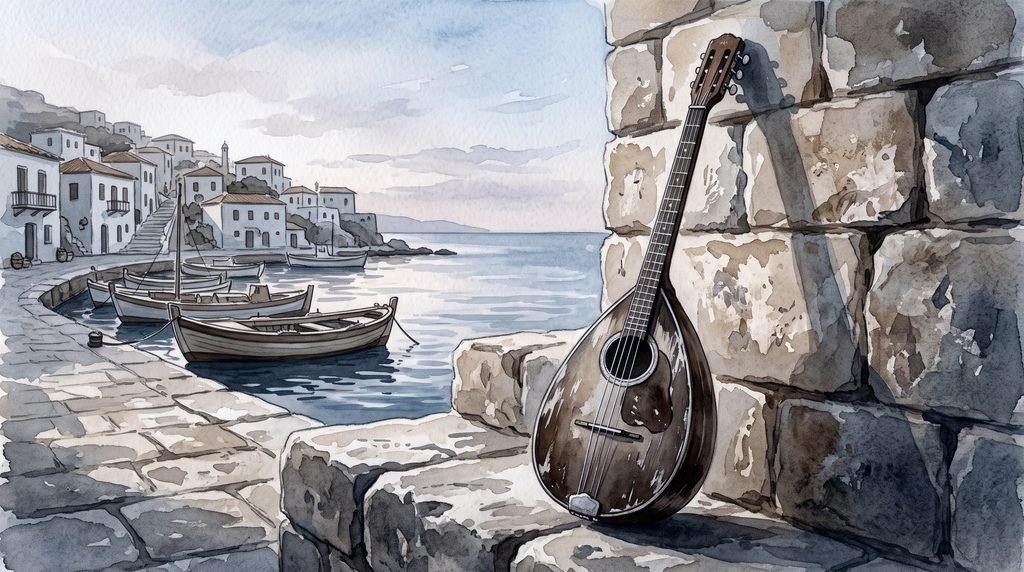
Who Was Markos Vamvakaris? A Boy from Syros
Markos Vamvakaris was born in 1905 on the island of Syros, into a family of modest means tied to the sea and to hard, physical work. Like many Greek islanders of his generation, he grew up surrounded by folk melodies, church chants, and the particular rhythm of a life shaped by tides and seasons rather than clocks.
He left school early. By his teenage years, he was already working — first on the island, then, like so many others of his time, drawn toward the mainland in search of something steadier. That search led him, as it led thousands, to one place above all others.
Arrival in Piraeus and the Underworld Scene
Piraeus in the 1920s was not a gentle city. It was a port town swollen with refugees from Asia Minor, dockworkers, smugglers, and men living just outside the reach of respectable society. It was loud, poor, and — for a young musician with nowhere else to belong — strangely alive.
Vamvakaris found work on the docks, but he found his true calling in the tekedes: small, half-hidden hash dens where men gathered to smoke, talk, and play music that polite society wanted nothing to do with. It was here that rebetiko, in its rawest form, took shape — not as entertainment, but as survival.
A few things defined this underground scene:
- Improvised gatherings in back rooms, cellars, and dockside cafés, rarely announced and rarely welcomed by authorities
- A shared code of hardship — songs about prison, poverty, heartbreak, and displacement, sung by people who had lived every word
- The bouzouki as identity — an instrument associated with the manges (streetwise, defiant outsiders), looked down upon by mainstream Greek society at the time
Vamvakaris didn’t just play in this world. He absorbed it, and eventually, he became one of its clearest voices.
The First Recordings
By the late 1920s and early 1930s, the recording industry had begun to take a cautious interest in this underground sound. Vamvakaris, largely self-taught, became one of the first rebetiko musicians to record commercially — a turning point not just for his own career, but for the genre as a whole.
| Period | Milestone |
| 1905 | Born on the island of Syros |
| Early 1920s | Moves to Piraeus, works on the docks |
| Late 1920s | Begins performing in the tekedes of Piraeus |
| Early 1930s | Makes his first commercial recordings |
| 1930s–1940s | Leads a quartet that helps define the “Piraeus style” of rebetiko |
| 1972 | Passes away, having lived to see rebetiko gain wider recognition |
His recordings introduced a wider Greek public to a sound they had mostly ignored or dismissed — rough-edged, minor-key, deeply emotional music that spoke of a life very different from the one presented in mainstream Greek culture at the time.
The Sound and Style
What set Vamvakaris apart wasn’t technical virtuosity in the classical sense — it was authenticity. His voice was rough, his phrasing unpolished, and that was exactly the point. He sang the way the tekedes sounded: honest, weary, occasionally defiant, occasionally tender.
His compositions typically featured:
- The zeibekiko rhythm — a slow, introspective 9/8 time signature often associated with solitary, almost meditative dancing
- Minor-key melodies carrying a distinctly Eastern Mediterranean color, shaped by the Asia Minor refugees who had settled in Piraeus
- Lyrics rooted in daily hardship — poverty, prison, love gone wrong, and the fatalism of a life lived on the margins
This combination became known as the “Piraeus style,” and it would go on to influence virtually every rebetiko musician who followed.
Later Years and Legacy
Vamvakaris’s later life was, in many ways, a quiet contrast to his early fame. As Greek musical tastes shifted in the following decades, rebetiko fell in and out of favor — at times even actively suppressed by authorities who viewed it as morally suspect. Vamvakaris continued composing and performing, watching the genre he helped create evolve into new forms he didn’t always recognize.
By the time of his death in 1972, however, a new generation of scholars, musicians, and Greeks abroad had begun rediscovering rebetiko as an essential piece of the country’s cultural memory — not underworld noise, but genuine folk art born from displacement, poverty, and resilience.
Why He Still Matters Today
- He is widely credited as the genre’s first true recording star, giving rebetiko a documented, traceable beginning
- His “Piraeus style” became the template that later giants — including Vassilis Tsitsanis — would build upon and expand
- His life story mirrors the larger story of 20th-century Greece: displacement, hardship, and the stubborn creation of beauty in difficult circumstances
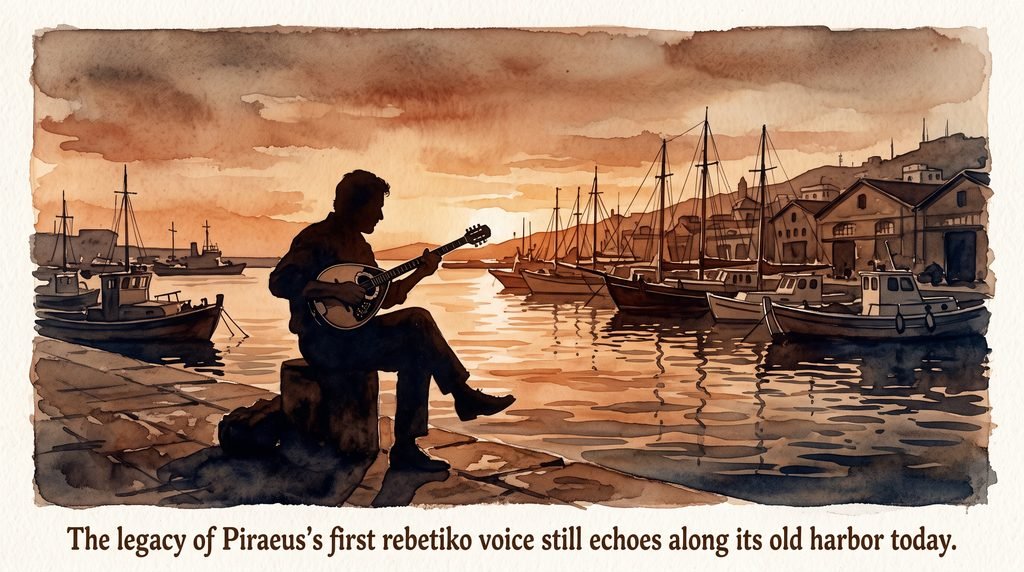
For anyone trying to understand where rebetiko truly began, Markos Vamvakaris isn’t just a starting point. He is, in every sense the Greeks intended when they gave him the title, the patriarch.
Curious how your own name would look in Greek letters? Try our free Your Name in Greek tool.
Want to hold a piece of this history in your hands? Visit our official shop for digital albums, CDs, and restored vinyl records celebrating the golden era of rebetiko.
2 thoughts on “Markos Vamvakaris: The Patriarch of Rebetiko”