No instrument tells the story of rebetiko quite like the bouzouki. Long-necked, sharp-voiced, and once considered barely respectable, it traveled a path that few instruments ever take — from the hands of outcasts in smoke-filled dens to the world’s most prestigious concert stages. Understanding bouzouki history means understanding the story of Greece itself: displacement, resilience, and the stubborn survival of beauty under pressure.
The Bouzouki History Begins in the Shadows
The bouzouki’s roots stretch back centuries, tracing a lineage through long-necked lutes of the Byzantine and Ottoman world — distant cousins of instruments still played across the Eastern Mediterranean and Middle East today. But the instrument as Greeks know it today took its modern shape in the early 20th century, carried west by the wave of refugees who arrived in Piraeus and other port cities after the population exchanges of 1922.
These refugees brought more than belongings. They brought musical traditions from Asia Minor, which fused with local Greek folk sounds in the crowded, improvised communities that formed almost overnight along the docks. Out of that collision, the bouzouki as we recognize it — bright, metallic, immediately distinctive — was born.
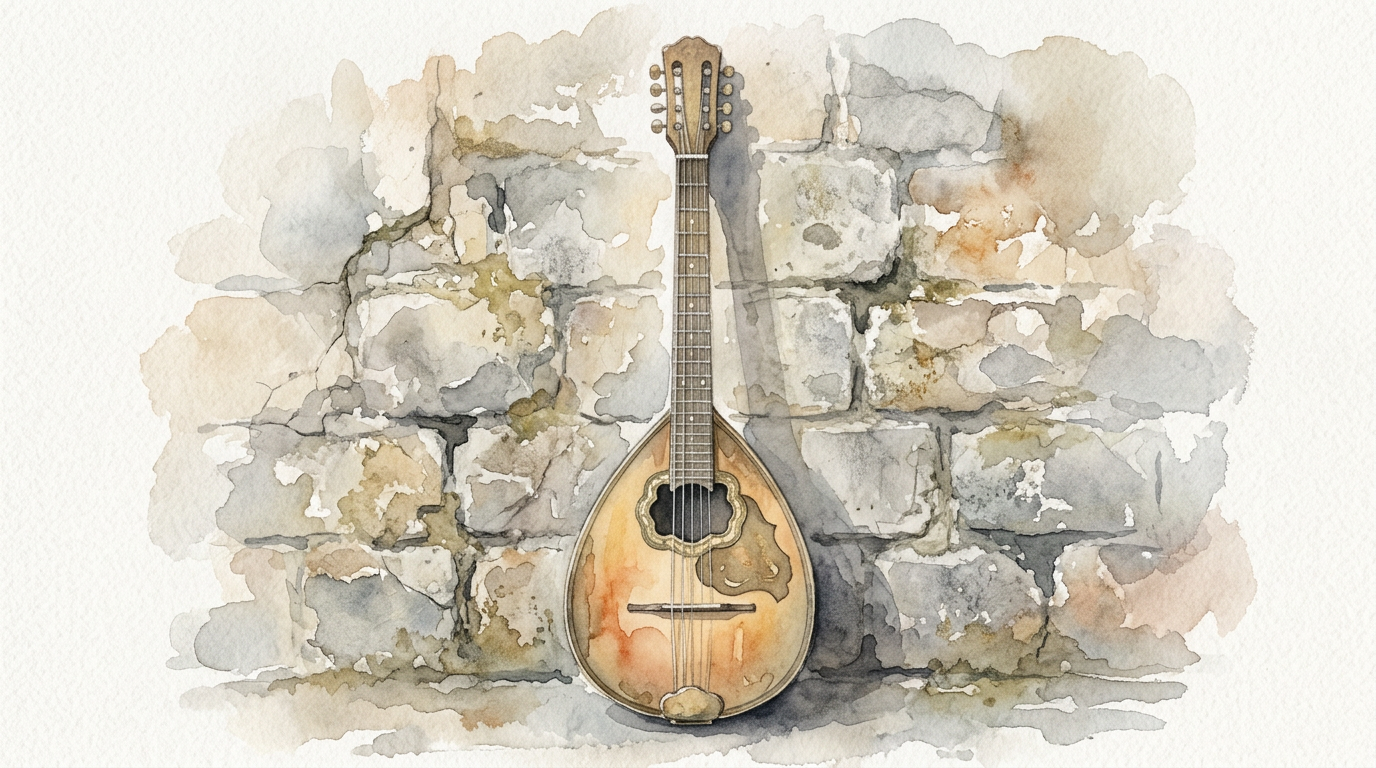
An Instrument of the Underworld
For decades, the bouzouki carried a reputation it couldn’t shake — and, in truth, didn’t try very hard to. It was the soundtrack of the tekedes, the hidden hash dens of Piraeus and Thessaloniki, and of the manges, the streetwise outsiders who lived defiantly outside respectable Greek society.
Mainstream Greek culture at the time treated the instrument the way it treated the people who played it: with suspicion, sometimes contempt. Radio stations avoided it. Polite households wanted nothing to do with it. And yet, in the very neighborhoods that respectable Athens turned its back on, the bouzouki was thriving — raw, expressive, and utterly alive.
A few forces defined this early chapter of bouzouki history:
- Association with the tekedes, where hash-smoking and music-making were deeply intertwined
- A folk instrument played almost entirely by ear, passed informally from musician to musician rather than taught in conservatories
- A sound built for improvisation, especially the slow, introspective zeibekiko rhythm favored by solitary dancers lost in thought
The Metaxas Crackdown
The bouzouki’s outsider status turned into something far more dangerous in 1936, when General Ioannis Metaxas established an authoritarian regime in Greece. His government viewed rebetiko culture — and the bouzouki along with it — as morally corrosive and politically suspect.
| Year | Event |
|---|---|
| 1922 | Refugees from Asia Minor bring new musical traditions to Piraeus |
| Late 1920s–1930s | The bouzouki becomes closely tied to tekedes and underground culture |
| 1936 | The Metaxas dictatorship begins actively censoring and suppressing rebetiko |
| 1936–1940 | Police confiscate instruments; musicians face arrest for playing or recording certain songs |
| 1940s–1950s | Rebetiko survives underground despite ongoing social stigma |
| 1960s | The bouzouki enters mainstream Greek and international music |
Recordings were censored. Lyrics referencing drugs, prison, or poverty were banned outright. Musicians caught performing the “wrong” kind of song — or simply carrying a bouzouki in the wrong part of town — risked confiscation of their instrument, fines, or even jail time.
Techniques Born Behind Bars
Here’s where bouzouki history takes one of its most remarkable turns. Rather than extinguishing the instrument, persecution seemed to refine it. Musicians who spent time in prison for their music — a genuine occupational hazard in this era — often kept playing behind bars, trading techniques with fellow inmates and experimenting in ways they might never have on the outside.
Some of the era’s most important innovations emerged from this pressure-cooker environment:
- The shift from three-course (trichordo) to four-course (tetrachordo) bouzouki, expanding the instrument’s range and expressive possibilities
- New tuning approaches that allowed for richer harmonic textures
- A deepening of the instrument’s emotional vocabulary, born from musicians pouring hardship directly into their playing
Far from silencing the bouzouki, the crackdown became part of its legend — proof of a culture too resilient to be legislated out of existence.
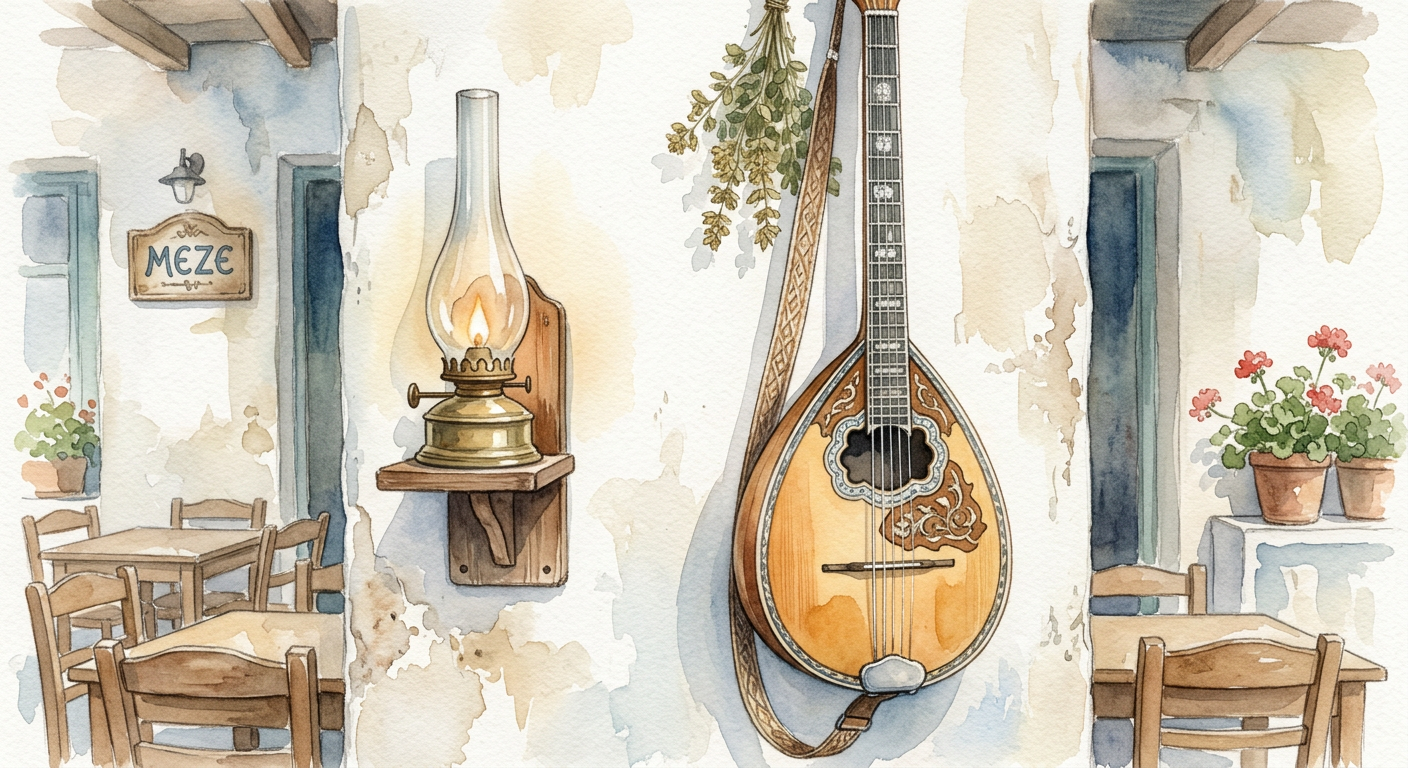
From Taverna to Concert Hall
Greece’s postwar decades brought a dramatic reversal of fortune. Composers like Mikis Theodorakis and Manos Hadjidakis — trained in classical music but drawn to the raw power of rebetiko — began incorporating the bouzouki into orchestral and theatrical works, lending it a legitimacy it had been denied for decades.
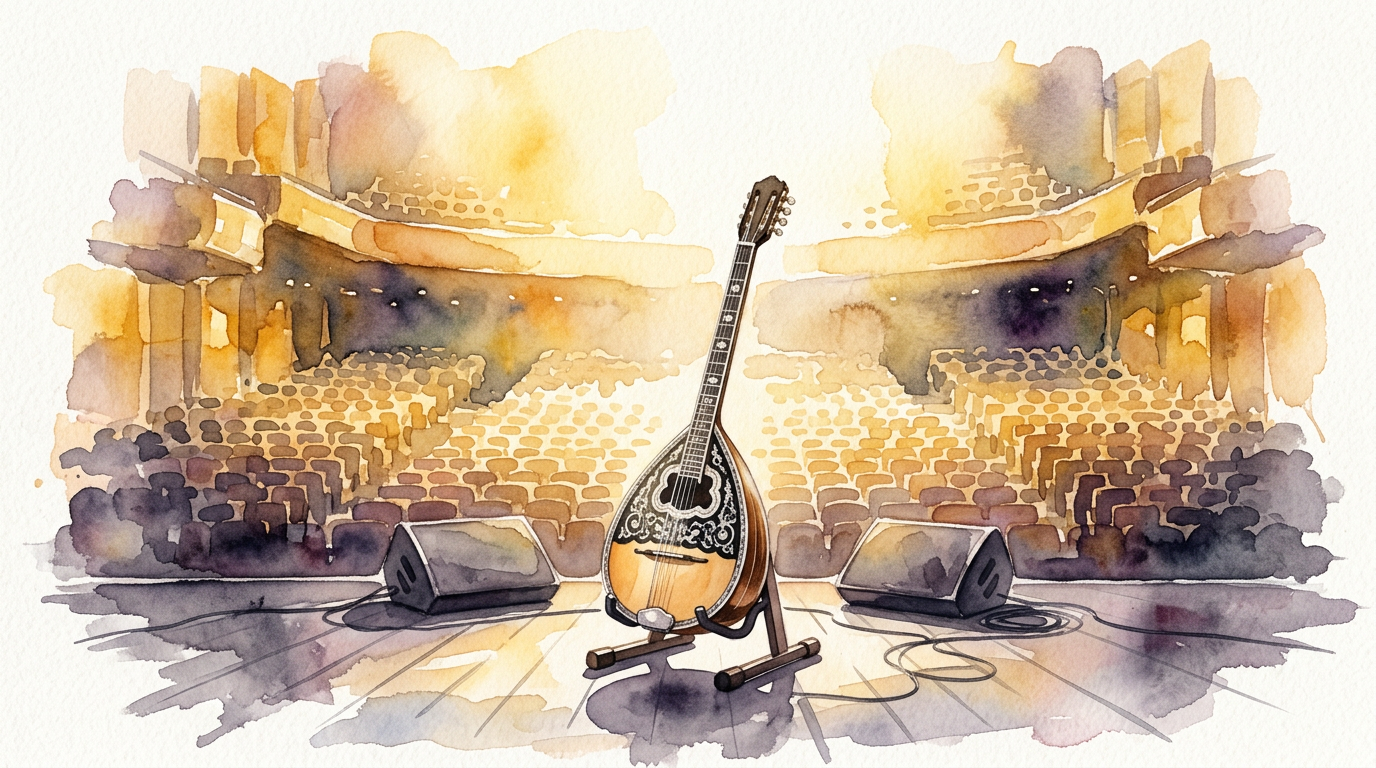
The turning point for international recognition came in 1964, when the bouzouki-driven score of Zorba the Greek introduced the instrument’s sound to audiences worldwide. Almost overnight, an instrument once confiscated by police became a symbol of Greek identity celebrated on concert stages across the globe.
The Bouzouki Today
Today, the bouzouki holds a position that would have seemed unthinkable to the musicians who once hid it from police. It’s taught in conservatories, played in orchestras, and remains the beating heart of Greek popular music — a direct line connecting modern audiences to the tavernas of 1930s Piraeus.
Why This History Still Matters
- It shows how an instrument associated with poverty and persecution became a defining symbol of national identity
- The technical innovations born from hardship (like the tetrachordo bouzouki) remain standard today
- It’s a reminder that cultural suppression rarely succeeds in silencing what people genuinely need to express
Want to see your name written in Greek? Use our free Your Name in Greek tool and download it as an image.
Illustrations in this article were created using AI in a vintage watercolor style.
Want to hold a piece of this history in your hands? Visit our official shop for digital albums, CDs, and restored vinyl records celebrating the golden era of rebetiko.
1 thought on “The Bouzouki: From Prison to Concert Halls”