Greek Mythology Monsters are the reason heroes had anything to do. No monsters, no quests. No quests, no legends. The ancient Greeks filled their stories with snake-haired women, many-headed serpents, man-eating bulls and singing creatures who lured sailors to their deaths, and they told those stories around the fire for centuries.
But which of these creatures was actually the scariest? Let’s settle the argument the fun way: a countdown from “creepy” to “please, not today,” judged on three things. How dangerous was it? How hard was it to defeat? And how well does it still haunt the imagination?
Grab a glass of something strong. We’re going into the dark.
How We’re Ranking Them
Before the countdown, a quick scoring guide. Each creature is judged on how much damage it did, how powerful its parentage was, and how hard it was for heroes to beat. Every one of these Greek mythology monsters is judged by the same yardstick.
Rank
Monster
Danger Level
9
The Sphinx
Deadly, but only if you can’t think
8
The Sirens
Deadly, but only if you listen
7
The Chimera
Fire, fangs and venom
6
Cerberus
Guards the gates of the dead
5
Medusa
One look, and it’s over
4
Scylla and Charybdis
A rock and a hard place
3
The Minotaur
Trapped in a maze
2
The Lernaean Hydra
Cut one head, two grow back
1
Typhon
Fought Zeus himself
9. The Sphinx: Deadly Riddles
The Sphinx had a lion’s body, a woman’s face and wings. She sat outside the city of Thebes and asked every traveler the same riddle: what walks on four legs in the morning, two at noon and three in the evening? Anyone who answered wrong was devoured.
The hero Oedipus finally solved it: a human being, who crawls as a baby, walks upright as an adult and uses a cane in old age. The Sphinx, defeated by a word, ended her own life.
She ranks lowest because she could be beaten with brains alone. But she’s still unsettling: a monster who kills you for being wrong. Among all the Greek mythology monsters, she is the one who tests your mind first.
8. The Sirens: The Song You Can’t Resist
The Sirens lived on a rocky island and sang so beautifully that sailors steered straight onto the rocks. Their weapon was desire, not claws.
Odysseus found the clever solution. He had his crew plug their ears with beeswax, and then ordered himself tied to the mast so he could hear the song safely. He begged to be released, and the crew, as instructed, only tied him tighter.
The Sirens drop in the ranking because their trick was avoidable. But the idea that the most dangerous things sound beautiful is a very old and very true fear.
📖 Quick Glossary: “Monster” comes from the Latin monstrum, meaning a warning or omen. In Greek stories, a monster was often the gods’ way of making a point.
7. The Chimera: Three Animals in One
The Chimera was a fire-breathing beast with a lion’s head, a goat’s body rising from its back and a serpent for a tail. It terrorized the region of Lycia until the hero Bellerophon arrived on the winged horse Pegasus.
Flying above the flames, he drove a spear tipped with lead into its mouth. The heat of its own fire melted the lead and killed it.
The Chimera is dangerous, certainly. Yet it falls to a clever trick and a flying horse. Its name has lasted, though: we still call any impossible, patched-together fantasy a chimera.
6. Cerberus: The Three-Headed Guard Dog
Cerberus guarded the entrance to the underworld, and his job was simple: let the dead in, and never let them out. He had three heads, a serpent’s tail and a mean temper.
His reputation as a monster is a bit unfair, since he was doing his job. Heroes bypassed him in different ways: Orpheus played music that put him to sleep, and Heracles wrestled him into submission as his twelfth labor, a story you can read in our guide to the labors of Hercules.
For a closer look at the realm he protected, see our article on Hades and the underworld. Cerberus is frightening, but he is also the only monster on this list that people have occasionally liked.
5. Medusa: The Gaze That Turns You to Stone
Medusa is the most famous monster in Greek mythology, and perhaps the most misunderstood. With snakes for hair and a gaze that turned people to stone, she was beheaded by the hero Perseus, who used a polished shield to avoid her eyes. Her story is more complicated than the legend suggests; see Medusa: victim or monster? for the full picture.
Her place at number five reflects how deadly she was, but also how complicated her story is. In some versions she was a mortal woman punished by a god. Whether she was villain or victim is a debate as old as the myth, and we explore it fully in our article on Medusa: victim or monster?
🗣️ Say It Like a Local: “Φοβάμαι” (FOH-vah-meh) means “I’m afraid.” If you want to say “don’t be afraid,” try “Μη φοβάσαι” (mee foh-VAH-seh).
4. Scylla and Charybdis: Between Two Terrors
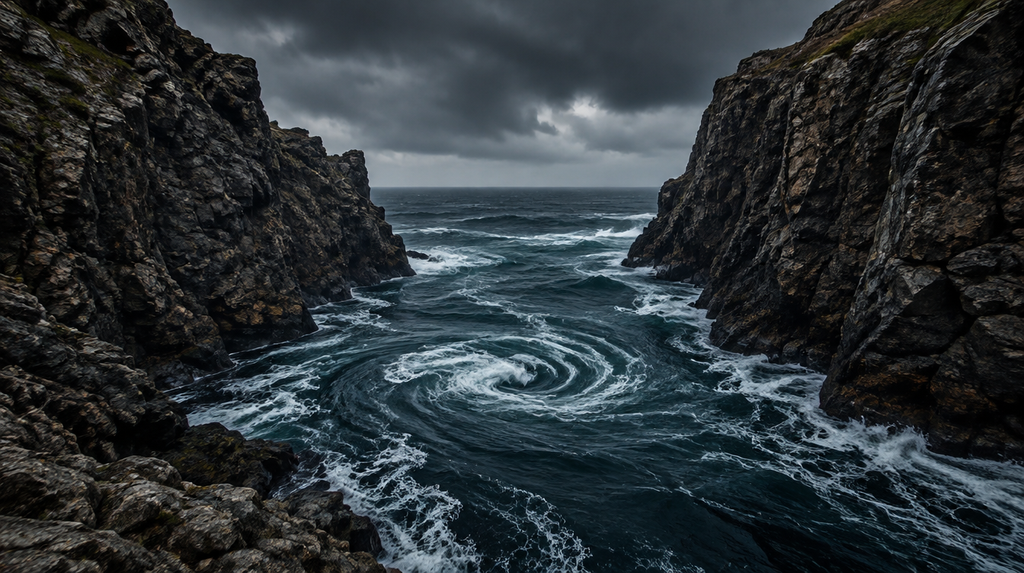
In the narrow strait that sailors had to cross, two monsters waited on opposite sides. Scylla was a creature with many heads that snatched sailors from passing ships. Charybdis was a whirlpool that swallowed whole vessels.
Odysseus had to choose which danger to risk. He chose Scylla and lost six men, because losing six was better than losing the entire ship. That’s the origin of the expression “between Scylla and Charybdis,” which means choosing between two bad options.
They rank high because there’s no clever trick to avoid them. You simply pick your loss.
3. The Minotaur: The Beast in the Labyrinth
The Minotaur, half man and half bull, lived at the center of the Labyrinth, a maze built on Crete by the craftsman Daedalus. Every few years, Athens was forced to send seven young men and seven young women into the maze as tribute, and none returned.
The hero Theseus volunteered to go. With a ball of thread given to him by Ariadne, he found his way in, defeated the Minotaur and followed the thread out again.
The Minotaur ranks high because the terror here is psychological: getting lost in the dark, with something waiting at the center. If this story catches your imagination, our article on Crete Island tells you more about the real island behind the legend.
2. The Lernaean Hydra: The Monster That Fights Back
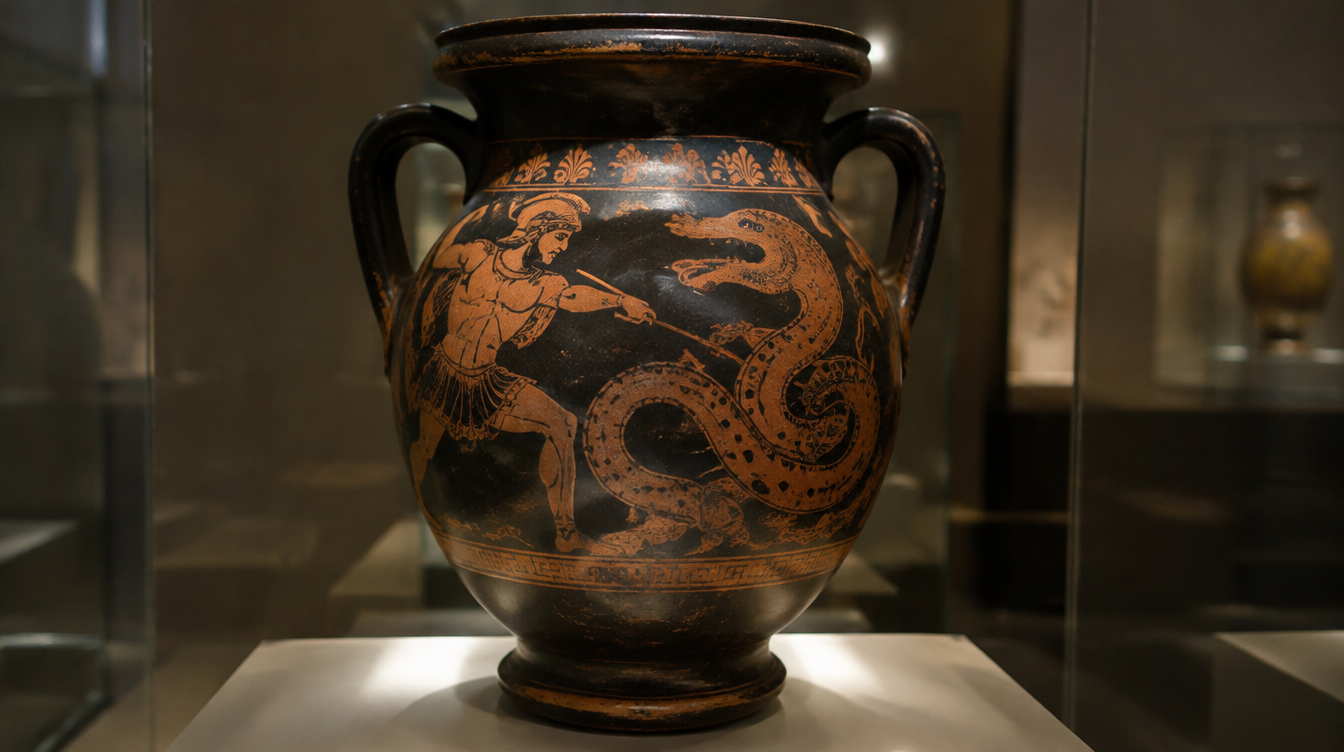
The Hydra lived in the swamps of Lerna, a serpent with many heads. Cut one off, and two grew back. Its breath and blood were poisonous, and even its lair was deadly.
Heracles won with help. His nephew Iolaus burned each neck stump with a torch the moment a head was cut off, stopping the regrowth. The central head, said to be immortal, was buried under a boulder.
The Hydra is terrifying because it punishes the obvious solution. The harder you attack, the worse it gets. Many modern writers still use it as a symbol for problems that multiply when you fight them head-on. Few Greek mythology monsters were so hard to put down for good.
1. Typhon: The Monster Who Challenged Zeus
At the top of the list is Typhon, the father of monsters. In the oldest tellings, he was a being so huge his head brushed the stars, with a hundred serpent heads and a voice that could imitate any creature. He rose against the gods themselves.
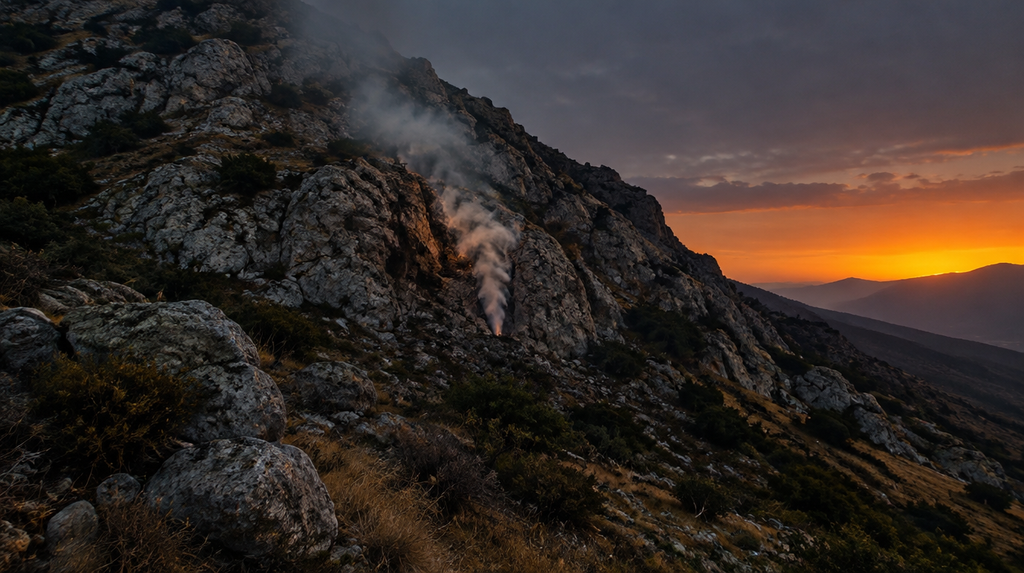
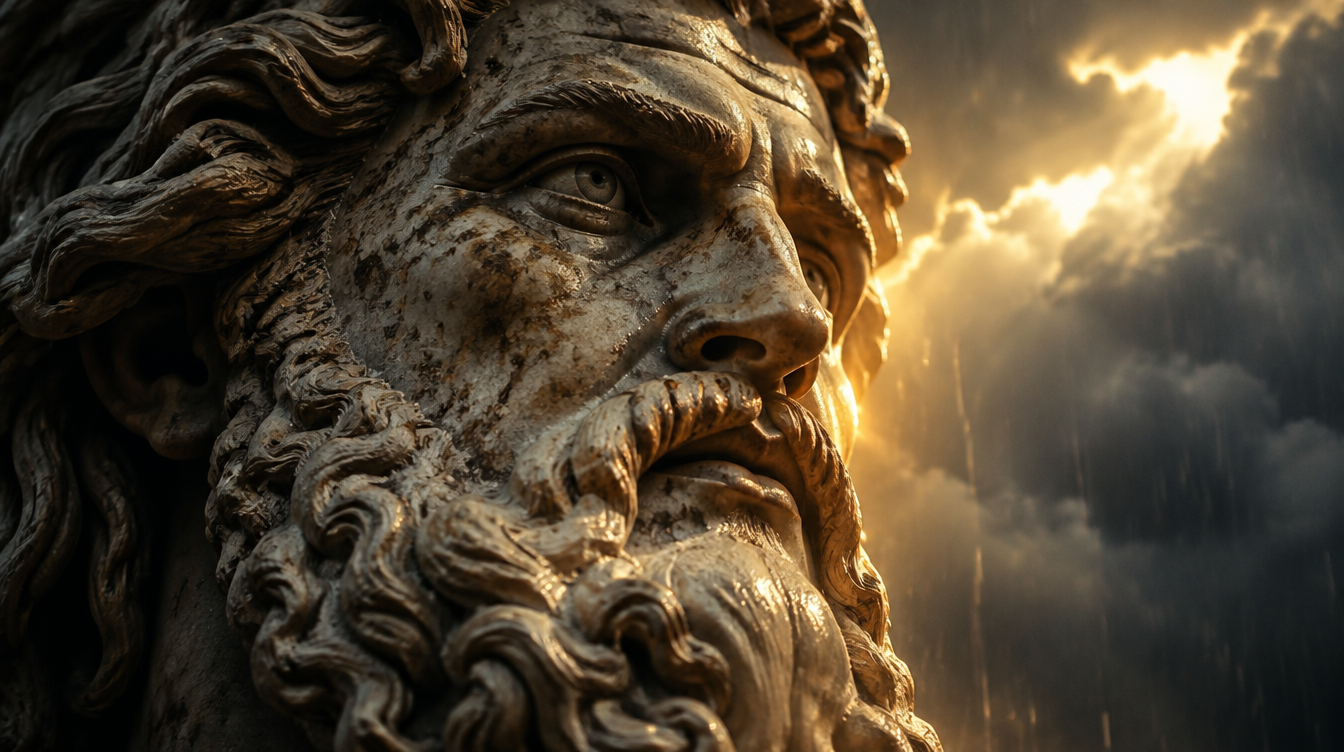
Most of the Olympians fled in terror. Zeus alone stood and fought, and after a violent battle he defeated Typhon and buried him under a mountain. Some traditions say Mount Etna in Sicily is his prison, and that its eruptions are his rage. It took Zeus, king of the gods, everything he had to win.
Typhon is number one because every other monster on this list is small beside him. He fathered many of them, and he nearly overthrew the king of the gods. If you want to understand who Zeus was and why this victory mattered, read our article on Zeus, king of the gods.
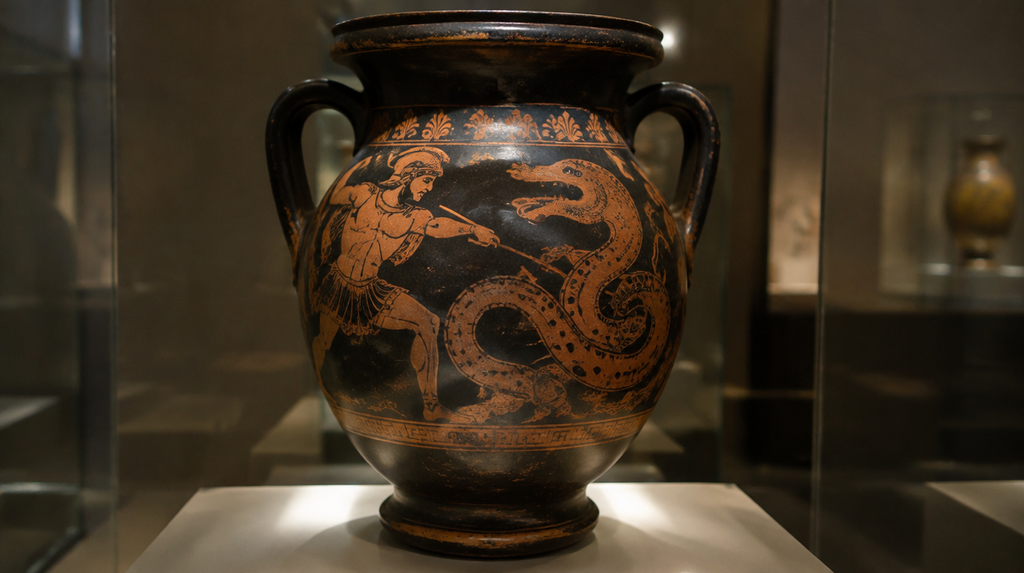
🧭 Local Tip: To see how ancient Greeks pictured these creatures, visit the National Archaeological Museum in Athens and look closely at the painted vases. Monsters were a favorite subject.
The Monster Family Tree
Here’s a detail that makes Greek Mythology Monsters even stranger: many of them were relatives. According to the poet Hesiod, Typhon and a half-woman, half-serpent creature named Echidna became the parents of a terrifying brood. In various tellings, their children include Cerberus, the Hydra, the Chimera and other beasts.
Think about that for a moment. The dog at the gates of the dead, the serpent in the swamp and the fire-breather of Lycia all came from the same dreadful household. It’s like the worst family reunion in history, with Zeus’s thunderbolts as the only chaperone. Nearly all the great Greek mythology monsters trace back to the same family.
The idea behind it is simple. The Greeks imagined the wild, dangerous parts of the world as one unruly clan that the Olympians had to keep in check. When a hero defeated a monster, it wasn’t just a fight. It was order winning another round over chaos.
Honorable Mentions: The Ones That Almost Made the List
Plenty of other creatures were left out of the main countdown, but they deserve a quick nod.
The Nemean Lion: a beast with skin so tough no weapon could pierce it. Heracles finally strangled it, then wore the pelt as armor.
Polyphemus the Cyclops: the one-eyed giant who trapped Odysseus and his men in a cave. Odysseus escaped by blinding him and hiding under the bellies of his sheep.
The Harpies: winged creatures who snatched food from a blind king’s table, leaving him starving until heroes drove them away
The Python: a giant serpent that guarded Delphi until the god Apollo slew it and claimed the site for his oracle
Each of them would be a nightmare to meet on a dark road. They just weren’t quite as devastating as the nine above. Any of these Greek mythology monsters could have earned a place on the main list.
Why We Still Love Greek Mythology Monsters
Three thousand years later, we keep coming back to these creatures. Films, novels and games borrow them constantly, and the reason is simple: they work. A monster gives fear a shape. It turns something vague and overwhelming into an enemy that a hero can face. That is why Greek mythology monsters still feel so alive today.
The Greeks understood that better than almost anyone. Their monsters aren’t just scary; they’re memorable, clever and strangely human. They remind us that every journey has obstacles, and that the best stories are the ones where somebody has to be brave.
What the Monsters Were Really About
It’s easy to read these stories as simple adventure. But the Greeks used monsters to talk about real fears. Seen this way, Greek mythology monsters were never just villains.
Nature’s dangers: storms, whirlpools and mountain fires were explained as living creatures
Temptation: the Sirens warned about pleasures that lead people to ruin
Chaos versus order: Typhon and the Titans represent the wild forces the Olympians had to tame
Human courage: every monster made a hero’s reputation. Without terror, there is no bravery.
For a wider view of the gods who stood against these creatures, see our 12 Olympian gods guide.
Myth vs. Truth About Greek Mythology Monsters
Myth: All monsters were evil. Truth: Many were created, cursed or used by the gods, and a few, like Cerberus, were simply doing a job.
Myth: Monsters always lost to the hero’s strength. Truth: Cleverness, gifts from gods and help from friends won most battles.
Myth: The Greeks invented every monster. Truth: Some creatures echo much older stories from the wider Eastern Mediterranean and Near East.
For more background on the full cast, Wikipedia’s page on Greek mythological creatures and its entry on Typhon are good places to read further.
So, Which One Scares You Most?
Ranking monsters is subjective, and the Greeks themselves would have argued about it for hours. Some find the Hydra terrifying. Others think the Minotaur wins. Still others would say the scariest monster is the one that looks like a person. Whichever you pick, the best Greek mythology monsters are the ones that stay with you.
If you could face only one, which would you choose? Many readers say the Sphinx, because at least you’d have a fighting chance with a good riddle. Others pick the Sirens, trusting a bit of beeswax and a strong rope. Almost nobody volunteers for Typhon. What matters is that these stories have lasted. They are told, retold and reimagined in films, books and games almost three thousand years later. A good monster story, it seems, never dies.
Illustrations in this article were created using AI in a photorealistic style.
Want to hold a piece of this history in your hands? Visit our official shop for digital albums, CDs, and restored vinyl records celebrating the golden era of rebetiko.