Daphne and Apollo is one of the most retold love stories in Greek mythology, and one of the strangest. It is a story about a god who gets everything he wants except the one thing he cannot take, a young woman who would rather become a tree than be caught and a plant that ended up on the heads of poets, athletes and emperors.
Every time you see a laurel wreath on a medal, a school diploma or a victory poster, you are looking at the end of this myth.
In this guide we will tell the story in five short acts, look at what it meant to the Greeks and the Romans, and follow the laurel from Thessaly to your kitchen shelf.
Table of Contents
The Myth in Brief
Who: Apollo, god of music, light and prophecy, and Daphne, a nymph of the river
What happens: Apollo pursues Daphne, and she is transformed into a laurel tree
Why it matters: Apollo declares the laurel his sacred plant
Best-known telling: the Roman poet Ovid, in his Metamorphoses
Where it lives on: laurel wreaths, the word “laureate” and Western art
Act 1: The Boast That Started It All
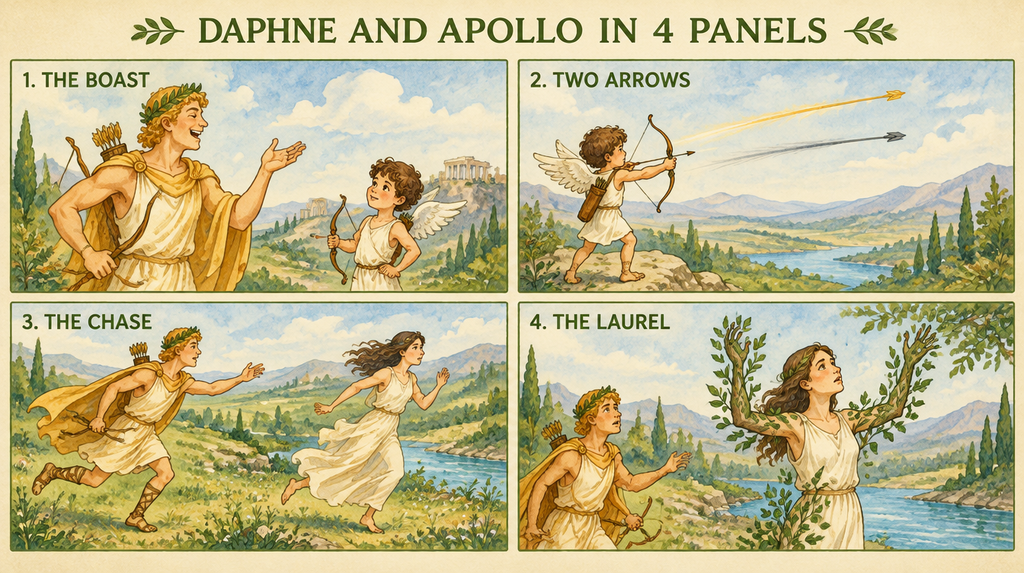
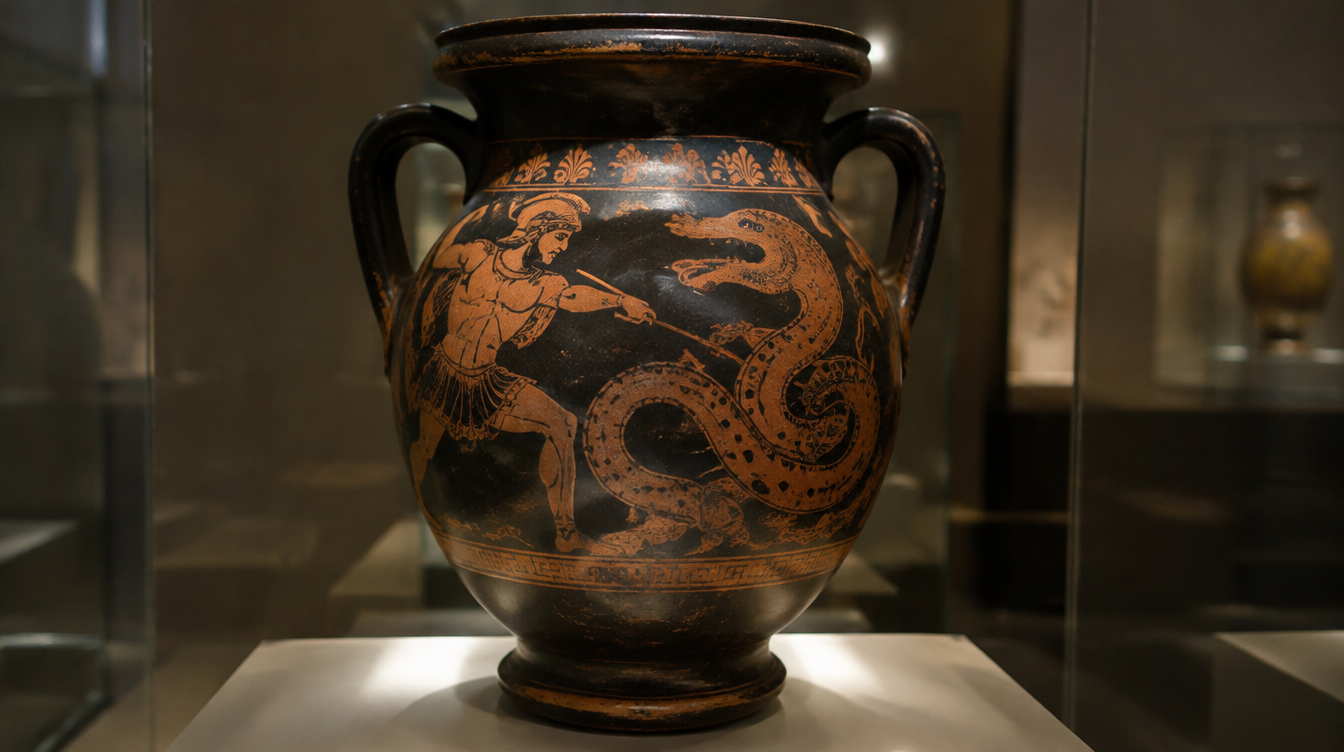
The story begins with a quarrel. Apollo had just defeated the giant serpent Python, and he was full of pride. When he saw the young god Eros testing a small bow, he mocked him. “What does a child need with a weapon of real heroes?” he said.
Eros did not forget the insult. He climbed a mountain and took two arrows from his quiver. One had a golden tip and caused love. The other had a dull lead tip and caused hatred of love. He shot Apollo with the golden arrow and the nymph Daphne with the lead one.
The first lesson of the myth is a simple one: pride has consequences, even for a god. If you want to know more about the family of gods around Apollo, our guide to the 12 Olympian gods lays out who is who, and our story of Aphrodite, the goddess of love explains the world that Eros came from.
Act 2: The Chase Through the Valley
Daphne was the daughter of Peneus, a river god in the region of Thessaly. She loved the woods and the hunt, and she asked her father for permission to remain unmarried forever. He agreed, though he warned her that her beauty would bring trouble.
Apollo, struck by the golden arrow, saw her and fell hopelessly in love. She, struck by the lead arrow, saw only danger. When he approached, she fled.
The poet Ovid describes the chase with great care. Apollo speaks gently as he runs, promising that he is no enemy and that he only wants her to stop. But the faster he speaks, the faster she runs. This scene gives the myth its tension, and it is also why many modern readers feel uncomfortable with it. We will return to that below.
📖 Quick Glossary: “Daphne” (DAF-nee) is the Greek word for laurel, the evergreen tree also called bay. It is still a popular girls’ name in Greece, where it is spelled “Dafni.”
Act 3: The Transformation
Exhausted, Daphne reached the bank of her father’s river. She called out for help and begged him to change her shape, to take away the beauty that had caused her danger. Almost at once, her limbs became heavy. Bark wrapped her body, her hair turned to leaves and her arms became branches. Her feet, so quick a moment before, took root in the ground.
Apollo stopped. Even now, he still loved her. He laid his hand on the trunk and felt the heart still beating under the bark. And then he made a promise: “Since you cannot be my wife, you will be my tree.”
From then on, he said, laurel would crown his head, decorate his lyre and mark his victories. The laurel would stay green, a symbol of something that does not fade.
Act 4: The Laurel Wreath Is Born
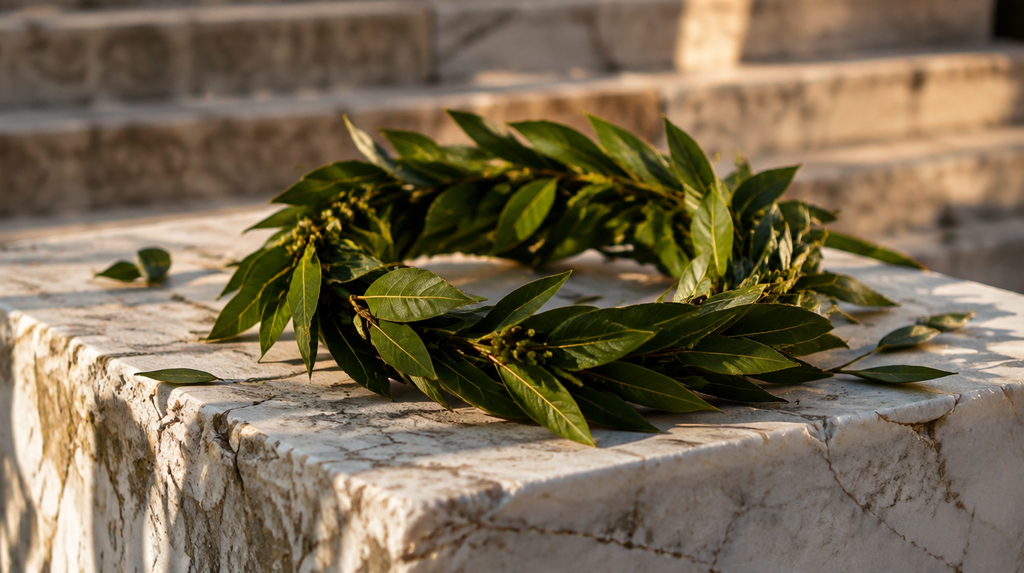
True to his word, Apollo made the laurel his sacred tree. At Delphi, the priestess who delivered his prophecies is said to have chewed laurel leaves and sat near a laurel tree. In the Pythian Games, held in his honor, the winners received crowns of laurel. In time, victors in poetry, music and war wore the same green wreath.
This is one of the most lasting symbols of the ancient world, and it travelled to Rome and from Rome to the rest of Europe. For a quick look at how Delphi became the center of the Greek world, our day trips from Athens guide includes the site, and Wikipedia has a detailed page on Apollo.
Even a tree on the stage of an ancient game could tell a story. That is exactly what the laurel does.
Who Was Apollo? A Quick Profile
To understand the myth, it helps to know the god at its center. Apollo was the son of Zeus and the Titaness Leto, and the twin brother of Artemis. He was the god of music, healing, prophecy, archery and light. His lyre set the rhythm for the gods, and his oracle at Delphi guided kings and city-states.
Yet he was also a god of limits. His own inscription at Delphi, “know thyself,” reminded visitors that mortals and even gods have boundaries. That makes the story of Daphne especially ironic. The god of order, harmony and self-knowledge is the one who cannot control his desire, and he is the one who is told no.
The River, the Valley and the Real Landscape
Ovid places the story in Thessaly, in northern Greece, along the river Peneus. Today the Peneus still flows through the region, and the narrow gorge of the Vale of Tempe, between Mount Olympus and Mount Ossa, was famous in antiquity as a place of beauty. Ancient writers say that laurel for Apollo’s rituals was gathered there and carried to Delphi in ceremonies.
So if you ever travel in central Greece and see a green river valley with laurel scrub on its banks, you are looking at the landscape of the myth. The Greeks did not separate story from place. For them, a legend lived in the shape of the land.
Act 5: Different Versions of the Story
Not every ancient author told the myth the same way. In some Greek versions, Daphne is the daughter of Ladon, a river in Arcadia, not Peneus in Thessaly. In another version, preserved by the traveler Pausanias, a young man named Leucippus loved her so much that he dressed as a girl to join her hunting band. Apollo, jealous, exposed him, and the nymphs killed him.
Ovid’s telling, from the 1st century, is the one most people know. It is also the most polished and the most visual, which is why artists loved it. The sculptor Gian Lorenzo Bernini carved the moment of transformation in marble in the 17th century, and you can still see it in Rome. The Italian painter Antonio del Pollaiuolo painted it in the 15th century, and it hangs in the National Gallery in London.
Daphne and Apollo in Art
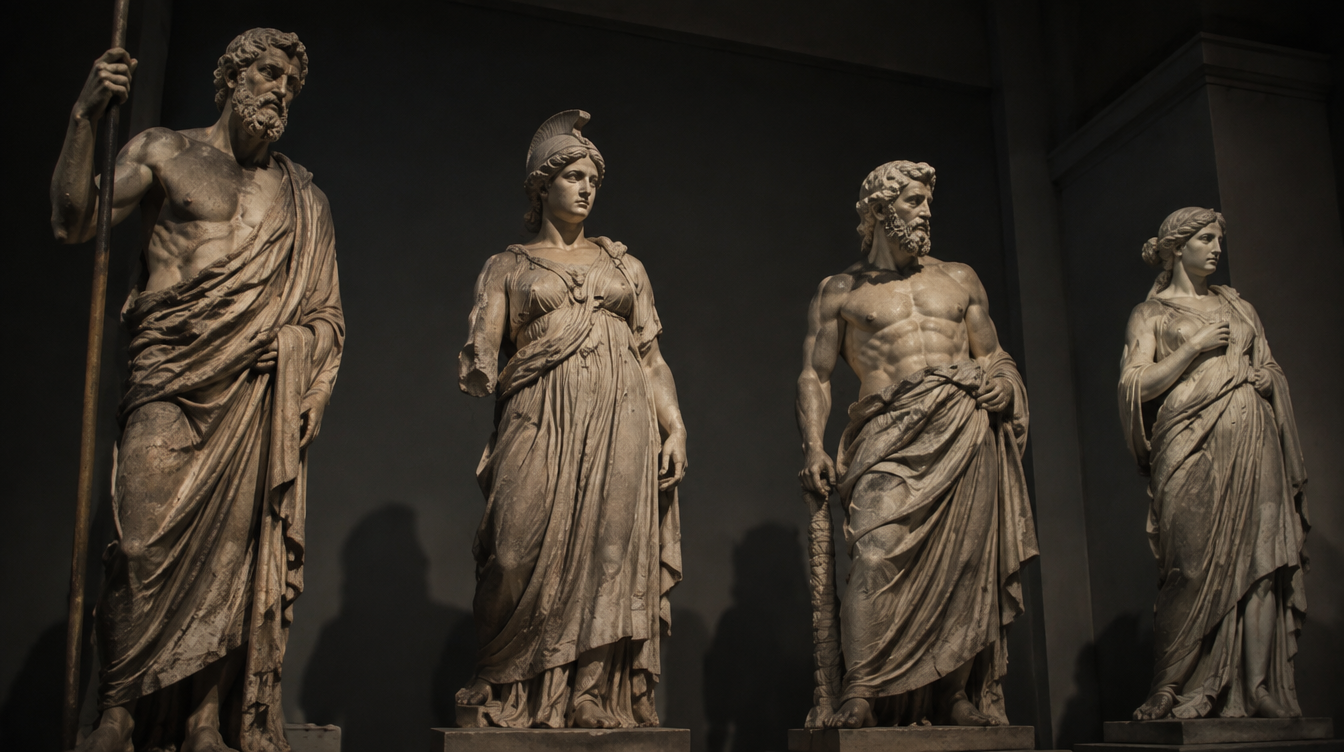
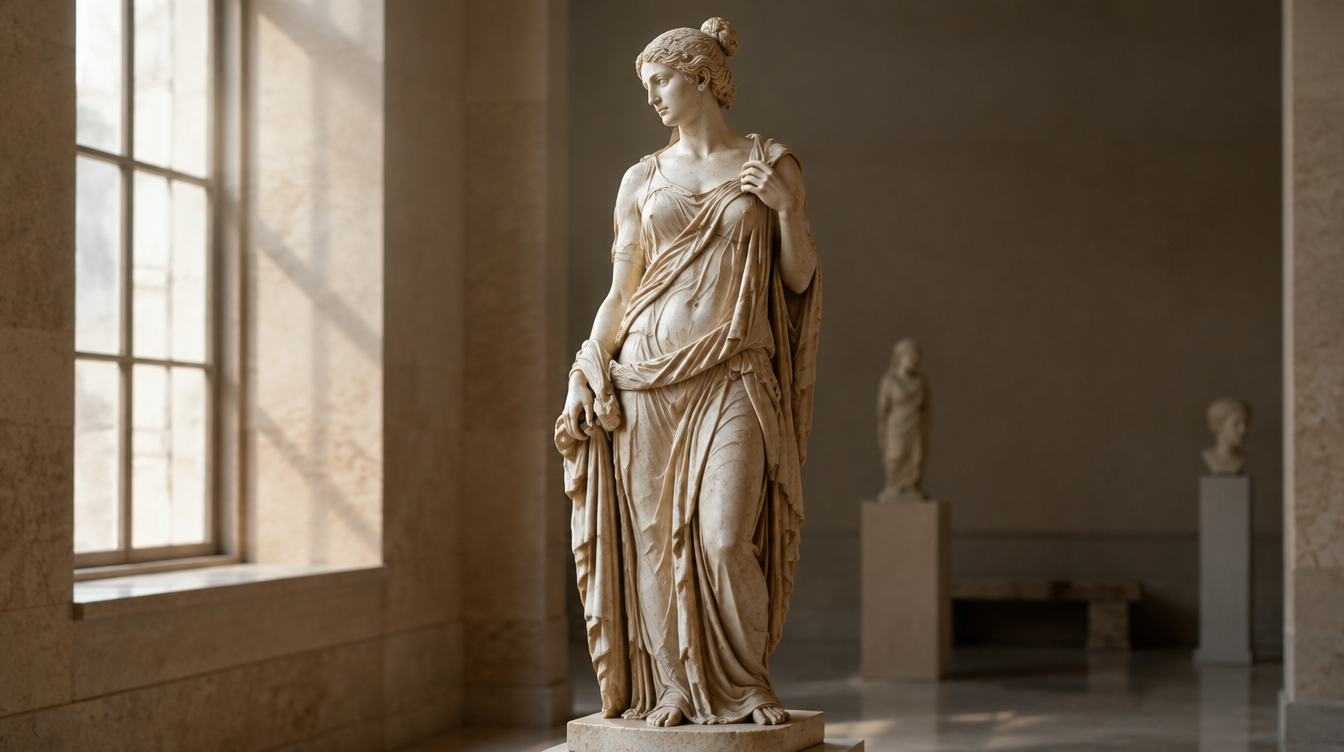
Few myths have inspired as many artists. Painters and sculptors loved the moment when Daphne’s fingers become leaves, because it shows the fragile border between a human body and a plant. Visitors to museums in Rome and London can see how very different artists solved the same problem: how to show someone changing shape in a single frozen moment.
How to Read This Myth Today
Modern readers often see Daphne and Apollo very differently from ancient ones. Here are three common readings.
Reading
What It Says
The traditional view
A story about the origin of the laurel and Apollo’s sacred tree
The moral view
A warning against pride, and a lesson that love cannot be forced
The modern view
A story about a woman who is pursued against her will and who is only saved by losing her human form
None of these cancels the others. The myth was a way for ancient people to explain a tree, but it was also a way to talk about desire, power and escape. If you enjoy comparing stories of transformation, you may also like our article on Medusa, victim or monster, which asks a similar question about who is really being punished, and the tale of Pan, whose pursuit of the nymph Syrinx ends with a similar metamorphosis.
🧭 Local Tip: Just outside Athens stands the Monastery of Daphni, an 11th-century Byzantine church with beautiful golden mosaics. It sits on the site of an older sanctuary of Apollo, and its name comes from the laurel trees that once grew there.
The Laurel in Your Everyday Language
The myth of Daphne and Apollo has left its mark on English and on many other languages. This list shows how far the laurel has traveled.
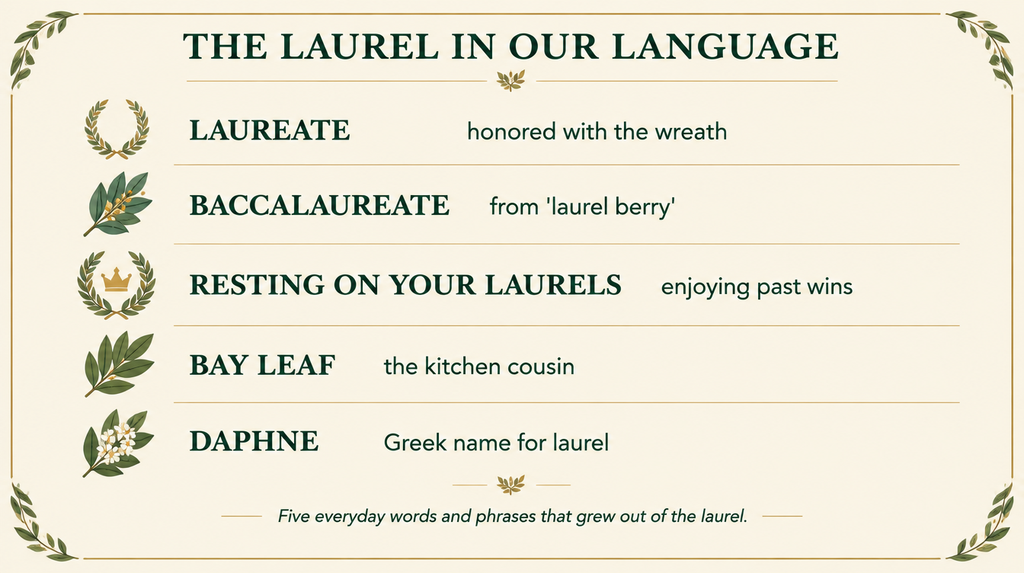
Laureate: a person honored with the laurel wreath, as in “poet laureate.”
Baccalaureate: from the Latin for “laurel berry,” a nod to the ancient habit of crowning scholars and victors.
Resting on your laurels: being content with past success and not trying anymore.
Bay leaf: the culinary leaf of the same tree, used in soups and stews around the world.
Daphne: the botanical name for a related genus of flowering shrubs.
From Myth to Kitchen: The Greek Bay Leaf
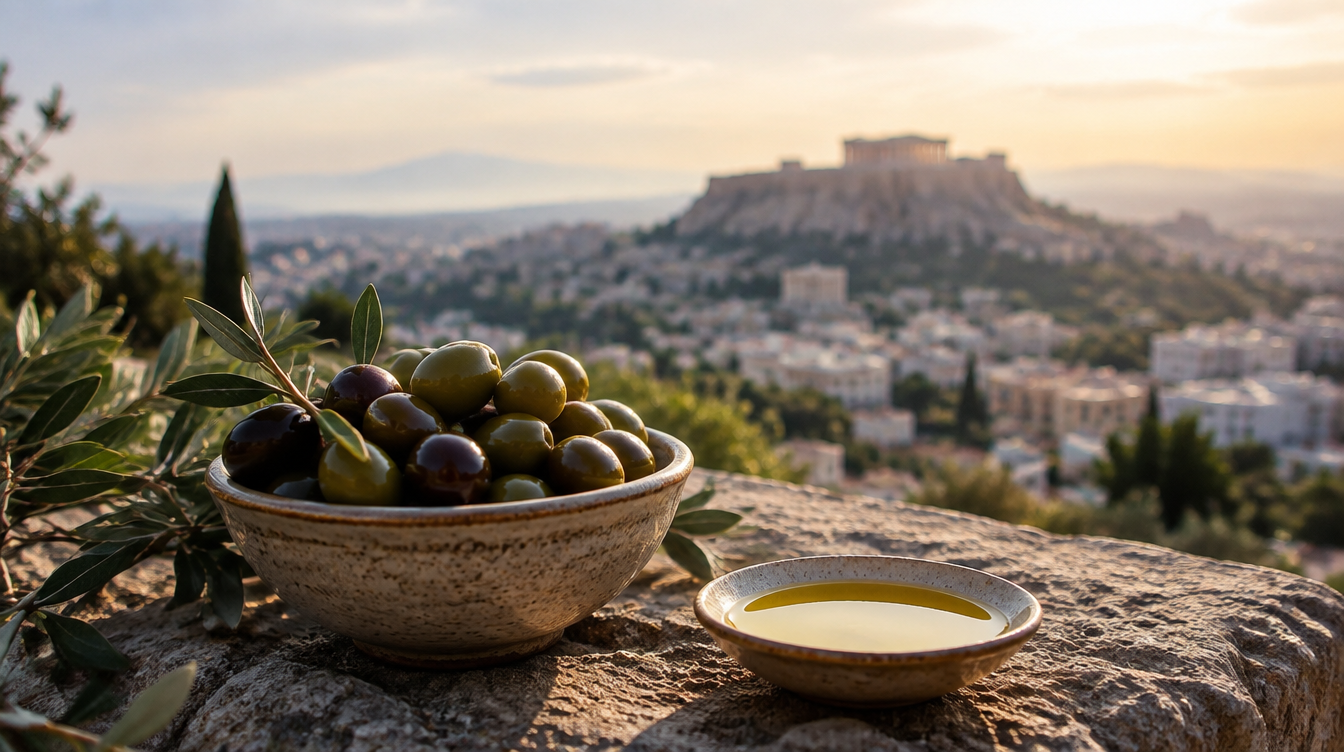
You do not need to visit a museum to meet Daphne. Open any Greek kitchen cupboard, and you will probably find dried bay leaves. Greek cooks drop a leaf or two into bean soup, tomato sauce, meat stews and fish broths, where it adds a gentle, woody fragrance.
That habit is part of the larger story of Mediterranean eating, which uses herbs and simple ingredients to make food that is both humble and rich. Our guide to the Mediterranean diet, the Greek way of eating shows how those flavors fit together. The next time you add a leaf to your pot, remember that you are cooking with a nymph.
🗣️ Say It Like a Local: “Dafnofyllo” (dahf-noh-FEE-loh) means “bay leaf” in Greek, and literally “laurel leaf.” Ask for it by that name at any market.
Rapid-Fire Questions About Daphne and Apollo
Was Daphne a goddess? She was a nymph, a lesser divine being tied to nature.
Why did Eros use two different arrows? One caused love and the other caused rejection of love. Together they created the impossible match.
Why is the laurel evergreen? Because Apollo promised that his tree would never lose its leaves, a sign of constant honor.
Did real athletes get laurel crowns? Yes, at the Pythian Games at Delphi. At Olympia, the winners were crowned with olive branches.
Did the Romans use laurel too? Very much so. Roman generals and emperors wore laurel wreaths as a sign of victory.
Is the story true? It is a myth, an ancient way of explaining a tree and exploring human feelings. For more context on the king of the gods whose family tangled in many such tales, see the truth behind Zeus.
A Quick Look at Transformation Myths
Greek myths are full of metamorphosis. Daphne becomes a tree, Syrinx becomes reeds, Narcissus becomes a flower and Arachne becomes a spider. Behind these stories is a simple idea: the Greeks saw nature as alive with old stories. A rustling tree, a whistling reed and a blooming flower might all be a person who once lived.
That belief helps explain why Greek landscapes feel so full of memory. Walk through a laurel grove in the early morning, and you might hear the leaves stir. The old stories say that is Daphne breathing.
Why the Story Still Matters
The myth of Daphne and Apollo survives because it works on many levels. It explains a tree, honors a god and warns about pride. It shows how a symbol can last for three thousand years, from ancient games to modern graduations. And it keeps asking a question that every age answers differently: what does it mean to be pursued, and what does it cost to be free?
Whether you read it as a myth of origin, a moral tale or a modern cautionary one, you will find something new each time. And the next time you see a laurel wreath, you will know exactly where it came from.
Illustrations in this article were created using AI in a photorealistic style.
Want to hold a piece of this history in your hands? Visit our official shop for digital albums, CDs, and restored vinyl records celebrating the golden era of rebetiko.