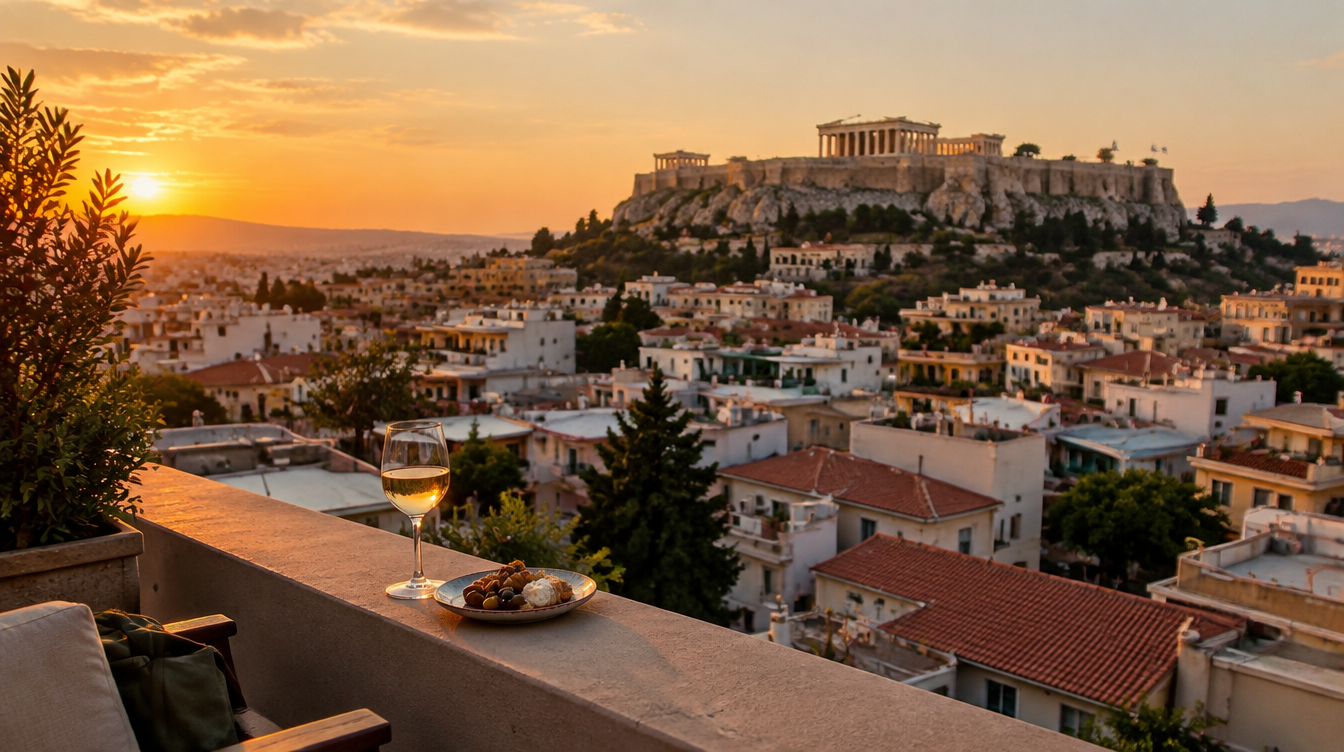
Most people land in Athens, get overwhelmed by the traffic and the heat, rush through the Acropolis in ninety minutes, and leave thinking they’ve “done” the city, checklist complete, box ticked. That’s a shame, honestly, because Athens rewards people who slow down way more than it rewards people racing through a checklist, and a rushed trip usually leaves you with a worse impression of a genuinely great city than it deserves.
This is the first-timer’s guide to Athens I wish someone had handed me before my first trip. Where to actually stay, when to hit the big sights so you’re not melting in a crowd, which neighborhoods deserve a lazy afternoon, and the handful of mistakes almost every first-timer makes on their first pass through the city.
Table of Contents
Quick Orientation Before You Book Anything
| Question | Short Answer |
|---|---|
| Best area to stay? | Plaka or Koukaki, both walkable to the Acropolis |
| Best time to visit the Acropolis? | Right at opening, or the last two hours before closing |
| How many days minimum? | 3 full days, 4 if you want to breathe |
| Main way to get around? | Walking and the metro, both genuinely easy |
| Biggest first-timer mistake? | Trying to see everything in one rushed day |
Where to Stay So You’re Not Miles From Everything
Athens sprawls, and picking the wrong neighborhood turns every single day into a logistics puzzle, adding an hour of transit time to what should be a quick fifteen-minute stroll. Two areas consistently work best for first-timers.
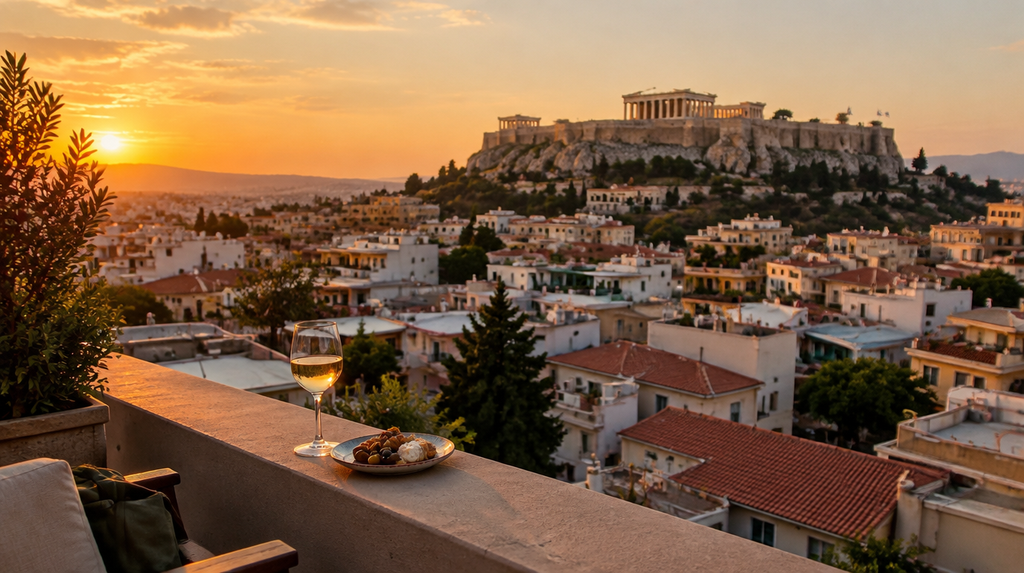
Plaka, the old neighborhood tucked right beneath the Acropolis, puts you within walking distance of basically everything historic, from the ruins themselves to a dozen small museums you’ll stumble into by accident. Narrow lanes, neoclassical buildings, a genuinely romantic feel in the evening once the day-trip crowds thin out and the lanes empty into something closer to a quiet village than a capital city. We’ve actually gone deep on this neighborhood before in our guide to Plaka, the soul of Athens, if you want the full picture.
Koukaki, just south of the Acropolis, is quieter, more residential, and noticeably cheaper, while still being an easy fifteen-minute walk to the major sites and the metro line that connects everywhere else. It’s become the go-to pick for travelers who want charm without the tourist-zone prices, and it’s where a lot of Athenians themselves recommend friends stay when visiting from abroad.
🧭 Local Tip: Avoid booking anything near Omonia Square unless you’re on an extremely tight budget. It’s central and cheap, but it’s also one of the rougher, less pleasant parts of the city center after dark, and the savings usually aren’t worth the tradeoff for a first visit.
The Acropolis: Timing Is Genuinely Everything
Here’s the single biggest lesson from every Athens trip: the Acropolis at 11am in July is a completely different experience from the Acropolis at 8am. We’re talking crushing heat, elbow-to-elbow crowds, and a line that snakes halfway down the hill before the gates even fully open for the day.
Show up right when it opens, or go in the final two hours before closing, and you get shorter lines, softer light for photos, and noticeably more breathing room to actually take the place in without a sea of raised phones in every frame. Buy tickets online in advance, always, since the ticket line alone can eat an hour of your morning otherwise. The Acropolis isn’t a single building either, worth remembering, it’s an entire hilltop complex, and the Parthenon, the one everyone pictures, is just the most famous of several structures up there, including the Erechtheion with its famous carved female columns standing in for actual pillars.
Neighborhoods Worth an Unhurried Afternoon
Beyond the must-see checklist, a few neighborhoods reward simply wandering around without any real plan at all, and honestly, this unstructured wandering is where a lot of the best moments from any first-timer’s guide to Athens tend to come from.
- Monastiraki: flea market energy, street food, and a genuinely great flea market on Sundays that spills out across several surrounding streets
- Psiri: Athens’s nightlife district, quiet by day, loud and fun after dark, packed with small bars and live music venues tucked into old buildings
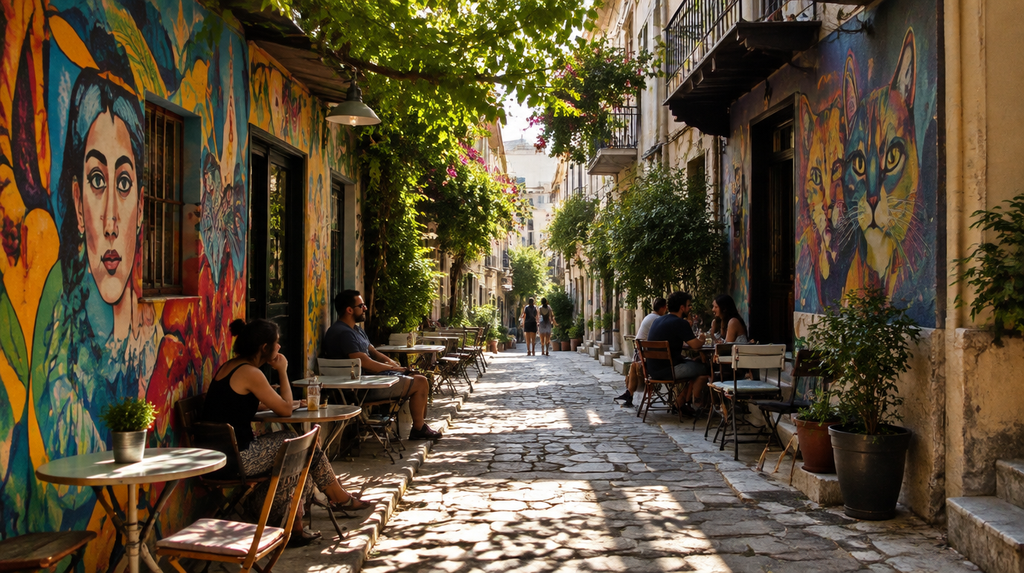
- Exarchia: the artsy, slightly rebellious neighborhood, full of street art and independent cafes, historically known as a center of student and activist culture
- Kolonaki: upscale, polished, good for boutique shopping and people-watching from a cafe terrace, sitting at the base of Lycabettus Hill
None of these need a full day. An hour or two wandering each, ideally without a rigid itinerary, tends to leave a better impression than checking a box, and it’s exactly the kind of slower pace that separates a good first-timer’s guide to Athens from a rushed checklist.
Best Time of Year to Actually Visit
Athens has a real “good season” and a real “rough season,” and timing your trip right makes a bigger difference than almost anything else on this list, arguably more than any single choice about neighborhoods or itinerary.
- April to early June: Warm, green, comfortable, and before the worst of the summer crowds arrive, with wildflowers still blooming across the ancient sites
- September to mid-October: Similar upside, plus slightly thinner crowds since school is back in session for most of Europe, and the sea stays warm enough for a swim
- July and August: Genuinely brutal heat, often well above 35°C (95°F), combined with peak tourist crowds at every major site and long lines that start before the gates even open
- November to March: Mild by most standards, quiet, cheap, though a few island day trips become less practical due to reduced ferry schedules
If your dates are flexible at all, shoulder season is the single easiest upgrade you can make to a first Athens trip, no extra planning required, just a different month.
Budget Tips That Actually Matter
Athens is one of the more affordable major European capitals, but a few habits stretch your money noticeably further without sacrificing much comfort along the way.
- Lunch specials at neighborhood tavernas run considerably cheaper than the same menu at dinner, often a genuine bargain for a full plate
- The Acropolis combo ticket covers several major sites at once and works out cheaper than paying separately if you’re planning to hit more than two of the included locations
- Free entry days exist at many archaeological sites and museums on the first Sunday of the month during off-peak season, worth checking before you book anything
- Tap water in Athens is safe to drink too, which sounds minor but saves a surprising amount of money over several days compared to buying bottled water constantly in the summer heat
Food You Actually Need to Try
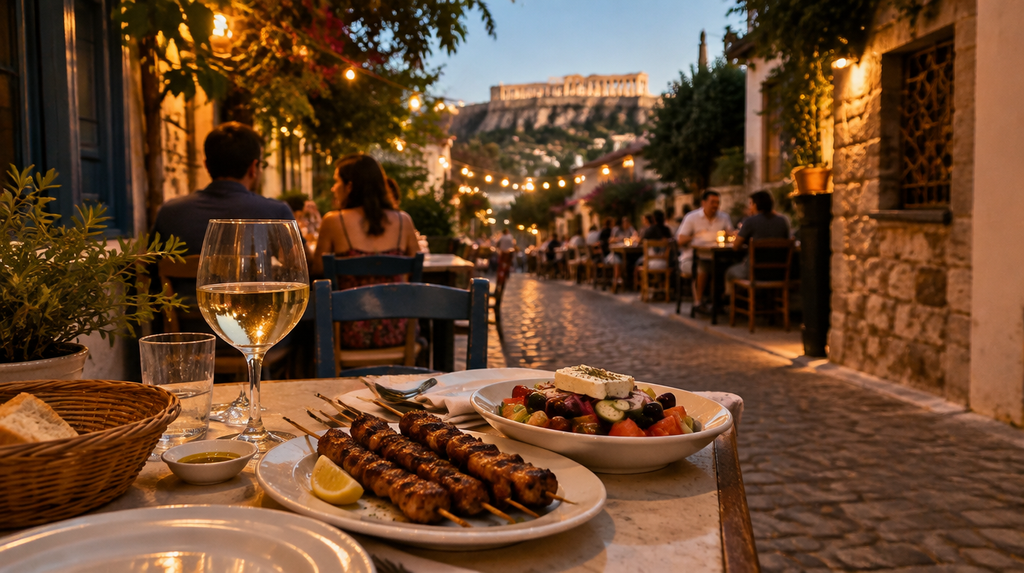
Skip the tourist-trap tavernas lining the main squares with laminated menus and aggressive hosts waving you inside. Walk two streets further and the food gets noticeably better and cheaper, almost every single time, which is one of the more reliable rules of thumb in Athens dining.
- Souvlaki from a no-frills counter spot, not a sit-down restaurant, this is genuinely how locals eat it, standing at a counter or walking down the street with it wrapped in paper
- Bougatsa, a custard-filled pastry, for breakfast from a proper bakery, ideally still warm
- A long, unhurried dinner built around several small shared plates rather than one entree each, the way most Greek families actually eat when they go out
- Fresh fruit and produce from a neighborhood laiki, the weekly open-air farmers market that pops up in a different part of the city each day
⚠️ Common Mistake: Restaurants with a host physically standing outside trying to wave you in are almost never worth it. Locals just don’t eat at those spots, and the prices usually reflect the tourist markup rather than the quality of what’s actually coming out of the kitchen.
Getting Around Without Losing Your Mind
Central Athens is genuinely walkable, more walkable than most first-timers expect, with most of the historic core and major neighborhoods connected by flat, pedestrian-friendly streets. For anything farther out, the metro is clean, cheap, and easy to figure out even with zero Greek, and it doubles as an unofficial archaeological museum in places, since several stations display ancient artifacts uncovered during construction.
A few practical notes worth keeping in your back pocket:
- The metro runs directly from the airport into the city center, no taxi negotiation required on arrival, and the ride takes roughly forty minutes
- Taxis are affordable by most international standards, but confirm the meter is running before you settle in, and agree on the fare upfront for any longer trips outside the city
- Traffic is genuinely chaotic for drivers, so renting a car for city sightseeing is more headache than it’s worth; save the rental for a day trip outside the city center instead
Day Trips Worth the Extra Effort
If your schedule allows an extra day or two, a couple of nearby options are absolutely worth the trip.
Cape Sounio, about an hour southeast of the city, has the dramatic clifftop Temple of Poseidon, especially striking at sunset, with waves crashing against the rocks directly below the ancient columns. The port town of Piraeus, meanwhile, isn’t just Athens’s ferry gateway to the islands, it has its own layered history worth a few hours, which we cover in our piece on Piraeus’s golden age.
Delphi is a further reach, about two and a half hours each way, but for anyone with an extra day and an interest in ancient mythology, the mountainside sanctuary once home to the most famous oracle in the ancient world is genuinely worth the drive, with views over the valley below that are worth the trip on their own.
🗣️ Say It Like a Local: “Efharisto” (eff-ha-ree-STOH) means thank you, and using it, even badly pronounced, goes a genuinely long way with shopkeepers and taverna owners, who tend to warm up noticeably once they see you making the effort.
The Mistakes Almost Every First-Timer Makes
A few patterns show up again and again with visitors on their first Athens trip, the kind of small missteps a proper first-timer’s guide to Athens should flag before you make them yourself.
- Trying to see everything in one day. The Acropolis, the Acropolis Museum, Plaka, and Monastiraki alone is a full, exhausting day for most people. Trying to cram in more just means rushing through all of it and remembering none of it clearly afterward.
- Wearing the wrong shoes. Ancient stone paths and marble steps are slippery and uneven, especially the famous marble around the Acropolis itself, polished smooth by millions of feet over the centuries and by the countless rainstorms that pass through each winter. Comfortable, grippy walking shoes matter more here than almost anywhere else in Europe.
- Skipping the Acropolis Museum. People assume seeing the ruins themselves is enough, but the museum, right at the base of the hill, puts everything into context in a way the site alone can’t, including original sculptures too fragile and weather-worn to leave exposed outdoors any longer.
- Underestimating the heat. Summer in Athens gets brutally hot, and the ancient sites offer almost no shade anywhere along the marble paths. Mornings and evenings aren’t just nicer, they’re often the only comfortable option, especially for anyone visiting between June and August.
- Not carrying cash. Plenty of smaller tavernas, kiosks, and market stalls still run cash-only, even in a city as modern as Athens, so a pocket of euros saves an awkward moment more often than you’d expect, especially early in the morning before card machines get pulled out.
For more on the mythology behind the city’s most famous landmark, our piece on Athena vs Poseidon and the naming of Athens explains the legend tied directly to the hill you’ll be climbing on day one. For further background on the site itself, Wikipedia’s entry on the Acropolis of Athens offers detailed historical context.
Illustrations in this article were created using AI in a photorealistic style.
Want to hold a piece of this history in your hands? Visit our official shop for digital albums, CDs, and restored vinyl records celebrating the golden era of rebetiko.