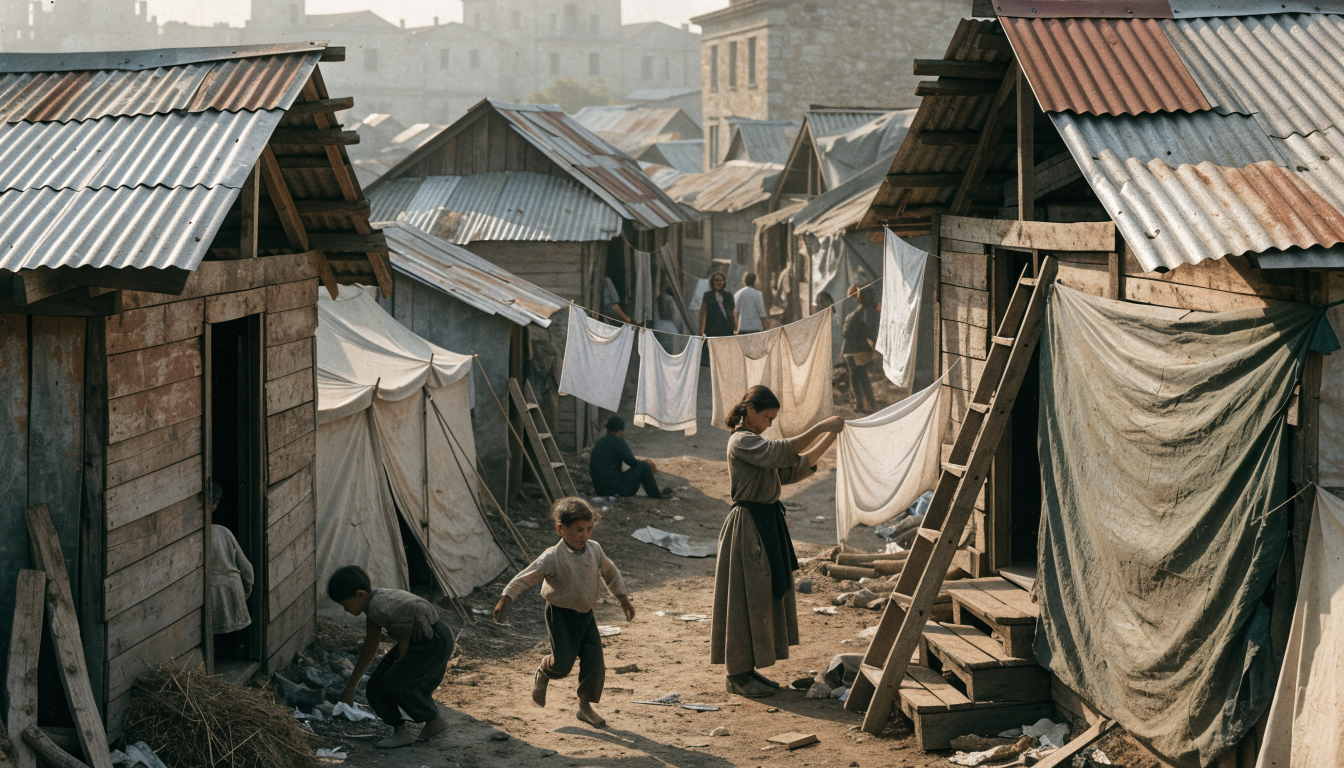
There is a date that every rebetiko historian eventually returns to, whether they intend to or not: 1922. It wasn’t a year of songs or recordings or famous performances. It was a year of ships, of families carrying whatever they could hold, of a coastline disappearing behind them for the last time. To understand rebetiko, you have to sit with this year first — because without it, the music simply wouldn’t exist in the form we know today.
A World That Disappeared Almost Overnight
For centuries, communities of ethnic Greeks had lived along the coast of Asia Minor — in Smyrna, in the towns and villages scattered across what is now western Turkey — often for longer than Greece itself had existed as a modern nation. These weren’t recent arrivals. They were rooted communities with their own dialects, their own musical traditions, their own understanding of what home meant.
The Greco-Turkish War ended that world in a matter of months. As the conflict collapsed into catastrophic defeat for Greece in 1922, panic spread through these coastal communities with terrifying speed. Families who had spent generations building lives in Asia Minor suddenly found themselves choosing between staying and risking everything, or fleeing with almost nothing.
Most chose to flee. The population exchange between Greece and Turkey that followed — formalized shortly after, though the exodus itself had already begun in chaos — displaced well over a million people. It remains one of the largest forced population movements in modern European history.
Arriving to a Country That Wasn’t Ready
Greece in 1922 was in no position to absorb this many people. The country was economically exhausted, physically small, and utterly unprepared for a population increase of this scale arriving within months rather than years. Refugees stepped off overcrowded ships into a country that offered them citizenship, but very little else.
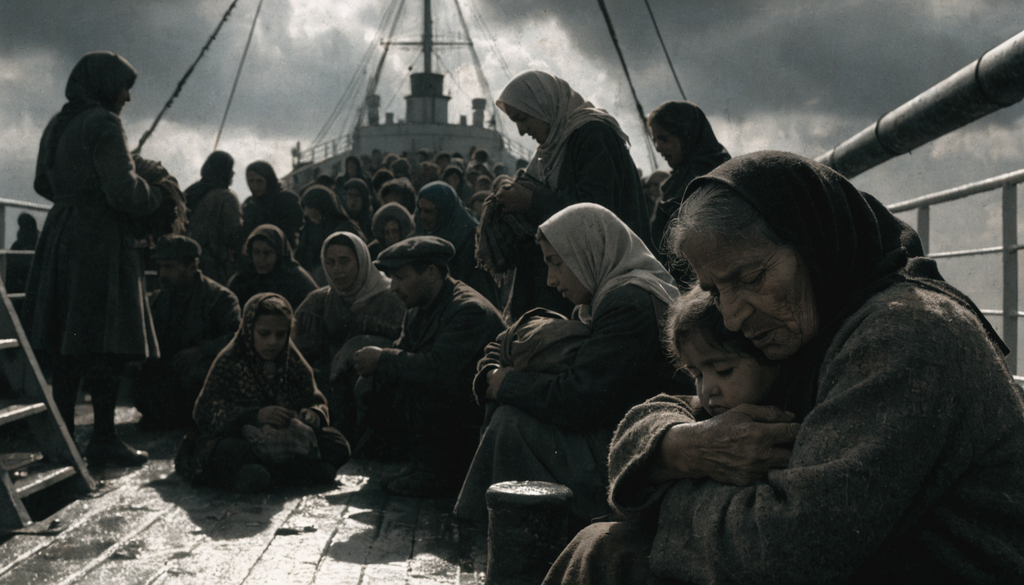
Piraeus, with its harbor and its endless demand for cheap labor, absorbed an enormous share of these new arrivals. We’ve written before about how neighborhoods like Drapetsona and Kaminia transformed almost overnight under this pressure — but it’s worth sitting, just for a moment, with what that transformation actually meant for the people living through it.
Imagine arriving somewhere with your entire life reduced to a single bag. Imagine finding shelter in whatever structure was still standing — a warehouse, a tent, a corner of someone else’s overcrowded home. Imagine doing this not as a temporary hardship, but as the beginning of the rest of your life.
What They Carried That Couldn’t Be Taken From Them
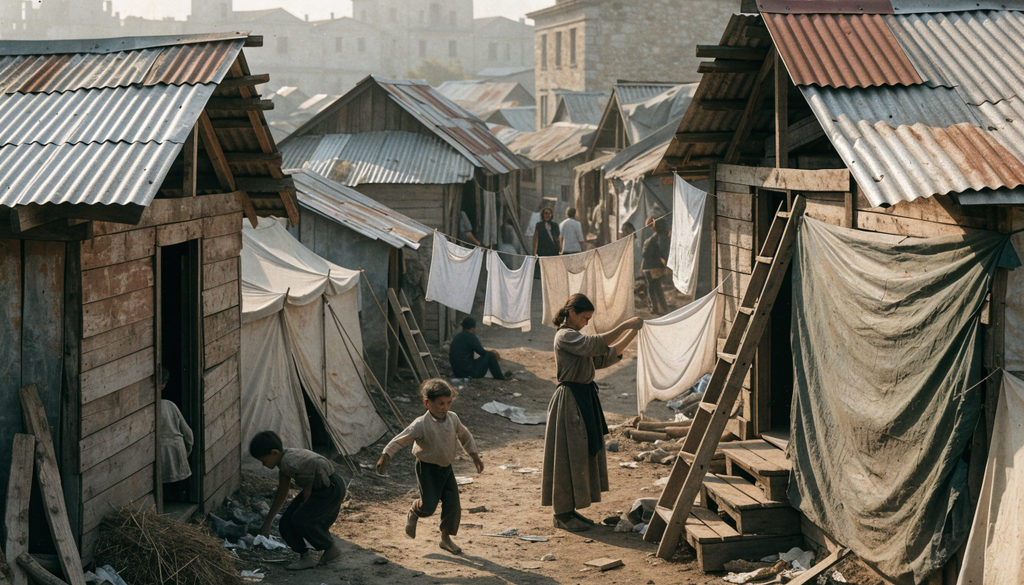
Here is where the story turns, and where rebetiko’s roots become impossible to separate from this chapter of history. What these refugees couldn’t pack into a single bag, they carried anyway — in memory, in habit, in the way they sang.
The musical culture of Smyrna and the broader Asia Minor coast was, by most historical accounts, more musically sophisticated and cosmopolitan than much of mainland Greek folk tradition at the time. The café aman style — with its intricate vocal ornamentation, its Eastern modal scales, its instruments like the violin, oud, and kanun — had flourished for generations in port cities that sat at the crossroads of Greek, Ottoman, Armenian, and Levantine culture.
When refugee musicians arrived in Piraeus with nothing but this musical inheritance, they didn’t set it aside to adapt to their new circumstances. They poured it directly into their new reality — grief, displacement, poverty, and all. That fusion, refined against a backdrop of genuine hardship, is what gave early rebetiko its distinctive emotional and melodic depth.
Songs as a Way of Surviving Displacement
It would be inaccurate to say the refugees “invented” rebetiko single-handedly — the genre also drew from existing Greek folk and underworld musical traditions already present in Piraeus. But it would be just as inaccurate to underestimate how central their experience was to the genre’s emotional core.
Consider what these songs were actually about, in their earliest and rawest form:
- The ache of a homeland that could never be returned to
- The disorientation of being legally “Greek” while being treated, socially, as an outsider
- The grinding poverty of starting over with nothing, in neighborhoods barely equipped to support the people already living there
- The small, defiant joys — a shared drink, a late-night song, a moment of connection — that made survival bearable
These weren’t abstract artistic themes. They were the literal daily experience of the people singing them.
A Painful Integration That Took Decades
It’s worth being honest about something uncomfortable: many refugees weren’t warmly welcomed by the Greek society they arrived into. Despite sharing ethnicity and religion, cultural and dialectal differences were significant enough that refugees often faced open discrimination, sometimes labeled with slurs referencing their Anatolian origins.
This social rejection likely deepened rebetiko’s outsider identity even further. The genre wasn’t just associated with poverty and the criminal underworld — it also carried the stigma of displacement itself, sung largely by people the rest of the country wasn’t sure how to categorize.
It took decades — arguably until well after World War II — for Greek society to fully absorb these communities and, not coincidentally, to begin recognizing the cultural value of what they had brought with them.
Why This History Deserves to Be Remembered Clearly
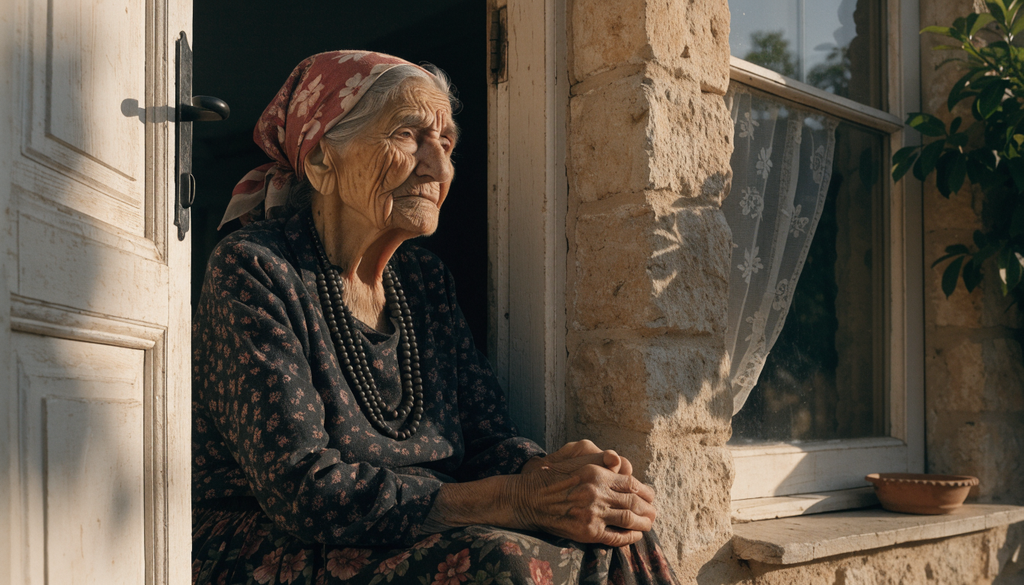
It’s tempting, looking back a century later, to romanticize this period — to focus only on the beautiful music that emerged and skip past the trauma that produced it. But the honest version of this story matters more than the comfortable one.
The Asia Minor refugees of 1922 didn’t set out to create a musical legacy. They were trying to survive an experience most of us, thankfully, will never have to face — losing not just a home, but an entire world, almost overnight. That they managed, in the middle of that loss, to create something as enduring and emotionally honest as rebetiko says something remarkable about human resilience.
Every time a bouzouki note carries that particular ache — somewhere between sorrow and defiance — it’s worth remembering exactly where that sound came from.

Illustrations in this article were created using AI in a photorealistic style.
Want to hold a piece of this history in your hands? Visit our official shop for digital albums, CDs, and restored vinyl records celebrating the golden era of rebetiko.