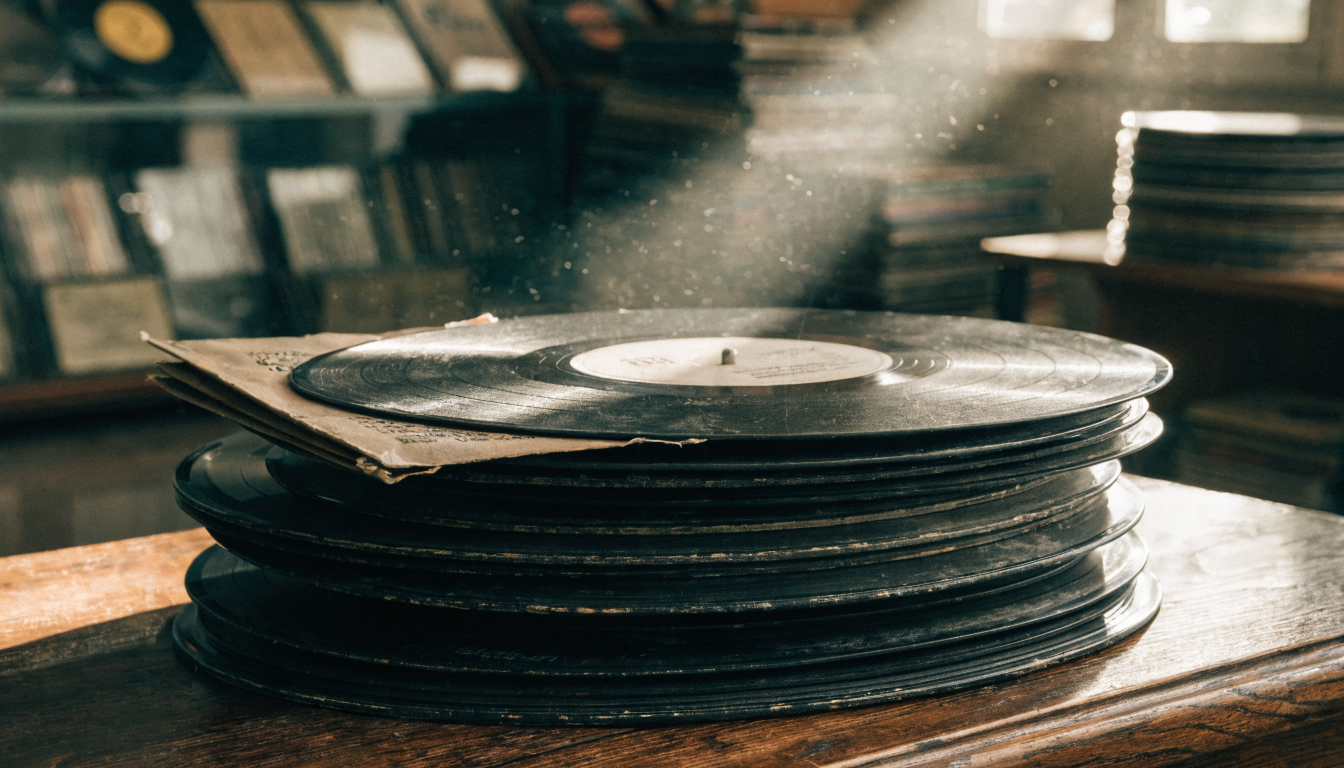
Somewhere in an attic in Athens, or a basement in Melbourne, or a closet in a Greek-American household in Chicago, there’s a good chance a rebetiko record has been sitting quietly for decades — scratched, dusty, and easy to forget about. And yet, against every reasonable expectation for a genre once actively suppressed and later simply unfashionable, that record’s music didn’t die with the format it was pressed on. It found its way onto streaming platforms, into festival playlists, and into the ears of people who weren’t even born when the vinyl was cut. This is the story of how that happened.
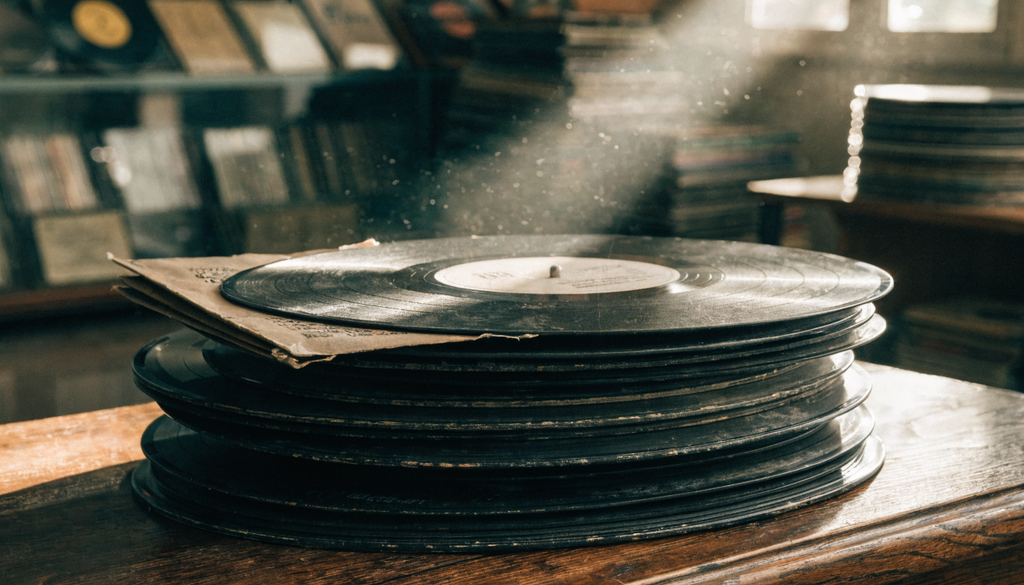
Rebetiko Vinyl: A Format Built to Be Forgotten
Early rebetiko recordings were never meant to last. Pressed cheaply, distributed informally, and played on equipment that wore records down fast, these early 78 RPM discs were treated as disposable entertainment, not cultural artifacts. Nobody involved — not the musicians, not the small labels recording them, not the audiences buying them in tavernas and market stalls — imagined future generations would care.
Add to that decades of official suppression, changing musical fashions, and the simple passage of time, and you have a genre that, by the mid-20th century, seemed genuinely at risk of vanishing from collective memory. Many recordings were lost outright. Others survived purely by accident, tucked away by people who had no idea they were preserving something historically significant.
The Quiet Work of the Collectors
Long before streaming existed, a small, dedicated community of collectors kept rebetiko alive almost single-handedly. These weren’t professional archivists in most cases — they were enthusiasts, often musicians themselves, who understood that if nobody actively sought out and preserved these fragile recordings, an entire chapter of Greek cultural history would simply disappear.
This preservation work involved:
- Tracking down surviving 78 RPM records, often through personal networks, flea markets, and estate sales rather than formal channels
- Carefully transferring fragile analog recordings to newer formats before the originals degraded beyond recovery
- Documenting context — who performed each song, when, and under what circumstances — information that existed nowhere else
- Sharing knowledge informally, through small community gatherings long before the internet made this kind of connection easy
Without this unglamorous, often unpaid labor, much of what we now know about early rebetiko simply wouldn’t exist. The genre’s survival into the digital age owes an enormous, largely uncredited debt to these collectors.

From Reissue Culture to Digital Archives
By the latter half of the 20th century, as rebetiko began gaining academic and cultural recognition, dedicated reissue labels started emerging — small operations focused specifically on remastering and re-releasing historical rebetiko recordings for a new generation of listeners. This mattered enormously, because it moved preservation from scattered private collections into something more permanent and accessible.
Around the same period, Greek cultural institutions and universities began taking a more serious interest in cataloguing and digitizing rebetiko recordings, treating them with the same academic rigor previously reserved for classical music archives. This shift — from hobbyist preservation to institutional recognition — mirrors the genre’s own broader journey from social stigma to cultural heritage status.
| Era | How Rebetiko Was Preserved |
|---|---|
| 1930s–1950s | Original 78 RPM pressings, informally distributed |
| 1950s–1980s | Private collectors preserving and transferring fragile recordings |
| 1980s–2000s | Dedicated reissue labels remastering historical recordings |
| 2000s–2010s | Academic and institutional digital archiving projects |
| Today | Global streaming platforms, algorithmic discovery, digitized archives |
How Streaming Accidentally Rescued a Forgotten Genre
Here’s the part of the story that even longtime rebetiko enthusiasts sometimes find surprising: streaming platforms, built for entirely different purposes, ended up doing something remarkable for a genre this specific. Once digitized recordings existed in sufficient quantity, algorithmic recommendation systems began doing what no single collector or label ever could — introducing rebetiko to listeners who had no prior connection to Greek culture at all.
A listener exploring Mediterranean folk music, or Eastern modal scales, or simply “music that sounds like old film soundtracks,” might stumble onto a decades-old rebetiko recording with zero cultural context — and find themselves genuinely moved by it anyway. This kind of accidental discovery, impossible in the era of physical records confined to specific regional markets, has quietly built rebetiko a global listenership its original musicians could never have imagined.
What Gets Lost in Translation (And What Doesn’t)
It would be dishonest to pretend nothing is lost when a 1930s taverna recording becomes a digital file streamed through headphones on the other side of the world. The scratchy warmth of analog sound, the physical ritual of handling a record, the specific cultural context that gave these songs their original meaning — all of that inevitably thins out somewhat in translation to a digital format.
And yet, something essential does survive the journey. The emotional rawness in a singer’s voice, the melancholic pull of a well-played zeibekiko, the sense of a life fully lived and fully felt — these qualities seem to transmit regardless of format, regardless of whether the listener understands a word of Greek. It’s a reminder that certain kinds of honesty in art don’t actually need translation.
Why This Story Matters as Much as the Music Itself
- It shows that cultural preservation often depends on unglamorous, unpaid effort long before institutions take notice
- It demonstrates how modern technology, despite its flaws, can genuinely rescue and expand access to endangered cultural heritage
- It proves that rebetiko’s emotional power was never dependent on its original format — vinyl, digital file, or otherwise
The next time you stream a rebetiko track without a second thought, it’s worth remembering the chain of unlikely events behind that convenience: a scratched record someone refused to throw away, a collector who spent years tracking down forgotten recordings, and a digital infrastructure nobody involved in the genre’s early years could have possibly imagined.

Illustrations in this article were created using AI in a photorealistic style.
Want to hold a piece of this history in your hands? Visit our official shop for digital albums, CDs, and restored vinyl records celebrating the golden era of rebetiko.