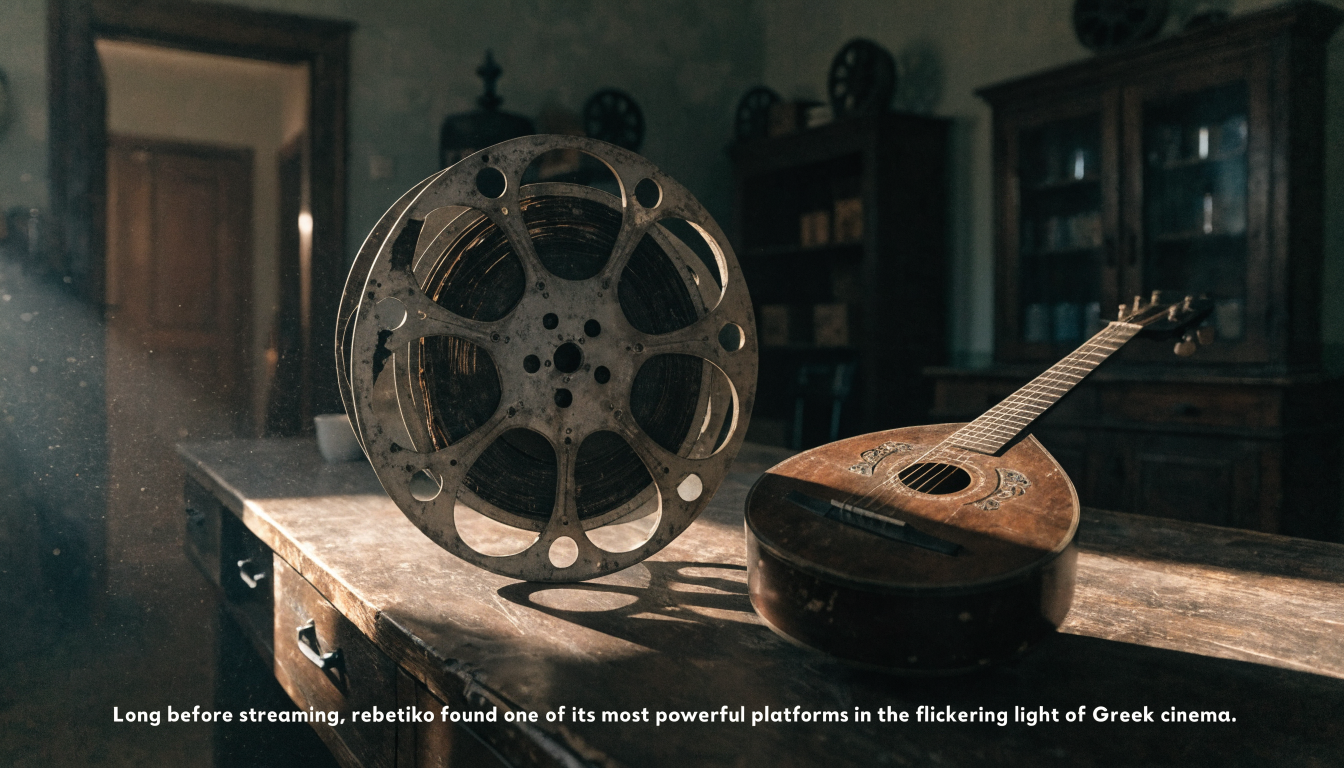
There’s something almost poetic about a genre once confiscated by police eventually becoming the emotional backbone of internationally celebrated films. Rebetiko’s relationship with cinema spans decades, continents, and a dramatic reversal of cultural fortune — from a soundtrack authorities tried to erase, to one of the most recognizable musical signatures of Greek film worldwide. Here’s how that transformation actually happened.
A Genre the Early Film Industry Wanted Nothing To Do With
It’s worth remembering just how unlikely this entire story is. During rebetiko’s earliest decades, official Greek institutions — including the emerging film industry of the 1930s and 1940s — largely avoided the genre entirely. This was, after all, the same music actively censored by the Metaxas dictatorship, associated in the public imagination with poverty, hashish dens, and social disrepute. Respectable cinema, chasing respectable audiences, had little interest in attaching itself to that reputation.
For years, if rebetiko appeared in film at all, it was typically as background texture signaling a disreputable setting — a taverna scene meant to convey danger or lower-class life, rather than a genuine artistic statement. The music was present, but rarely honored.
This treatment reflected broader anxieties within Greek cultural institutions of the period. Cinema, still establishing itself as a legitimate national art form in the eyes of both domestic critics and international audiences, had every incentive to distance itself from anything associated with poverty, criminality, or social disrepute. Rebetiko, still carrying the stigma of its tekedes origins and its recent history of active government censorship, fit that unwanted category almost perfectly. Filmmakers who did include the music often did so cautiously, framing it explicitly as something foreign to respectable characters — heard drifting from a disreputable establishment a protagonist would never actually enter.
The Postwar Shift Toward Cultural Legitimacy
That began changing gradually in the postwar decades, running parallel to rebetiko’s broader journey toward mainstream acceptance that we’ve traced throughout this blog. As composers like Vassilis Tsitsanis brought increasing sophistication to the genre, and as Greek cinema itself matured into a genuine national industry through companies like Finos Film, the wall between “respectable” Greek entertainment and rebetiko’s raw emotional world started to erode.
Greek films of the 1950s and 1960s increasingly incorporated bouzouki-driven music not as shameful background noise, but as a genuine signifier of Greek identity and authenticity — a shift that mirrored, and arguably helped accelerate, the genre’s broader cultural rehabilitation happening across Greek society at the time.
The Film That Introduced Rebetiko to the World
No single film did more to introduce rebetiko’s sound to international audiences than Zorba the Greek in 1964. Directed by Michael Cacoyannis and based on Nikos Kazantzakis’s novel, the film became a global sensation — and its Mikis Theodorakis-composed, bouzouki-driven score became inseparable from the film’s identity, eventually recognized as one of the most iconic pieces of Greek music anywhere in the world.
What makes this moment so significant isn’t just international exposure, though that mattered enormously. It’s that Theodorakis, a classically trained composer with serious artistic credibility, chose to build his score around rebetiko’s instrumentation and emotional sensibility rather than treating it as folk curiosity to be sampled from a distance. This lent the genre an unmistakable stamp of high artistic legitimacy at exactly the moment Greek cinema was finding its own international voice.
Audiences who had never heard of rebetiko, who couldn’t have located Piraeus on a map, walked out of theaters humming melodies rooted directly in this once-suppressed musical tradition. That’s an extraordinary transformation for any art form to undergo within a single generation.
The film’s cultural ripple effects went well beyond the soundtrack itself. The now-famous “sirtaki” dance, forever associated with Greek celebration in the popular imagination, wasn’t actually an ancient folk tradition at all — it was choreographed specifically for the film, blending elements of several traditional dance styles into something new and instantly memorable. Within a few years, this cinema-born dance had become so thoroughly adopted by Greek tourism and hospitality culture that most international visitors assumed it had existed for centuries. Rebetiko’s cinematic influence, in other words, didn’t just introduce the music — it helped invent new cultural rituals built on top of it.
This kind of feedback loop between cinema and lived culture is worth sitting with. A film score built on genuine rebetiko sensibility ended up reshaping how Greeks themselves celebrated, danced, and presented their culture to the wider world, decades after the genre’s own musicians had been treated as social outcasts for playing that same music in Piraeus tavernas.
Telling Rebetiko’s Own Story On Screen
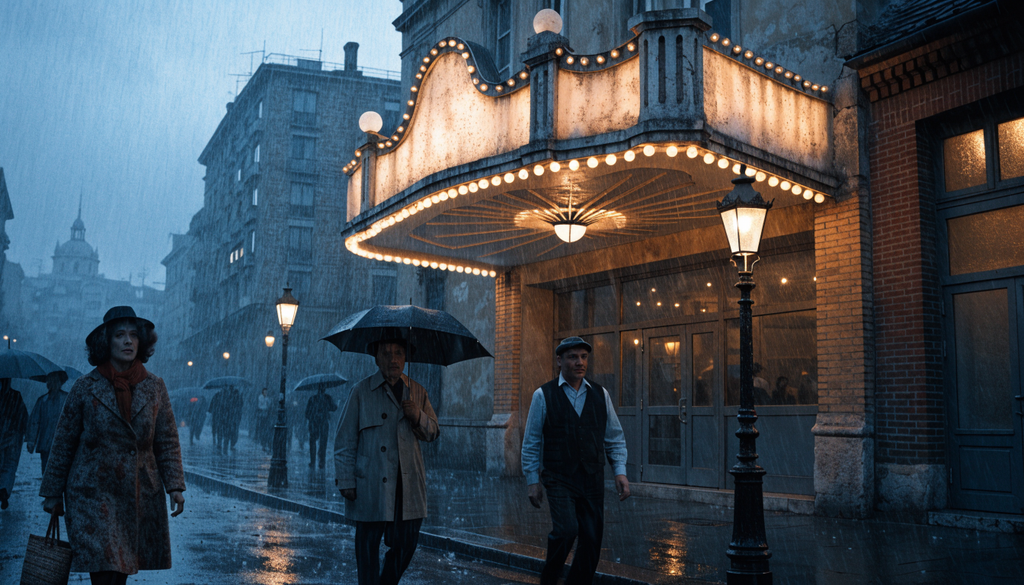
Perhaps even more significant than films that simply used rebetiko as a soundtrack was the emergence of films that told the genre’s own history directly. The clearest example arrived in 1983, when director Costas Ferris released a film titled simply Rebetiko — a dramatized account loosely inspired by the lives of several real rebetiko-era women singers, tracing a fictional heroine’s journey from the Asia Minor exodus we’ve written about before, through the smoky tavernas of Piraeus, and into the genre’s eventual cultural vindication.
The film was a genuine critical achievement, earning recognition at the Berlin International Film Festival and multiple Greek State Film Awards. Its significance for rebetiko’s cultural standing is hard to overstate: this wasn’t cinema borrowing rebetiko’s sound for atmosphere. This was cinema treating rebetiko’s history as worthy of serious dramatic and artistic attention in its own right — a milestone in the genre finally being recognized not just as music, but as a complete cultural narrative deserving thoughtful storytelling.
What made the film particularly resonant for Greek audiences was its refusal to sanitize the material. Rather than presenting a nostalgic, softened version of rebetiko’s origins, the film leaned directly into the poverty, displacement, and social marginalization that shaped the genre’s earliest decades — much of the same difficult history we’ve explored throughout this blog. Its central character’s journey, though fictionalized, drew heavily enough on real historical circumstances that many Greek viewers recognized echoes of their own family histories, particularly among descendants of the Asia Minor refugees who arrived in 1922.
This willingness to confront hardship directly, rather than smoothing it over for easier viewing, is likely part of why the film succeeded in shifting perception rather than simply entertaining. Audiences left not just having heard beautiful music, but having sat with the genuine human cost behind it.
How Composers Adapted Rebetiko for the Orchestra Pit
Bringing rebetiko’s sound into film scoring wasn’t as simple as pointing a microphone at a bouzouki player and calling it done. Composers like Theodorakis faced a genuine technical and artistic challenge: how do you preserve the raw emotional character of an instrument built for smoky, intimate taverna settings while scaling it up for orchestral arrangements meant to fill cinema soundscapes and support dramatic narrative pacing?
The solution generally involved treating the bouzouki not as a novelty instrument to be sampled briefly, but as a genuine lead voice within a larger orchestral texture — surrounded by strings, percussion, and other instrumentation that supported rather than diluted its distinctive character. This required composers to have real fluency in both traditions: classical orchestral composition and authentic rebetiko phrasing and rhythm, particularly the introspective pull of the zeibekiko rhythm we’ve discussed elsewhere on this site.
Done poorly, this kind of fusion risks flattening rebetiko into generic “exotic” film scoring, stripped of its specific cultural and emotional weight. Done well, as it was in the most celebrated examples of this genre-crossing work, it preserved the music’s emotional honesty while giving it the scale and structure needed to carry an entire film’s dramatic arc. This technical achievement, arguably as much as any single melody, is what allowed rebetiko-influenced scores to feel authentic rather than exploitative to audiences both in Greece and abroad.
Why Film Succeeded Where Other Mediums Struggled
There’s a specific reason cinema proved such an effective vehicle for rebetiko’s cultural rehabilitation, beyond simple exposure. Film has a unique capacity to provide context — showing not just the music, but the poverty, the displacement, and the resilience that produced it. A rebetiko song heard in isolation might strike an unfamiliar listener as simply melancholic or foreign. That same song, heard against the backdrop of a film depicting the actual circumstances of 1920s and 1930s Piraeus, becomes something far more legible and emotionally resonant.
This context-providing power helps explain why film often succeeded in building sympathy and understanding for rebetiko among audiences who might have dismissed the genre if encountered purely through audio recordings, stripped of any narrative framing.
It’s a dynamic that extends well beyond rebetiko specifically. Plenty of musical traditions around the world remain misunderstood or dismissed by outside audiences simply because they’re encountered without context — a few unfamiliar minutes of sound, disconnected from the lives and circumstances that shaped them. Rebetiko’s cinematic journey offers a useful case study in how powerful storytelling can close that gap, turning unfamiliar sound into something an audience can genuinely feel invested in.
A few patterns emerge when looking at rebetiko’s film history as a whole:
- Early appearances treated the genre as disreputable background texture, rarely centered as a subject worth respecting
- Postwar films gradually repositioned bouzouki music as a marker of authentic Greek identity rather than shameful association
- International breakthroughs like Zorba the Greek introduced the sound to global audiences through serious, artistically credible composition
- Direct historical dramatization, exemplified by Ferris’s Rebetiko, finally told the genre’s own story with the narrative respect it had long been denied
The Ongoing Relationship Between Rebetiko and Film
This relationship hasn’t stopped evolving. Contemporary Greek documentary filmmakers continue exploring rebetiko’s history, often working alongside the same festivals, archives, and preservation efforts we’ve discussed elsewhere on this site. Modern films and documentaries increasingly draw on digitized archival recordings and the accumulated scholarship of decades, building on foundations laid by earlier collectors and reissue labels.
There’s a kind of full-circle quality to this ongoing work. A genre that once couldn’t get arrested — quite literally, given its history with authorities — without controversy now serves as a subject serious filmmakers actively seek to explore, document, and preserve for future audiences.
Television Joins the Preservation Effort
Cinema wasn’t the only screen medium that eventually embraced rebetiko’s story. Greek television, particularly from the 1980s onward, began producing documentaries, retrospective specials, and interview-based programs featuring surviving musicians, collectors, and scholars discussing the genre’s history firsthand. These programs served a different function than dramatized film: rather than telling rebetiko’s story through fictionalized narrative, they preserved direct testimony from people who had actually lived through its earlier, harder decades.
This distinction matters more than it might initially seem. As the generation of musicians who performed rebetiko in its original taverna context gradually passed away, these television interviews became irreplaceable primary source material — the closest thing available to hearing the genre’s founding era described firsthand, rather than reconstructed secondhand by later historians and filmmakers.
International travel and culture programming has also played a smaller but meaningful role, regularly featuring rebetiko as a marker of authentic Greek cultural experience for global audiences curious about Greece beyond typical tourist imagery. This ongoing media presence, decades after the genre’s postwar cinematic breakthrough, suggests rebetiko’s relationship with screen media was never a brief cultural moment — it became a permanent fixture of how the genre gets discovered, understood, and remembered.
Why This Cinematic History Matters
Looking back at this journey as a whole, a few clear lessons stand out about how art forms shift from marginalized to celebrated, and why that shift so rarely happens through music alone:
- It demonstrates how a single influential film can permanently alter international perception of an entire musical tradition
- It shows cinema’s unique power to provide the emotional and historical context that helps unfamiliar audiences genuinely connect with foreign musical traditions
- It reveals rebetiko’s remarkable range as a subject — flexible enough to function as atmospheric soundtrack, iconic film score, and serious historical drama all within a few decades
The next time you watch any film built around a bouzouki-driven score, it’s worth remembering the long, complicated journey behind that sound — from confiscated instruments and censored recordings, to some of the most celebrated film music the world has ever heard. Few musical traditions anywhere have traveled quite so far, quite so publicly, in the space of a single century.

Illustrations in this article were created using AI in a photorealistic style.
Want to hold a piece of this history in your hands? Visit our official shop for digital albums, CDs, and restored vinyl records celebrating the golden era of rebetiko.