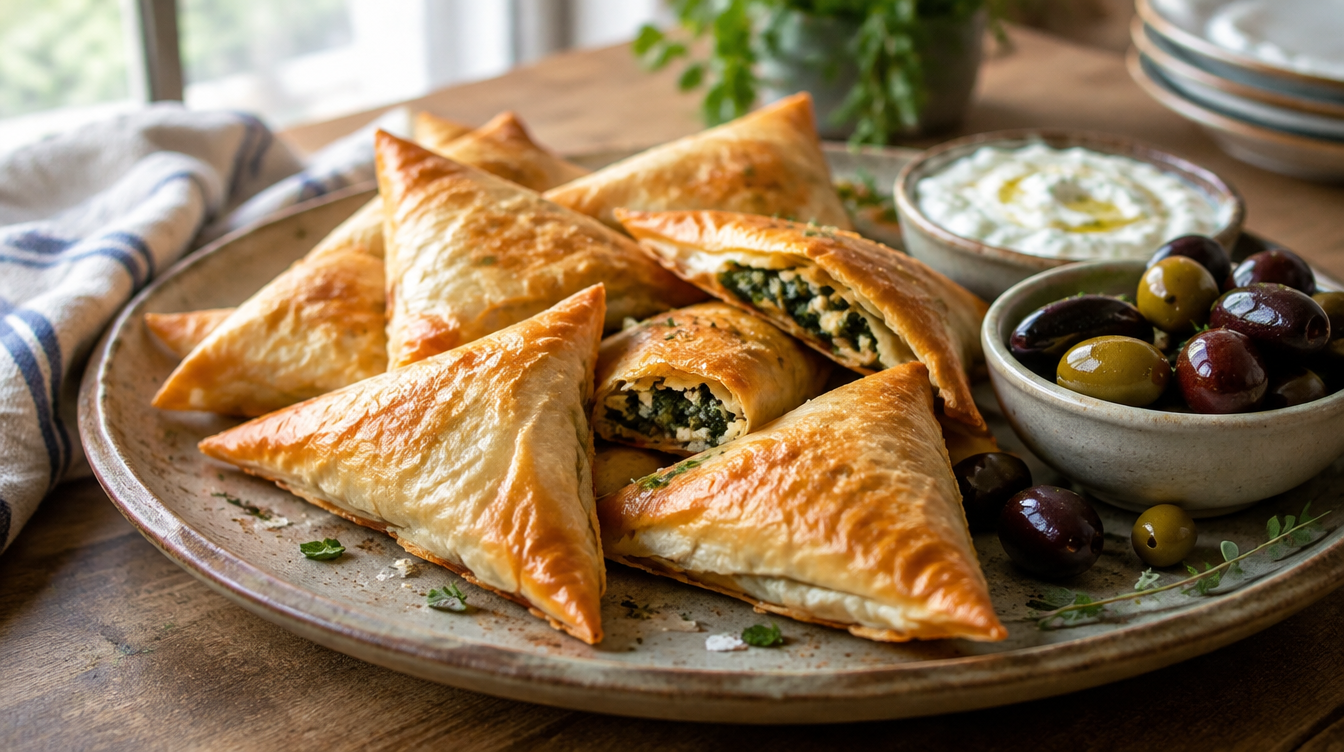
Here’s a confession: spanakopita gets treated like the quiet background snack of Greek food, always sitting next to the flashier stuff, the souvlaki, the moussaka, never quite getting top billing on anyone’s must-try list. That’s a genuine shame, because when it’s made right, crispy golden phyllo shattering into a rich, herby spinach-and-feta filling, it’s one of the best things Greek cooking has to offer.
Let’s fix spanakopita’s underdog status. Here’s where it actually comes from, what separates a great one from a soggy disappointment, and the handful of small tricks that make all the difference between “fine” and “can I have another piece.”
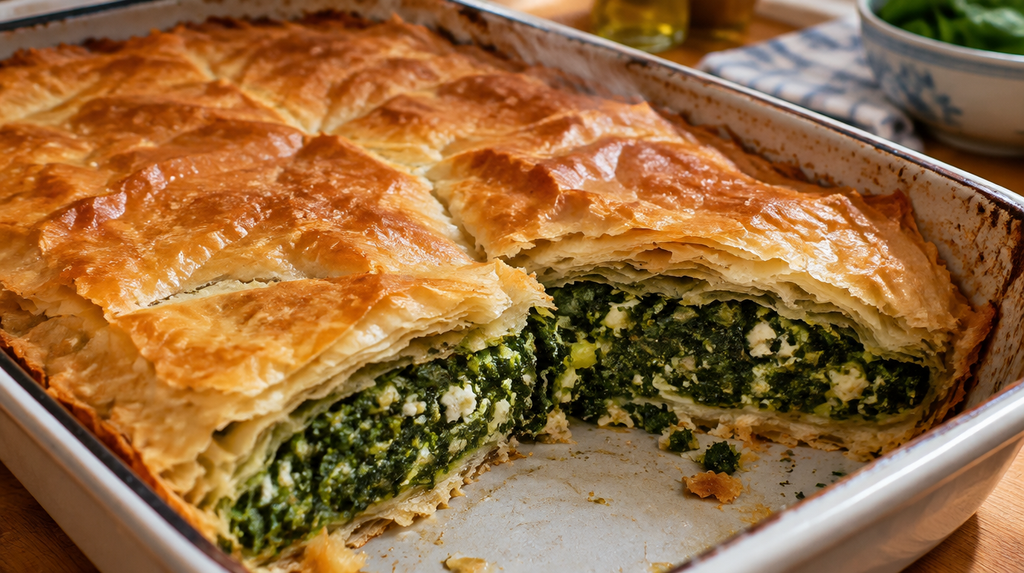
Wait, Where Does This Even Come From?
Spanakopita’s roots trace back through Byzantine-era Greek cooking, where phyllo-wrapped pies stuffed with greens were already a kitchen staple long before “Greek cuisine” was even a phrase anyone used, let alone printed on a restaurant menu. The word itself is refreshingly literal: “spanaki” means spinach, “pita” means pie. No mystery there.
Here’s something most people don’t realize: spinach wasn’t always the star. Plenty of traditional Greek households make a version called hortopita, using whatever wild greens were in season, dandelion, nettles, wild chard, instead of cultivated spinach. Spinach eventually won out in most modern kitchens mostly because it’s easier to find year-round, not because it was ever the “official” original. Either way, the basic idea, thin buttered pastry wrapped around a savory green filling, has stuck around for centuries because, frankly, it just works.
Store-Bought Phyllo vs. Making Your Own
Let’s address the elephant in the kitchen: almost nobody makes phyllo from scratch anymore, and that’s completely fine. Traditional phyllo-making is a genuine skill, stretching dough paper-thin by hand across an entire kitchen table, and it takes years to get good at it, the kind of technique passed down rather than looked up. Store-bought phyllo, sold frozen in most grocery stores, is a legitimate shortcut that even plenty of Greek households rely on today.
A few tips if you’re going the store-bought route:
- Thaw it in the refrigerator overnight, never on the counter, which causes uneven moisture and cracking across the sheets
- Once thawed, use it within a day or two; it doesn’t refreeze well once it’s already been through that first cycle
- If a sheet tears while you’re separating the stack, don’t panic, just patch it into a middle layer where nobody will ever notice
If you ever do want to try making it from scratch, just know you’re signing up for a genuine project, not a weeknight dinner, closer to a weekend hobby than a quick recipe. Most people, including most Greek home cooks today, wisely decide it’s not worth the trouble when a good frozen version does the job just fine.
The Three Things That Actually Matter
Forget fancy technique for a second. Get these three things right, and you’re most of the way to a great spanakopita, no advanced pastry degree required.
| Element | Why It Matters |
|---|---|
| Dry filling | Wet spinach means soggy, collapsing phyllo |
| Buttered layers | Each phyllo sheet needs its own coat, no skipping |
| High oven heat | Crisps the layers fast before moisture escapes into them |
Skip any one of these, and you’ll end up with something edible but disappointing, the kind of spanakopita that looks right but eats like a damp napkin. Nail all three, and you get that shattering, crackling bite everyone’s actually chasing, the whole reason people go back for a second slice even when they swore they were done.
Getting the Filling Right (This Is the Part People Rush)
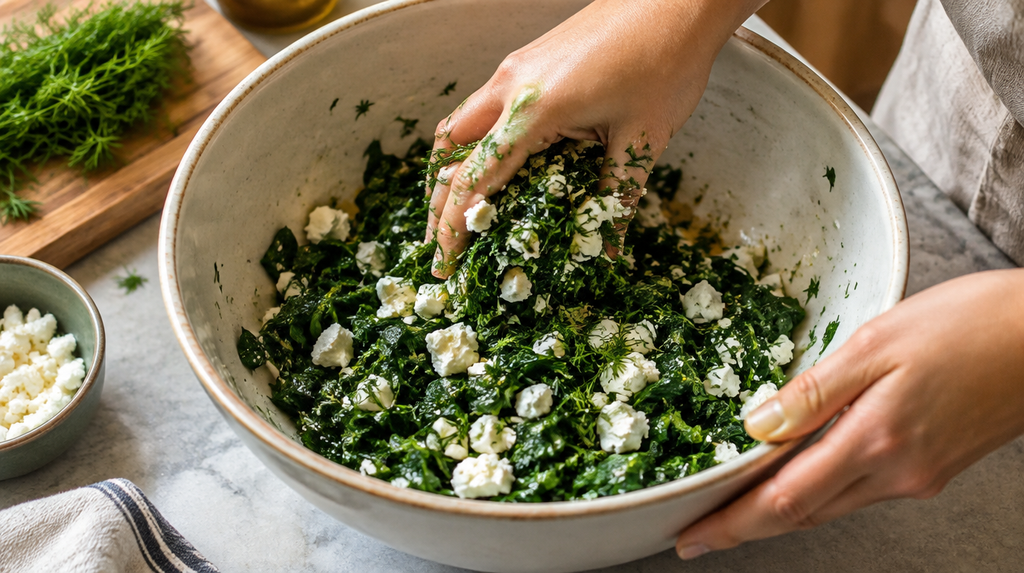
Fresh or frozen spinach both work, but either way, moisture is the enemy. If you’re using fresh, wilt it down first, then squeeze it, hard, in a clean towel until barely any liquid comes out. If you’re using frozen, thaw it completely and squeeze even harder, since frozen spinach holds an almost comical amount of water, way more than you’d expect from looking at the bag.
Once it’s properly dry, mix it with:
- Crumbled feta, the salty backbone of the whole filling, and please, real feta, not a generic white cheese substitute that only vaguely resembles it
- Finely chopped dill and scallions or spring onion, for that unmistakable herby brightness that separates good spanakopita from bland green-cheese-pie
- A beaten egg or two, to bind everything together and help the filling hold its shape once sliced
- A little black pepper, since the feta usually covers the salt on its own, and over-salting is an easy mistake to make if you forget that
Some households add a touch of ricotta or a soft Greek cheese called anthotyro to round out the texture, making the filling creamier without overwhelming the feta’s sharpness. Not essential, but worth trying once, especially if you’ve found your feta-forward version a little too sharp for your taste on previous attempts.
Phyllo: The Part That Scares People Off (Don’t Let It)
Working with phyllo dough intimidates a lot of home cooks, and honestly, fair enough, the sheets are paper-thin and tear if you look at them wrong. Here’s the good news: a few tears don’t actually ruin anything once it’s all baked and golden. Nobody’s grading your pastry symmetry.
A few things that genuinely help:
- Keep unused sheets covered with a slightly damp towel while you work, phyllo dries out and cracks shockingly fast once exposed to air, sometimes within just a couple of minutes on a dry day
- Brush, don’t pour, melted butter between every single layer, skipping sheets is the number one cause of a dry, flavorless crust that nobody actually wants to eat
- Work reasonably fast, but don’t panic, a torn sheet just gets patched with the next one going down, and once it’s baked golden, nobody will ever know
Traditional spanakopita comes in a few shapes: a full tray cut into squares after baking, individual triangles folded flag-style, or spiral rolls coiled into a pan. All three use the exact same filling. Pick whichever shape matches your patience level that day.
A Few Regional Twists Worth Trying
Greece is a big place with a lot of grandmothers, and predictably, spanakopita doesn’t look identical everywhere. A few notable variations:
- Cretan versions sometimes swap in wild greens alongside the spinach, and lean on local herbs like fresh mint for a brighter, slightly different flavor profile than the mainland standard most people are familiar with.
- Epirus, in northwestern Greece, is famous for extremely thin, delicate phyllo layers, sometimes a dozen or more per pie, creating a much flakier, lighter texture than thicker regional versions found elsewhere in the country.
- Island versions occasionally add a touch of nutmeg or allspice to the filling, a subtle warmth that surprises people expecting a purely savory bite.
None of these variations are more “correct” than the standard version. They’re just proof that a dish this old had plenty of time to pick up local personality along the way, shaped by whatever ingredients and habits each region happened to have on hand.
Common Mistakes (We’ve All Made These)
Let’s be honest about where this usually goes wrong, because it’s almost always one of the same few things.
- Skipping the squeeze. Undrained spinach is the single most common reason spanakopita turns soggy. Squeeze harder than feels necessary, using an actual clean towel and real muscle, not a gentle press with a paper towel. Then squeeze again.
- Underbuttering the phyllo. Dry-looking, pale pastry usually means someone got lazy with the butter brush around layer six, cutting corners exactly where it shows most.
- Baking too low and slow. Spanakopita wants a hot oven, generally 375 to 400°F (190-200°C), to crisp fast rather than slowly dry out into something closer to cardboard than pastry.
- Cutting it too soon. Let it rest ten minutes after baking. Cutting immediately collapses the layers and lets steam escape unevenly, turning crisp phyllo limp within seconds of contact with the knife.
- Overfilling the pie. More filling doesn’t mean better. Too much makes the pastry hard to fold or roll properly, and the extra moisture only makes the soggy-bottom problem worse.
Serving It Like a Greek Would
Spanakopita rarely shows up as the star of a meal on its own. It’s usually part of a spread, sitting alongside olives, a Greek salad, maybe some tzatziki, as one of several small dishes shared around the table rather than a single main course taking up the whole plate.
It also travels well cold or room temperature, which is exactly why it’s such a fixture at picnics, name day gatherings, and pretty much any occasion where food needs to survive sitting out for a while without losing its appeal. Leftover triangles reheat beautifully in an oven or toaster oven too, though a microwave will turn that crisp phyllo sad and rubbery fast, so it’s worth avoiding if you can.
Making It Ahead and Freezing Leftovers
Good news for anyone who wants spanakopita on a weeknight without the weeknight effort: it freezes exceptionally well, both baked and unbaked.
To freeze unbaked triangles or a whole unbaked tray, assemble everything as usual, then freeze it solid before wrapping tightly for longer storage. Bake straight from frozen, no thawing needed, just add an extra ten to fifteen minutes to the cooking time. This method actually produces a crisper result than thawing first, since the pastry goes into the hot oven fully solid rather than slightly soggy from condensation that builds up during a slow thaw.
Already-baked spanakopita also freezes well and reheats nicely in a hot oven for about fifteen minutes, straight from frozen or thawed. It’s one of those rare dishes that genuinely tastes almost as good on day three as it did fresh, which makes a double batch on a lazy Sunday afternoon a pretty reasonable investment in future you’s dinner, especially on a week when cooking from scratch every night sounds exhausting.
For more Greek dishes that pair naturally on the same table, our guides to the authentic Greek salad and the tzatziki recipe round out a solid, traditional spread. For further reading on the pastry technique behind this dish, Wikipedia’s entry on phyllo dough covers its wider history across Mediterranean and Middle Eastern cooking.
A Few Quick Questions People Always Ask
Can I use frozen chopped spinach instead of fresh? Absolutely, and plenty of Greek households do exactly this out of convenience rather than any strict rule about freshness. Just make sure it’s fully thawed and squeezed thoroughly, since frozen spinach tends to hold onto even more water than fresh.
Does it have to be feta specifically? Traditionally, yes, feta is what gives spanakopita its distinctive salty tang that no other cheese quite replicates. A substitute cheese will technically work, but it won’t taste like the real thing, and Greek grandmothers everywhere would have strong opinions about the switch.
Can I make it vegan? It’s trickier, since both the feta and the egg binder are doing real structural and flavor work, but plant-based feta alternatives and a flax-egg substitute can get you reasonably close if that’s a requirement in your kitchen. It won’t be identical to the original, but it’ll land somewhere in the right neighborhood.
Why did my phyllo turn out chewy instead of crispy? Usually one of two culprits: not enough butter between layers, or an oven that wasn’t hot enough to crisp the pastry before the filling’s moisture had a chance to soften it from the inside out.
Why This One’s Worth Learning Properly
A lot of Greek dishes take a full afternoon and a specific piece of equipment to get right. Spanakopita mostly just takes patience and a willingness to accept that your first attempt might look a little rough around the edges, and that’s genuinely fine.
Once you’ve made it a few times, the whole process becomes almost meditative: dry the spinach, layer the phyllo, brush the butter, repeat, over and over until the tray’s full. It’s the kind of recipe that rewards repetition rather than punishing beginners, which might be exactly why it’s stuck around Greek kitchens for as long as it has, generation after generation.
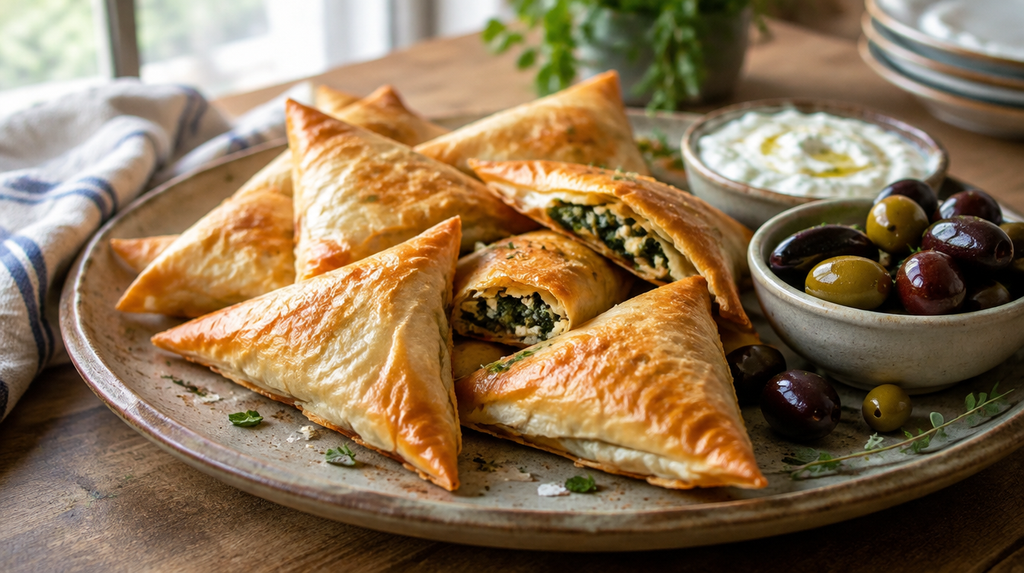
Illustrations in this article were created using AI in a photorealistic style.
Want to hold a piece of this history in your hands? Visit our official shop for digital albums, CDs, and restored vinyl records celebrating the golden era of rebetiko.