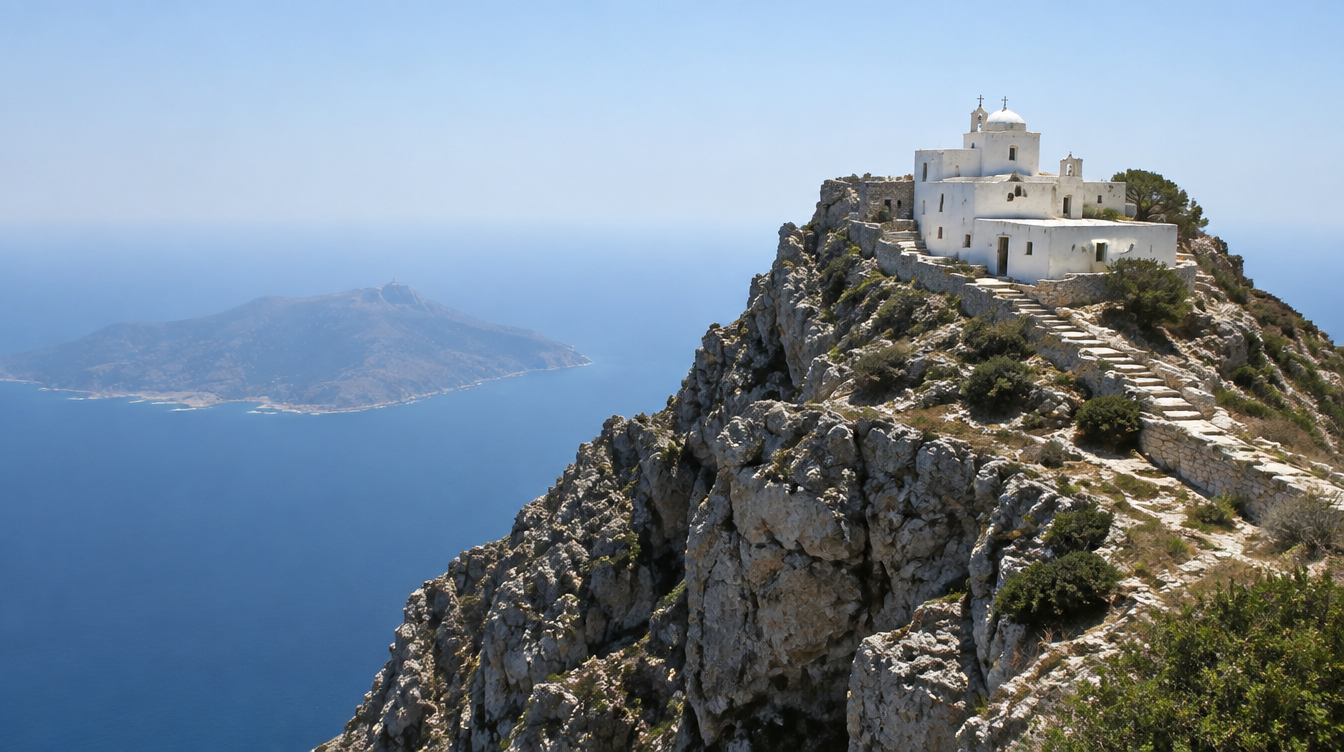
Greek Islands Most Tourists Never Visit sounds like a contradiction in a country that welcomes tens of millions of visitors a year, almost all of them funneled toward the same handful of famous names. Santorini, Mykonos, and Crete dominate the postcards and the search results, but Greece has more than 200 inhabited islands, and a meaningful number of them see barely a fraction of that traffic, even in the height of summer, when the more famous ports strain under the weight of daily arrivals.
This list covers five islands that rarely make it onto a first-time visitor’s itinerary, along with the practical details, what each one is best for, how to actually get there, and what not to miss, laid out for quick reference before the deeper description of each. None of these are undiscovered secrets in any absolute sense; Greeks themselves have long known about all five, and several see a modest but steady stream of domestic tourism every summer. What they share is simply staying off the well-worn tourist circuit that concentrates the vast majority of foreign visitors onto a handful of the same familiar names year after year, regardless of how many other equally striking islands sit just a short ferry ride away.
Why These Islands Stay Under the Radar
A few practical factors consistently explain why certain Greek islands remain quieter than their neighbors, even when they offer scenery and history that rival the country’s most famous destinations, and understanding them helps explain why the islands below have stayed relatively untouched:
- Limited direct flights. Most of these islands require a ferry connection or a small regional flight through a larger hub, adding an extra step that filters out visitors on tight schedules or short layovers.
- Smaller or no cruise ship access. Major cruise itineraries concentrate almost entirely on a small number of ports with deep-water harbors, bypassing smaller islands entirely.
- Deliberate local choices. Some islands, like Tilos, have actively chosen slower, smaller-scale tourism development over large resort construction, a choice that shapes everything from zoning rules to how many rooms get built each year.
- Geography that resists easy day trips. Mountainous terrain or distant, less-frequent ferry schedules discourage the quick, single-day visits that fuel crowding elsewhere, keeping the pace of visitor arrivals naturally slower and steadier.
- Less marketing infrastructure. Fewer large hotel chains means fewer marketing budgets pushing these destinations into mainstream travel algorithms and social media feeds, leaving them to spread mostly by word of mouth.
Quick Comparison
| Island | Best For | How to Get There | Don’t Miss |
|---|---|---|---|
| Anafi | Total quiet, hiking | Ferry from Santorini | Monastery atop Mount Kalamos |
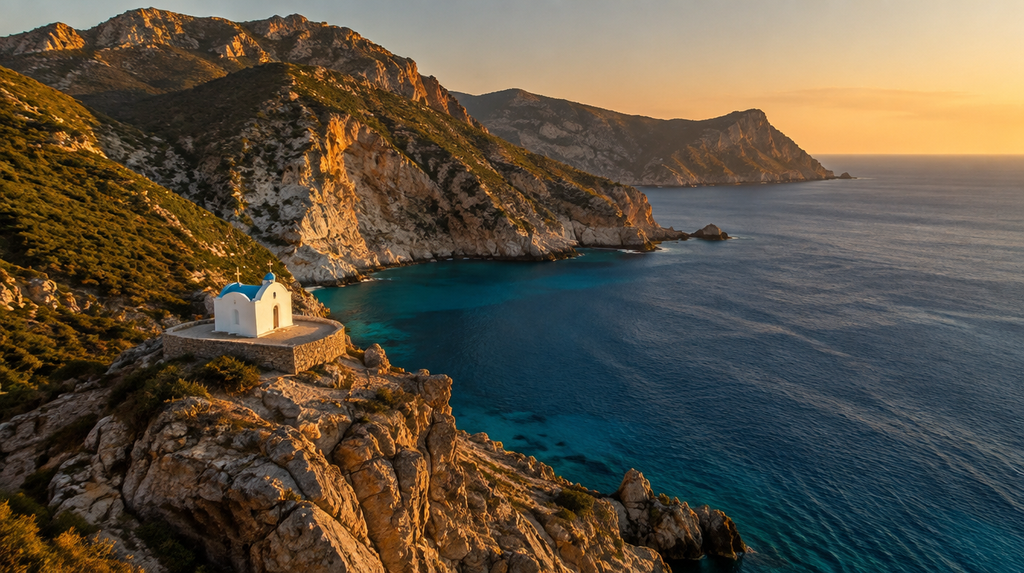
| Folegandros | Dramatic clifftop views | Ferry from Piraeus or Santorini | Chora’s cliffside square |
| Tilos | Wildlife, slow travel | Ferry or small plane via Rhodes | Harkadio Cave fossils |
| Karpathos | Living tradition | Ferry or flight via Rhodes/Athens | Olympos mountain village |
| Amorgos | Dramatic scenery, diving | Ferry from Piraeus or Naxos | Hozoviotissa Monastery |
1. Anafi: The Island Santorini’s Crowds Never Found
Anafi sits less than an hour by ferry from Santorini, yet it might as well belong to a different century. While its famous neighbor fills with cruise-ship crowds every afternoon, Anafi remains one of the quietest inhabited islands in the Cyclades, with a single small port town, a scattering of family-run tavernas, and roads that still turn to dirt not far outside the main village. Its entire population numbers only a few hundred year-round residents, swelling modestly each summer but never approaching anything close to the scale seen just across the water.
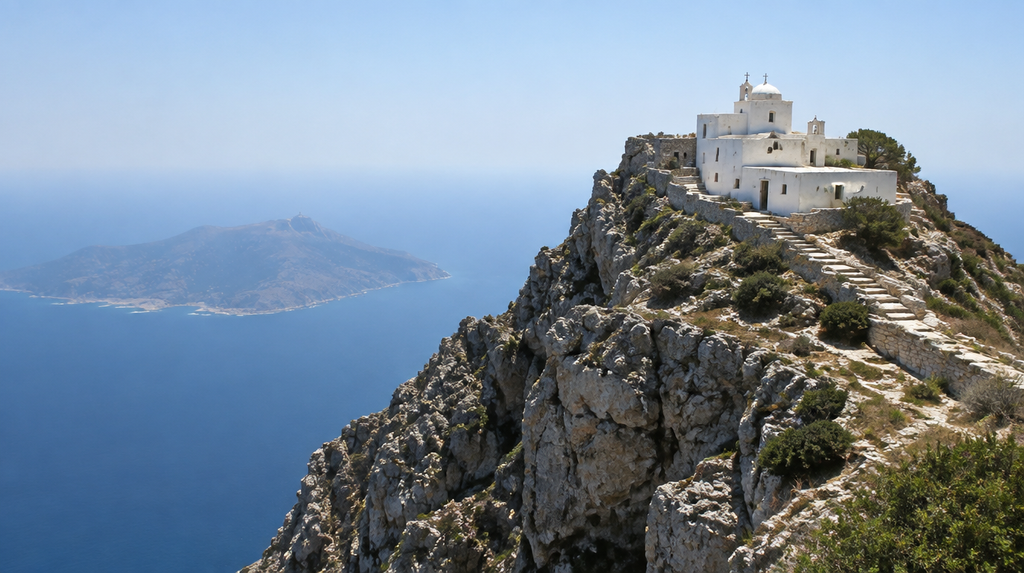
The island’s centerpiece is the Monastery of Kalamiotissa, perched dramatically atop Mount Kalamos, one of the tallest rock formations rising directly from the sea anywhere in the Mediterranean. The hike up is steep but manageable in a few hours, rewarding visitors with sweeping views back toward Santorini’s caldera from a spot almost nobody else bothers to reach. Below the monastery, ancient ruins from a ninth-century Byzantine settlement add another layer of history to the climb, one most hikers encounter with no other visitors in sight for the entire ascent.
- Best time to visit: late May through June, before peak summer heat
- What locals recommend: staying at least two nights, since most day-trippers from Santorini only get a few rushed hours
- Good to know: very limited ATM and shop access, so bring cash
2. Folegandros: Dramatic Cliffs Without the Crowds
Folegandros sits between the far more famous islands of Santorini and Milos, and somehow manages to be overlooked by most visitors passing directly between them. Its main town, Chora, is built along the edge of a sheer cliff, with a central square, Piatsa, considered by many longtime Cyclades travelers to be one of the most atmospheric spots in the entire island chain once the evening lights come on.
Unlike its busier neighbors, Folegandros has deliberately limited large-scale hotel development, keeping most accommodation in small, family-run guesthouses. The island’s beaches require a bit more effort to reach, several are only accessible by boat or a genuine hike, which has kept them considerably quieter than similarly striking beaches elsewhere in the Cyclades. A network of old donkey paths still connects several of the island’s smaller settlements, and walking even a short stretch of one offers a genuine sense of how residents got around before roads reached every corner of the island.
| Highlight | Details |
|---|---|
| Chora’s Piatsa square | Best experienced at sunset over dinner |
| Agkali Beach | Reachable by boat or a scenic coastal walk |
| Church of Panagia | Overlooks the whole town from above Chora |
3. Tilos: A Sanctuary for Wildlife and Slow Travel
Tilos, part of the Dodecanese island group near Rhodes, has taken a noticeably different path than most Greek islands its size. Rather than chasing large-scale tourism, Tilos declared itself a bird sanctuary and has become known instead for hiking trails, protected wildlife, and a genuinely unhurried pace of life that draws a small but loyal following of repeat visitors who return year after year specifically because so little about the island changes.
The island is also home to the Harkadio Cave, where the fossilized remains of dwarf elephants, a now-extinct species that once lived on several small Mediterranean islands, were discovered in the twentieth century. It remains one of the more unusual and lesser-known archaeological sites in the entire region, and a small exhibit near the cave entrance explains how these miniature elephants, some standing barely a meter tall, evolved in isolation over thousands of years before disappearing entirely.
- Roughly 500 permanent residents, one of the smallest populations of any inhabited Greek island, a number that has held remarkably steady over recent decades despite gradual tourism growth
- Home to over 150 recorded bird species, making it a genuine destination for birdwatchers who plan entire trips around the island’s protected migratory routes
- Reachable by ferry or a small propeller plane connecting through Rhodes
4. Karpathos: Where Old Traditions Never Left
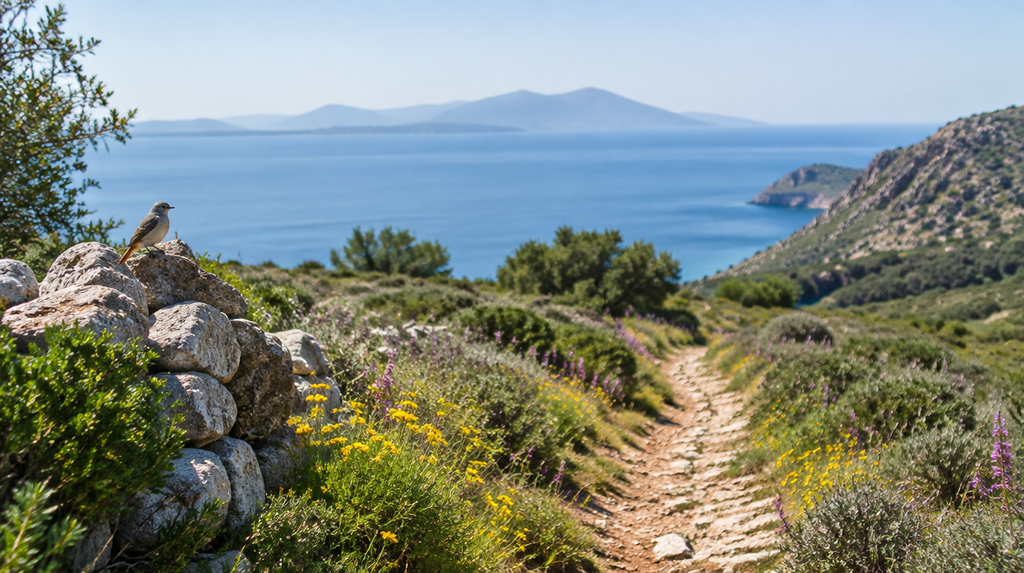
Karpathos, positioned between Crete and Rhodes, is large enough to have a real airport and a growing number of visitors, yet its mountainous interior has kept much of the island remarkably isolated from outside influence. The mountain village of Olympos, perched high above the northern coast, remained accessible mainly by boat or mule path until fairly recently, and it shows: many older women in the village still wear traditional dress daily, not for tourists, but as a continuation of ordinary local life passed down through generations rather than performed for cameras.
The island’s dialect, dress, and even some wedding customs have retained features that have largely disappeared elsewhere in Greece, a preservation locals often attribute directly to Olympos’s historical isolation, cut off for generations by both mountains and the sea. Visitors willing to make the winding drive north are rewarded with windmills, traditional stone houses, and a genuine sense of stepping into an older version of Greek village life, one where bread is still occasionally baked in communal outdoor ovens rather than home kitchens.
| What to Expect | Details |
|---|---|
| Olympos village | Traditional dress, dialect, and architecture still in daily use |
| Southern beaches | Wide, sandy, and considerably quieter than Rhodes or Crete |
| Getting around | A rental car is close to essential outside the main town |
5. Amorgos: Dramatic Cliffs and a Monastery Carved Into Stone
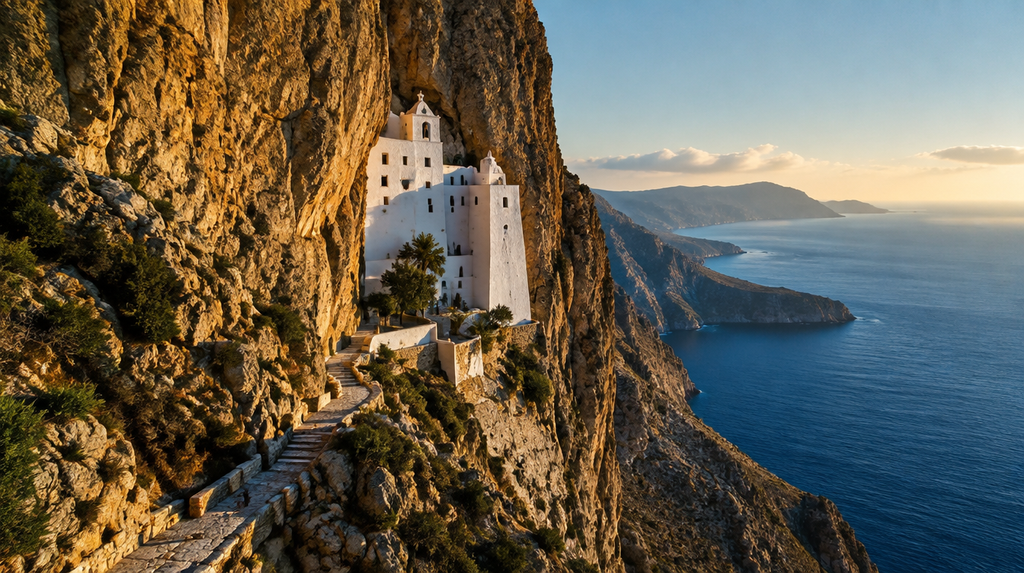
Amorgos, the easternmost island in the Cyclades, gained a burst of international attention after serving as the filming location for the 1988 French film “The Big Blue,” directed by Luc Besson and loosely based on the real-life rivalry between two free-diving pioneers, yet it has still managed to avoid the mass tourism that has transformed many of its neighbors in the decades since the film’s release. Its most striking landmark, the Hozoviotissa Monastery, is built directly into a sheer cliff face nearly 300 meters above the sea, a structure that has housed Orthodox monks since the eleventh century and remains one of the oldest continuously operating monasteries in Greece.
The island’s terrain is dramatic and hilly, making it a genuine draw for hikers and divers rather than beach-club visitors, with clear waters and a rugged coastline that has kept large resort development largely at bay. Two main settlements, Chora and Aegiali, offer distinctly different atmospheres, one perched dramatically on a ridge overlooking the sea from a considerable height, the other set around a calmer, more sheltered bay better suited to families and slower mornings.
- The Hozoviotissa Monastery is open to visitors most days but requires modest dress
- Diving conditions around Amorgos are considered among the best in the Cyclades, with clear visibility and underwater terrain that draws experienced divers from across Europe
- Ferry connections run from Piraeus and neighboring Naxos, though schedules are less frequent than to more popular islands
Getting There Without the Usual Crowds
Reaching these Greek Islands Most Tourists Never Visit generally means routing through a larger hub first, Piraeus, Santorini, or Rhodes, since few have direct international flights of their own, and travel days often need to be built in as part of the journey rather than treated as an afterthought. Ferry schedules to smaller islands also thin out considerably outside the June-to-September window, so travelers should check connections carefully if visiting in shoulder season, when the quieter atmosphere is often at its best. Piraeus itself is worth a lingering stopover before boarding a ferry — its portside neighborhoods hold their own story, told in our feature on the Piraeus Golden Age of rebetiko music.
A Note on Traveling Respectfully
Part of what keeps these islands appealing is precisely the fact that they have not yet been reshaped around mass tourism the way some of their neighbors have, and a growing number of travelers now actively seek out destinations like these specifically to avoid contributing to overtourism elsewhere. Visitors hoping to keep it that way generally find a warmer welcome by following a few simple habits:
- Support small, family-run tavernas and guesthouses rather than seeking out international chains, which are largely absent from these islands anyway, since the money spent locally tends to stay far more directly within the community itself
- Respect quiet hours in small villages, particularly during the traditional midday rest period still observed in many rural communities, when shops close and streets empty out for a few hours each afternoon
- Dress modestly when visiting active monasteries or churches, several of which, like Hozoviotissa on Amorgos, still function as working religious sites rather than tourist attractions, and appreciate a visitor’s quiet, unhurried presence far more than a rushed photo stop
- Book ferry tickets in advance during peak season, since smaller islands often have limited capacity and fewer daily departures than the major routes, and a canceled sailing can strand travelers on a tight schedule for a day or more
For more on the port that connects nearly all of these routes, our coverage of the Piraeus Golden Age explores the history of the harbor still serving as the gateway to islands like these today. For further background, Wikipedia’s entries on the Cyclades and the Dodecanese provide useful geographic context for the island groups covered here.
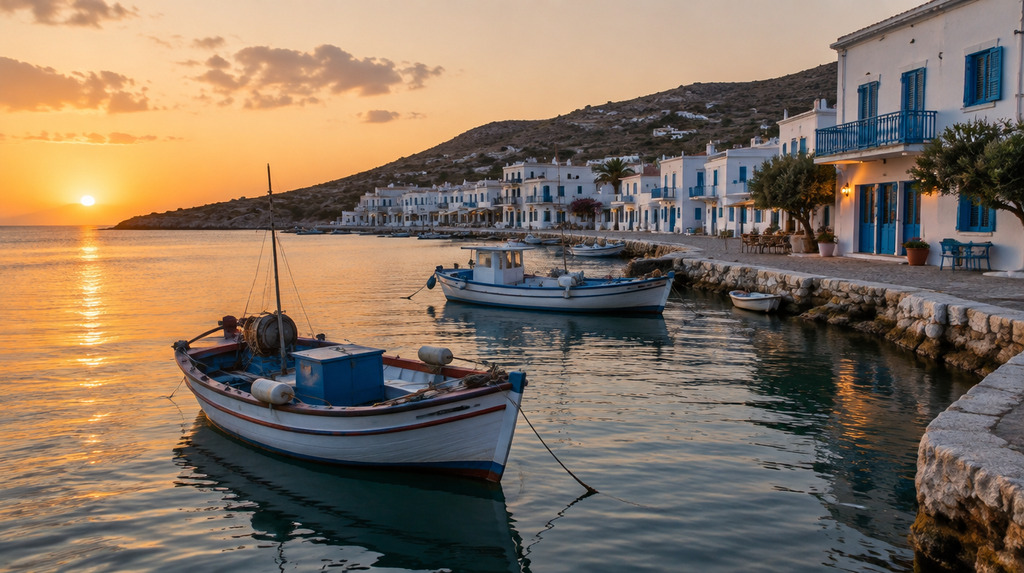
Illustrations in this article were created using AI in a photorealistic style.
Want to hold a piece of this history in your hands? Visit our official shop for digital albums, CDs, and restored vinyl records celebrating the golden era of rebetiko.