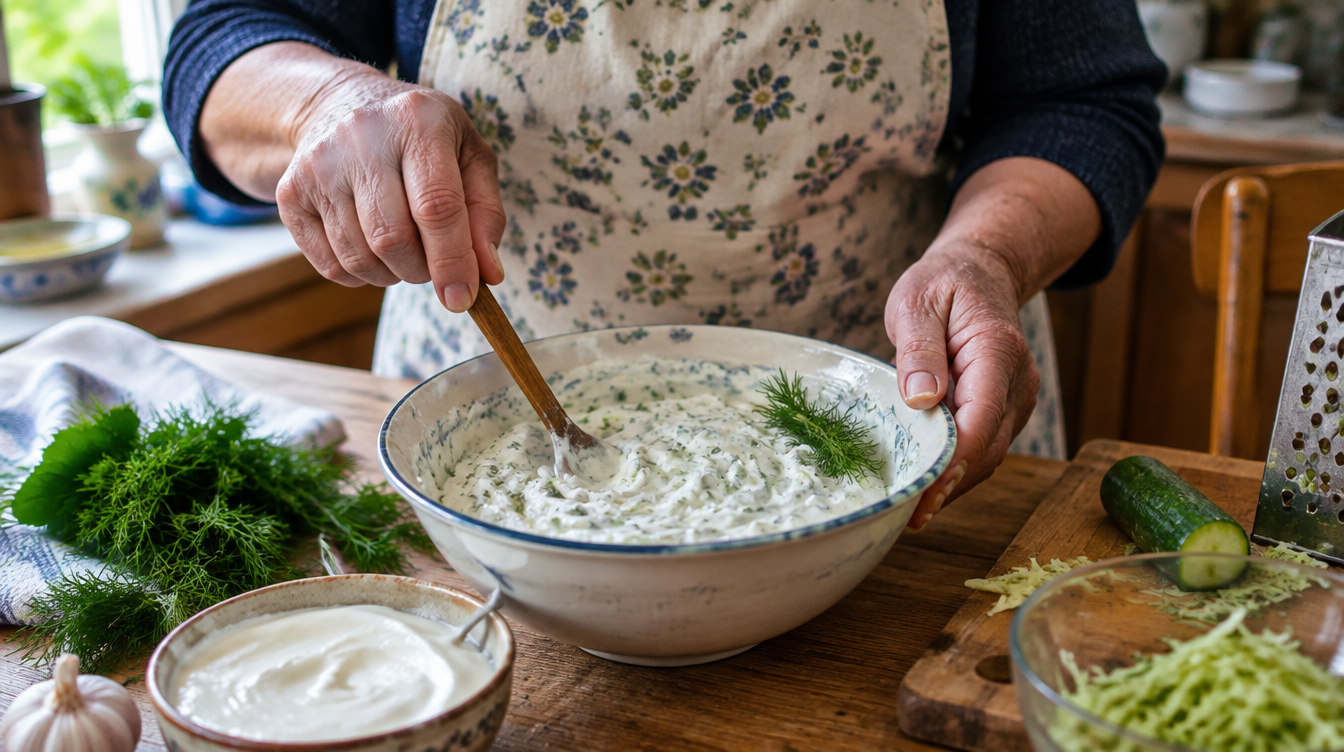
A good Tzatziki recipe looks almost too simple on paper: yogurt, cucumber, garlic, olive oil. Yet ask ten Greek households how they make it and you will likely get ten slightly different answers, along with a few strong opinions about what does not belong in the bowl. This dish, cool and tangy enough to cut through the heat of a Mediterranean summer, has been shared across kitchen tables for generations, passed down more through watching and tasting than through any written measurements, and getting it right depends on a handful of small techniques that most printed recipes skip entirely.
This guide walks through where tzatziki actually comes from, what a proper Tzatziki recipe requires, the steps that separate a watery, forgettable version from a thick, flavorful one, and the small variations you will find depending on which part of Greece, or which family’s kitchen, you happen to be sitting in.
Where Does Tzatziki Actually Come From?
Tzatziki belongs to a much larger family of yogurt-and-cucumber dishes found across the Eastern Mediterranean, the Balkans, and the Middle East, a family that includes Turkish cacık, Persian mast-o-khiar, and Indian raita. This shared ancestry sometimes leads to disputes over which country can claim it, but food historians generally agree that yogurt-based cucumber dishes evolved independently in several neighboring regions that all had access to the same basic ingredients: abundant dairy herds, cucumbers suited to a hot climate, and a culinary tradition built around cooling, acidic accompaniments to balance rich, grilled meats.
The Greek version took its current name from the Turkish word “cacık” during the centuries of Ottoman influence over Greece, though the underlying dish likely predates that specific name by a considerable margin. What makes a Greek Tzatziki recipe distinct from its regional cousins comes down to a few specific choices: the use of thick, strained Greek yogurt rather than thinner yogurt varieties, a generous hand with garlic, and the addition of good olive oil, which is far less common in some neighboring versions of the dish.
This layered history is part of what makes a proper Tzatziki recipe interesting beyond the kitchen. It sits at a genuine crossroads of Mediterranean and Near Eastern food culture, shaped by centuries of trade, migration, and shared borders rather than developing in isolation. Rather than diminishing its place in Greek cuisine, that shared ancestry reflects how deeply interconnected the food traditions of the wider region have always been, even when national pride sometimes prefers a simpler, single-origin story.
The Ingredients a Real Tzatziki Recipe Actually Needs
At its core, an authentic Tzatziki recipe relies on just six ingredients, and the quality of each one matters more than any amount of clever technique. Thick, strained Greek yogurt forms the base, ideally full-fat, since low-fat versions tend to separate and lose body once mixed with the other ingredients. English or Persian cucumber, seeded and well-drained, provides freshness without watering down the final texture. Fresh garlic, grated or crushed rather than minced with a knife, delivers the sharp bite that defines the dish. Good extra virgin olive oil rounds out the richness, while a small amount of white wine vinegar or fresh lemon juice adds the acidity that keeps the dip from tasting flat. Finally, a pinch of salt draws out excess moisture from the cucumber and balances everything else.
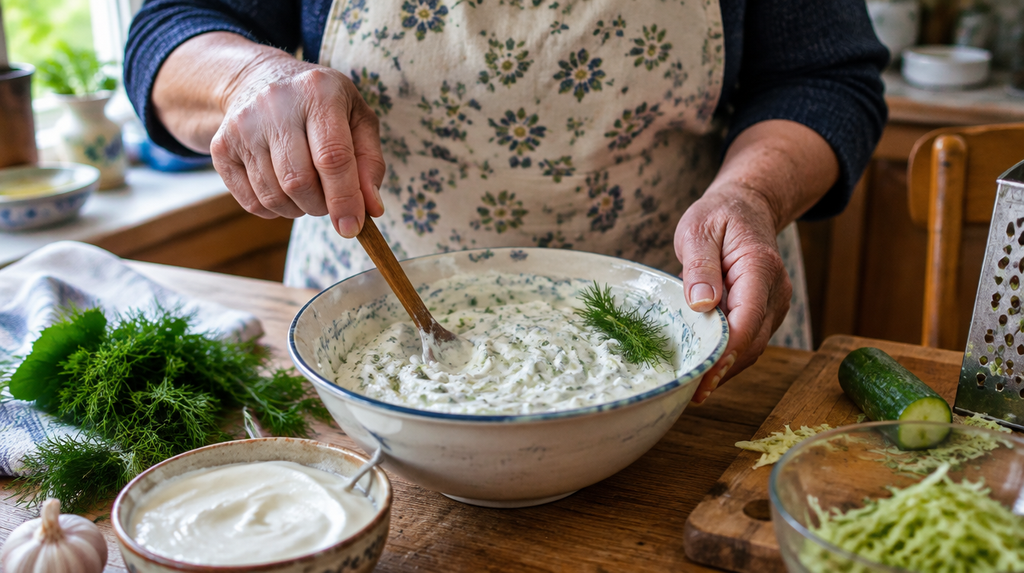
Dill is the most traditional herb choice in mainland Greek households, though mint appears in some regional and island variations, particularly in parts of Crete. Neither is wrong, but a Tzatziki recipe that swaps in dried herbs instead of fresh, or skips the herb entirely, is missing one of the small details that separates a memorable version from a forgettable one.
Regional Variations Worth Knowing
While the core Tzatziki recipe stays fairly consistent across Greece, small regional differences do exist, and they are worth knowing if you want to understand why two versions from different households can taste noticeably different. In Crete, some families favor mint over dill, and a handful of island recipes lean slightly sweeter with a milder garlic presence, reflecting the generally lighter hand with strong seasoning found in parts of Cretan cooking. In the Peloponnese and other mainland regions, garlic tends to be more assertive, and dill remains the dominant herb almost without exception.
A smaller number of households add a touch of finely chopped fresh mint alongside the dill rather than choosing one or the other, layering both herbs for a slightly more complex finish. Others insist on white wine vinegar over lemon juice, arguing that vinegar produces a cleaner, less fruity acidity that does not compete with the other flavors the way citrus sometimes can. A few coastal families even add a very small pinch of finely ground white pepper instead of black, a subtle touch meant to add warmth without introducing visible dark flecks into the pale dip. None of these choices make one version more “correct” than another; they simply reflect the kind of small, inherited preferences that get passed down within a single family rather than written into any official recipe.
The Step Most People Skip: Draining Properly
The single biggest reason homemade tzatziki turns out thin and watery instead of thick and spoonable comes down to one overlooked step: properly draining both the yogurt and the cucumber before combining them. Cucumbers are roughly ninety-six percent water, and if that water is not removed first, it will leak directly into the finished dip within an hour, no matter how good the other ingredients are.
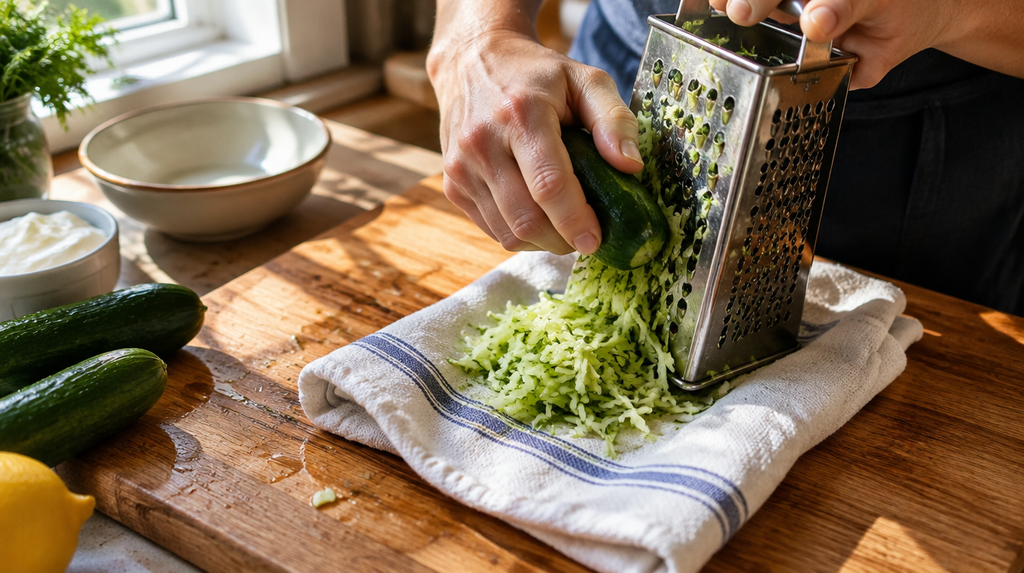
To drain the cucumber correctly, grate it on the large holes of a box grater, place the shredded cucumber in a clean kitchen towel or a fine mesh strainer, sprinkle it lightly with salt, and let it sit for at least fifteen to twenty minutes before squeezing out as much liquid as possible by hand, twisting the towel firmly rather than pressing gently. Many home cooks skip this step entirely, assuming a quick pat with a paper towel is enough, but the salting step is what actually pulls the deeper moisture out of the vegetable’s cell structure, not just the surface water.
The yogurt benefits from a similar approach if it is not already labeled as strained or Greek-style. Standard plain yogurt can be placed in a cheesecloth-lined strainer set over a bowl and left in the refrigerator for a few hours, allowing the whey to separate out and leaving behind a much thicker base that will not dilute once the other ingredients are folded in later on.
A Traditional Tzatziki Recipe, Step by Step
Once the yogurt and cucumber are properly drained, the rest of the process comes together quickly:
- Grate one medium cucumber, salt it lightly, and let it drain in a towel or strainer for at least fifteen minutes, then squeeze out the remaining liquid firmly.
- If using regular plain yogurt rather than pre-strained Greek yogurt, strain two cups of it through cheesecloth for two to three hours in the refrigerator beforehand.
- In a mixing bowl, combine the strained yogurt with the drained cucumber.
- Grate two to three cloves of garlic directly into the bowl, adjusting to taste depending on how sharp you want the final flavor.
- Add two tablespoons of extra virgin olive oil and one tablespoon of white wine vinegar or fresh lemon juice.
- Stir in a tablespoon of finely chopped fresh dill.
- Season with salt to taste, keeping in mind that the cucumber was already salted during draining.
- Mix everything together until smooth and well combined, then cover and refrigerate for at least thirty minutes before serving to let the flavors settle.
- Just before serving, finish with an extra drizzle of olive oil on top and a few whole dill fronds for presentation.
Letting the finished dip rest in the refrigerator, rather than serving it immediately after mixing, is another detail many home cooks skip. That resting period allows the garlic to mellow slightly and the flavors to fully combine, producing a noticeably rounder taste than a version served right away.
Common Mistakes That Ruin a Tzatziki Recipe
A few habits consistently show up in disappointing versions of this dish. Using thin, unstrained yogurt straight from the container is the most frequent culprit, producing a runny dip that separates within minutes. Skipping the cucumber-draining step is a close second, and together these two shortcuts account for the vast majority of watery, underwhelming results.
Overdoing the garlic is another common issue, particularly when it is minced with a knife rather than grated, leaving large, sharp chunks that overpower the other ingredients instead of blending smoothly throughout everything else in the bowl. Using bottled lemon juice instead of fresh, or skipping the resting period before serving, are smaller mistakes, but each one chips away slightly at the final result. A properly made Tzatziki recipe should be thick enough to hold its shape on a spoon, not something closer to a thin, drippy sauce.
One final mistake worth mentioning is preparing the dip too far in advance and storing it for several days. While tzatziki does keep for a few days under refrigeration, the cucumber continues to release small amounts of moisture over time even after draining, meaning a batch made four or five days ahead will noticeably thin out compared to how it tasted on the first day. For the best texture, most households treat tzatziki as something best made within a day or two of serving rather than a make-ahead staple meant to last an entire week.
How Tzatziki Fits Into a Greek Meal
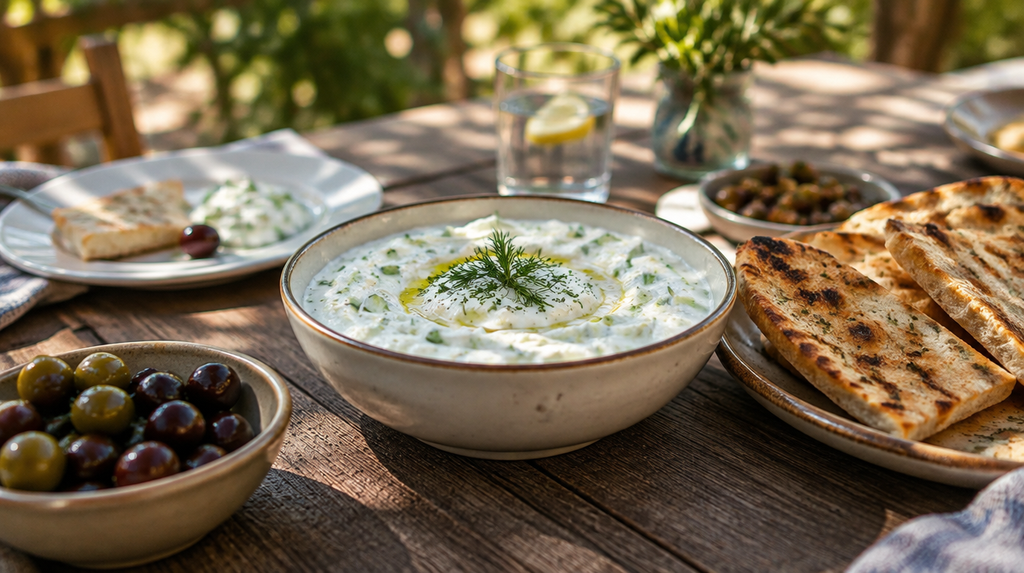
Tzatziki rarely appears as a standalone dish in Greece. It is typically served as one of several small plates at the start of a meal, alongside warm pita bread, olives, an authentic Greek salad, and other dips like melitzanosalata or taramasalata, meant for scooping and sharing rather than plating individually. It is also a near-constant companion to grilled meats, particularly souvlaki and gyro, where its cool, tangy character cuts through the richness of charred, seasoned meat in a way few other condiments manage as effectively.
Some households also use tzatziki as a simple side dish on its own, spooned alongside roasted vegetables or grilled fish, treating it less as a dip and more as a light, cooling counterpart to whatever heavier dish sits next to it on the plate. This flexibility, useful as both an appetizer and a side, is part of why a good Tzatziki recipe tends to become a permanent fixture in a household once it is learned properly, showing up at everything from casual weeknight dinners to large family gatherings without ever feeling out of place.
Why This Simple Dish Has Real Nutritional Value
Beyond its place at the table, a traditional Tzatziki recipe also happens to be a genuinely nourishing dish, which is part of why it has remained a staple across so many generations rather than fading into a niche regional curiosity. Strained Greek yogurt is naturally high in protein and contains live cultures that support digestive health, while cucumber contributes hydration and a light dose of vitamin K with very few calories. Garlic, long associated in traditional Mediterranean cooking with cardiovascular benefits, and olive oil, rich in the same monounsaturated fats credited with much of the Mediterranean diet’s reputation for supporting long-term health, round out a dish that manages to be both indulgent in flavor and genuinely light in composition.
This combination of qualities, rich and satisfying while remaining low in calories and high in protein, likely explains part of why tzatziki has traveled so far beyond Greece’s borders, appearing on menus and in home kitchens across the world as a familiar, trusted staple rather than an exotic specialty dish, and why so many households continue returning to the same basic Tzatziki recipe generation after generation.
For more Greek recipes rooted in tradition, our guide to the authentic Greek salad covers another dish that shares many of the same core ingredients as tzatziki. For further background, Wikipedia’s entry on tzatziki traces its regional history and variations in more detail.
Illustrations in this article were created using AI in a photorealistic style.
Want to hold a piece of this history in your hands? Visit our official shop for digital albums, CDs, and restored vinyl records celebrating the golden era of rebetiko.