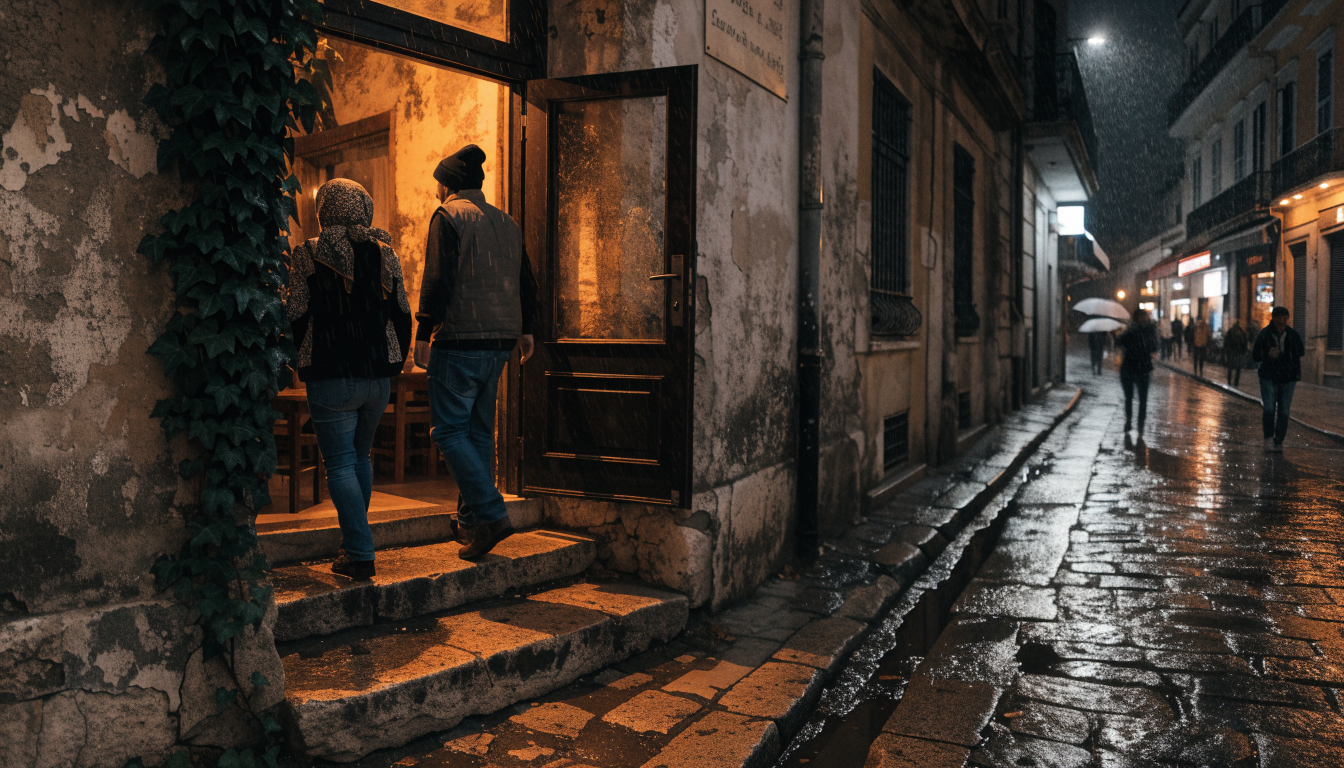
Everything we’ve written about so far on this blog might make rebetiko sound like something confined to history books and old recordings. It isn’t. Right now, tonight, somewhere in Athens, a bouzouki player is tuning up in a small basement taverna, getting ready for a crowd that will stay until well past midnight. If you ever find yourself in Greece, here’s where that history is still very much alive.
This isn’t a curated list of tourist-friendly performances designed for passing visitors. Every venue below has earned its reputation over years, sometimes decades, of consistent live music, patronized largely by Athenians themselves rather than sustained purely by tourism. That distinction matters if you’re genuinely hoping to experience rebetiko the way it’s actually lived today, rather than a version staged specifically for outside observers.
What to Expect Before You Go
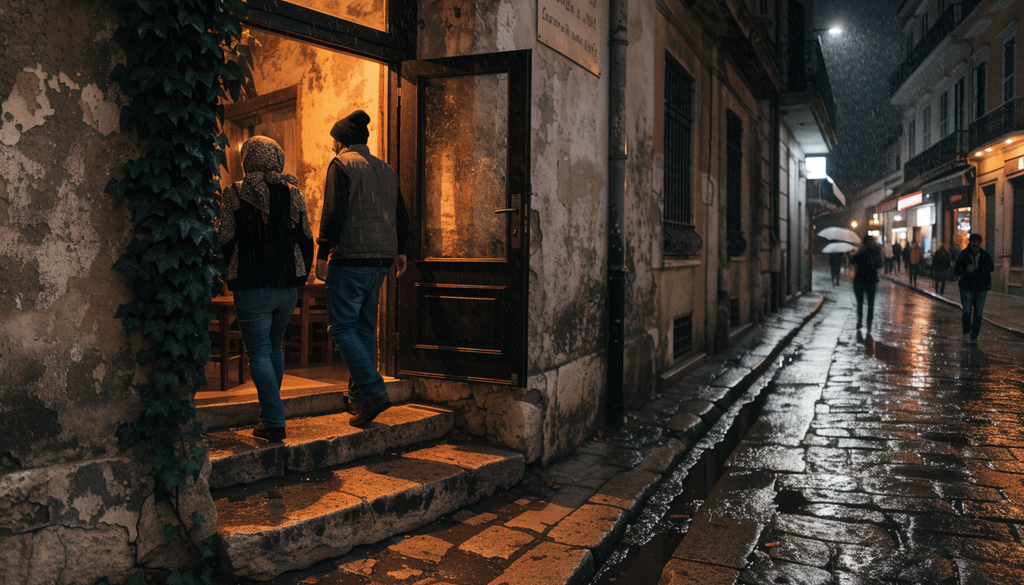
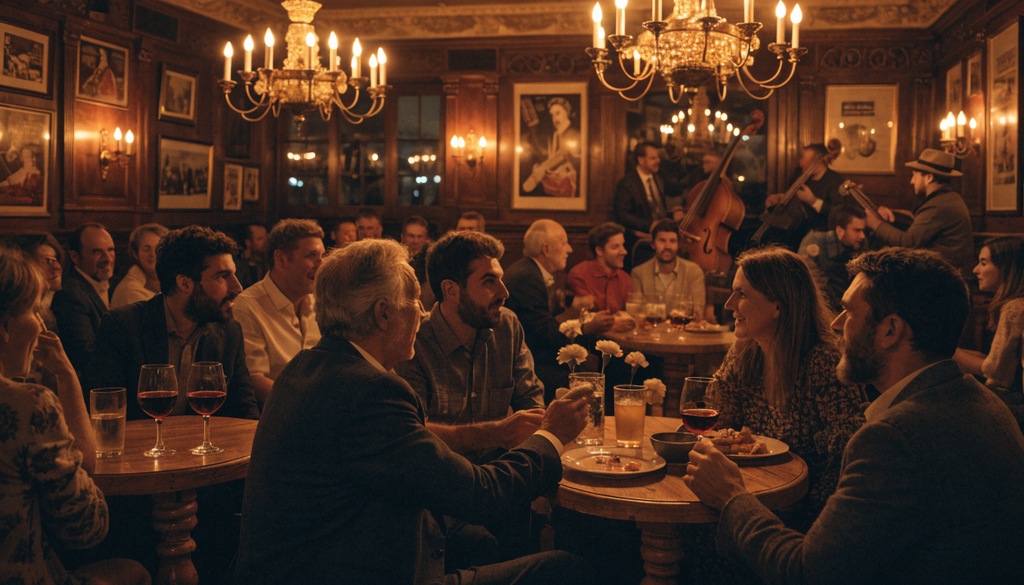
Before diving into specific venues, it helps to understand what a modern rebetadiko — a dedicated rebetiko venue — actually feels like, since it’s genuinely different from typical tourist entertainment. These aren’t polished stage shows built for spectators watching passively from a distance. Music usually starts around 10 PM and can run until 3 or 4 AM, depending entirely on the room’s energy that particular night.
Audience participation is central to the experience, not incidental to it. It’s common practice for enthusiastic listeners to toss small paper or plastic carnations — sold by the venue specifically for this purpose — toward musicians during songs the crowd particularly loves. Spontaneous dancing, especially the slow, introspective zeibekiko we’ve discussed elsewhere on this blog, often breaks out organically rather than as scheduled performance. If you’re used to concerts with a clear separation between performer and audience, this collapsing of that boundary can feel disorienting at first, and then, for most visitors, genuinely moving.
This lack of formal staging extends to the physical spaces themselves. Many of Athens’s most respected rebetiko venues occupy basements, converted neoclassical buildings, or rooms tucked above unrelated businesses — a pattern that traces directly back to the genre’s earliest, most improvised performance spaces. There’s rarely a stage in the theatrical sense, just a corner of the room where musicians set up close enough to the audience that eye contact between performer and listener happens constantly throughout the night.
It also helps to know that these venues cluster in fairly predictable neighborhoods. Exarchia, Psirri, Pangrati, Kypseli, and Kerameikos each host multiple rebetiko establishments, meaning a single evening spent wandering one of these districts often reveals several options within a short walk of each other, even beyond the specific venues detailed below.
1. Aggelos (Exarchia)
Tucked into a neoclassical building in the famously bohemian Exarchia neighborhood, Aggelos has built a reputation as one of Athens’s most respected rebetiko venues, with live music performed nightly rather than on a limited weekly schedule. The setting itself contributes meaningfully to the atmosphere — Exarchia’s slightly rebellious, countercultural character feels genuinely fitting for a genre that spent decades as social outsider music in its own right.
What distinguishes this venue for many regulars is its consistency: rather than treating rebetiko as an occasional special event, it’s simply part of the nightly rhythm of the place, alongside fresh seafood and the kind of unhurried, conversation-heavy dining that defined taverna culture in rebetiko’s original era.
Weekend nights here occasionally feature performances from established Greek actresses and vocalists who maintain a personal connection to the genre, blurring the line between a neighborhood taverna and something closer to an intimate cultural event. Regulars often describe returning specifically for these appearances, treating them as recurring fixtures worth planning an evening around rather than leaving to chance.
2. Kavouras (Exarchia)
Just around the corner from Aggelos, situated above a souvlaki shop that never seems to close, Kavouras offers a slightly different flavor of the same neighborhood’s rebetiko scene. Operating primarily on weekend nights, it draws a loyal crowd that treats these evenings as a genuine ritual rather than a one-time tourist stop.
The venue’s straightforward, unpretentious setting — a modest room above a working-class food stall — echoes rebetiko’s own origins more directly than some of the city’s more polished offerings. There’s something fitting about a genre born in humble taverna back rooms still being performed in spaces that haven’t been dressed up for visiting cameras.
Because it operates on a more limited weekend schedule and closes entirely during summer months, visitors need to plan around its calendar more carefully than some of the nightly venues on this list. That limited availability, somewhat counterintuitively, seems to have only deepened its loyal following — regulars treat a Friday or Saturday night here as something worth specifically building an evening around, rather than a casual, spontaneous stop.
3. To Koutouki tou Marathoniti (Pangrati)
Located in the residential Pangrati neighborhood, this venue operates as a genuine koutouki — a small, unpretentious wine cellar-style establishment, known specifically for wine served directly from stacked wooden barrels rather than bottles. It offers what many consider one of the more distinctly local, less tourist-oriented rebetiko experiences remaining in Athens.
The basement setting, worn wooden furnishings, and barrel-served wine collectively create an atmosphere that feels closer to how rebetiko might have actually been experienced generations ago, before the genre acquired its current cultural cachet. For visitors specifically seeking an experience closer to how Athenians themselves engage with this tradition, rather than a performance staged primarily for outsiders, this is frequently recommended as a strong starting point.
Pangrati itself adds to the appeal. Unlike Exarchia’s more bohemian reputation or Psirri’s increasingly tourist-oriented nightlife, Pangrati remains a genuinely residential Athenian neighborhood, largely free of the souvenir shops and multilingual menus that mark more heavily touristed districts. Finding this venue often means walking past ordinary apartment buildings and neighborhood bakeries rather than navigating crowds of fellow visitors, which only reinforces the sense of stepping into something authentically local rather than a curated experience.
4. Klimataria (Theatrou Square, Central Athens)
Sitting in a more central, easily accessible location near Theatrou Square, Klimataria offers a slightly more traditional taverna experience alongside its rebetiko programming — making it a reasonable starting point for visitors not yet ready to venture into Exarchia’s more countercultural atmosphere or Pangrati’s residential streets.
Its central location doesn’t come at the cost of authenticity, however. The venue maintains a genuine commitment to rebetiko’s traditional repertoire, offering visitors a solid introduction to the genre without requiring extensive navigation of Athens’s more labyrinthine neighborhoods.
For travelers with limited time, or those understandably hesitant to wander unfamiliar residential streets late at night, this accessibility genuinely matters. A short walk from central Athens landmarks and hotels, Klimataria functions as a reasonable bridge between convenient tourist infrastructure and a legitimately traditional taverna experience — proof that authenticity and accessibility aren’t always mutually exclusive.
5. To Pontiki (Kypseli)
With roots stretching back to 1984, when it first opened specifically to give emerging musicians a platform, To Pontiki carries a slightly different historical significance than some of the city’s older establishments. Rather than tracing directly back to rebetiko’s earliest 1930s decades, it represents the genre’s postwar revival period — a venue built explicitly to support musicians during a phase when rebetiko was actively reclaiming cultural legitimacy.
Located in the Kypseli neighborhood, somewhat off the typical tourist path, it’s developed a reputation as a classic destination for both traditional food and consistent, nightly live music, appealing to a loyal, largely local crowd.
This distinction between “birthplace era” and “revival era” venues is worth understanding as you plan a visit. Somewhere like To Pontiki represents rebetiko not as a preserved historical artifact, but as a living tradition that musicians actively chose to build new institutions around, even decades after the genre’s original taverna scene had faded. That choice reflects genuine confidence in rebetiko’s continued cultural relevance, made at a time when its long-term survival wasn’t nearly as assured as it might seem in hindsight today.
A Note on Piraeus Itself
It’s worth remembering that Piraeus — the neighborhood this entire blog is named for — still has its own rebetiko venues today, tied more directly to the genre’s original geographic birthplace than any of the Athens locations above. These tend to be less accessible for casual tourists, embedded within residential districts rather than concentrated in nightlife-friendly central neighborhoods, but they offer something the more famous Athens venues can’t quite replicate: proximity to the actual streets and docks where this music first took shape, the same ones we explored in our piece on the Piraeus Golden Age.
Finding these venues often requires more local knowledge than a quick online search provides — asking hotel staff, local residents, or even taverna owners in Athens for current recommendations tends to work better than relying solely on tourist guides, which frequently focus exclusively on the more accessible central Athens scene. This slight extra effort is, for many rebetiko enthusiasts, precisely the point: a little inconvenience feels appropriate for a genre whose entire history involved seeking out spaces the mainstream overlooked.
For visitors willing to venture slightly further off the beaten path, seeking out a Piraeus rebetadiko rather than staying within central Athens offers a meaningfully different, arguably more historically grounded experience.
Beyond Athens: Thessaloniki’s Own Scene
Athens and Piraeus aren’t the only cities keeping this tradition alive. Thessaloniki, Greece’s second-largest city, maintains its own active rebetiko scene, shaped partly by its own significant history of Asia Minor refugee settlement following 1922 — a parallel history to the one we’ve explored throughout this blog in the context of Piraeus.
Visitors spending time in northern Greece shouldn’t assume live rebetiko is exclusively an Athens phenomenon. Thessaloniki’s bars, tavernas, and dedicated music clubs regularly host performances, often drawing on the city’s own distinct regional variations within the broader genre, shaped by its particular blend of refugee communities and local musical traditions. For anyone building a longer Greek itinerary around this musical tradition, splitting time between Athens and Thessaloniki offers a genuinely fuller picture of how rebetiko lives on across the country today, rather than treating the capital as the genre’s only remaining stronghold.
Practical Tips for a First Visit
- Arrive without rigid expectations of a formal concert. These are living social spaces first, performance venues second
- Don’t worry about understanding every lyric. As we’ve discussed before, rebetiko’s emotional tone often communicates clearly even across language barriers
- Expect a late start and a later finish. Arriving before 10 PM often means an empty room; the real energy usually builds well after most tourist-oriented restaurants have closed
- Bring cash. Many of these smaller, traditional venues still operate primarily on cash transactions rather than card payments
- Check current schedules before visiting. Live music nights and hours can shift, especially seasonally, so confirming ahead avoids disappointment
- Consider reserving a table in advance for smaller venues. Rooms like Aggelos and To Koutouki tou Marathoniti are intimate by design, and popular nights fill quickly with regulars who return week after week
- Dress comfortably, not formally. These remain unpretentious working-class spaces at heart, regardless of the cultural prestige rebetiko has since acquired
- Pace your drinking. Evenings genuinely can stretch past 3 AM, and the traditional rhythm of shared meze and slow conversation rewards patience over rushing toward a single dramatic highlight
Why Seeking Out Live Rebetiko Still Matters
- It connects visitors directly to a living tradition, not a museum reconstruction of one
- It supports musicians and venues actively keeping this cultural heritage financially and artistically viable
- It offers a far richer understanding of everything we’ve explored throughout this blog than any amount of reading alone could provide
Reading about rebetiko’s history is one thing. Sitting in a crowded, warm room past midnight, watching a stranger toss a paper flower toward a musician mid-song, is another experience entirely — and it’s still there, waiting, for anyone willing to stay out late enough to find it. No amount of research replaces the particular feeling of a room full of strangers falling silent together for the opening notes of a song everyone, apparently, already knows by heart.
Illustrations in this article were created using AI in a photorealistic style.
Want to hold a piece of this history in your hands? Visit our official shop for digital albums, CDs, and restored vinyl records celebrating the golden era of rebetiko.