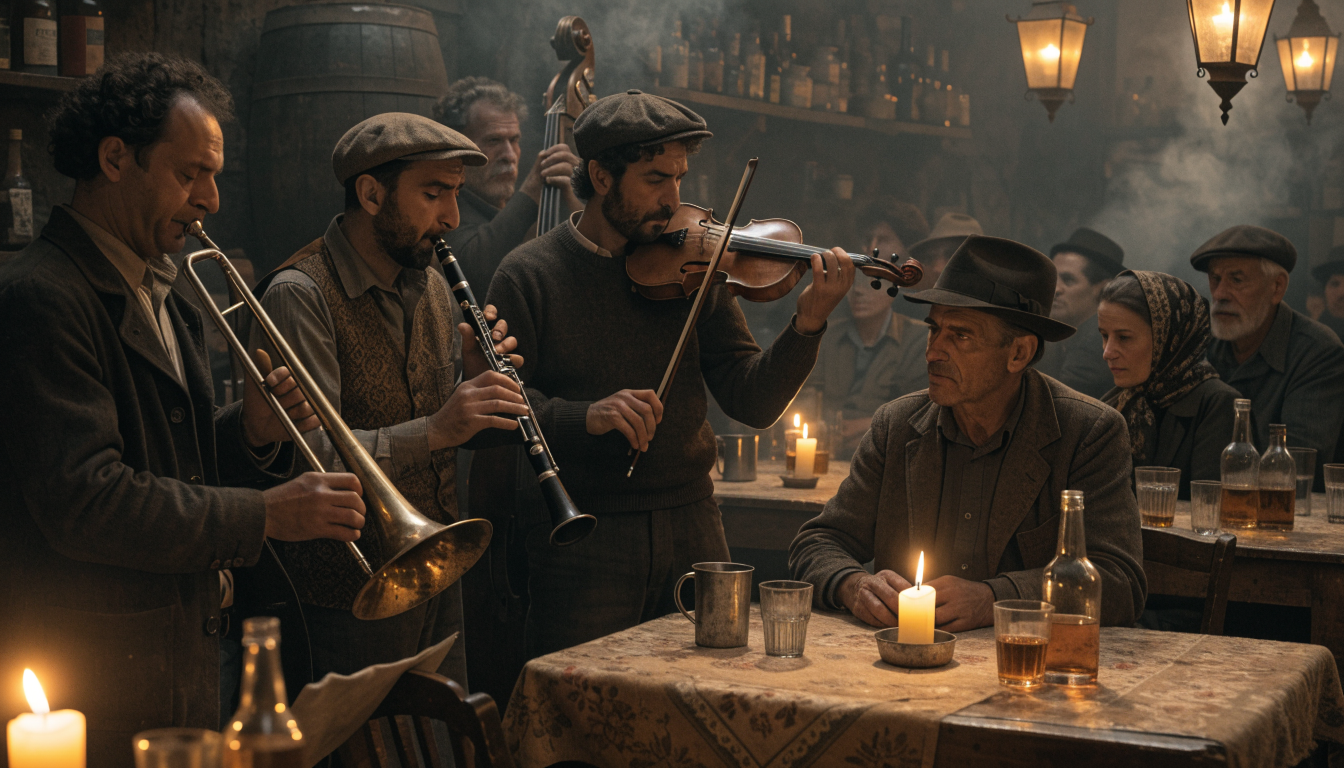
If Markos Vamvakaris gave rebetiko its first documented voice, Vassilis Tsitsanis gave it something the genre desperately needed to survive long-term: legitimacy. He didn’t do this by softening the music’s emotional core or abandoning its roots in hardship and longing. He did it by writing songs so undeniably good, so structurally sophisticated, that Greek society eventually ran out of reasons to keep dismissing them.

A Law Student Who Chose Music Instead
Tsitsanis was born in 1915 in Trikala, a provincial town in central Greece, far from the port culture of Piraeus that had shaped rebetiko’s earliest years. His family background wasn’t tied to the docks or the tekedes — by most accounts, he came from a relatively respectable household, and he initially moved to Athens in the mid-1930s to study law, following a fairly conventional path for a young man of his background.
Music had other plans for him. Athens in the 1930s was saturated with the sound of rebetiko, and Tsitsanis, already a capable bouzouki player, found himself drawn into the city’s taverna scene almost immediately. Within a few years, the law books had taken a back seat to something that clearly interested him far more.
This background matters more than it might first appear. Unlike many of rebetiko’s earliest pioneers, who came to the genre out of poverty and displacement, Tsitsanis approached it with a level of formal education and structural sensibility that would eventually reshape what the genre could sound like.
Finding His Voice Through Hardship
Tsitsanis’s early career unfolded against the same difficult backdrop we’ve explored before — the Metaxas dictatorship’s censorship of rebetiko in the late 1930s, followed shortly after by the devastation of World War II and the Axis occupation of Greece. Rather than pulling him away from music, these years of genuine hardship seemed to deepen his songwriting.
During the occupation years specifically, Tsitsanis reportedly performed in a small taverna in Thessaloniki, writing prolifically even as basic survival became difficult for most Greeks. Some of his most enduring compositions emerged directly from this period — songs shaped by scarcity, uncertainty, and the particular kind of resilience that occupation demanded.
It’s worth pausing on this detail, because it captures something essential about Tsitsanis’s approach. He wasn’t writing hardship from a distance, romanticizing it for effect. He was living it, in real time, while continuing to compose some of the genre’s most emotionally precise material.
An Almost Impossible Volume of Work
What separates Tsitsanis from many of his contemporaries isn’t just quality — it’s sheer output. Over the course of his career, he’s credited with composing several hundred songs, an almost implausible volume for a single songwriter, especially considering how many of those compositions remain genuinely beloved and performed today, rather than forgotten filler.
This prolific output wasn’t scattershot. Tsitsanis brought a level of melodic and structural sophistication to rebetiko that hadn’t been as consistently present in the genre’s earlier, more improvisational era. His songs often featured:
- More developed melodic structures, drawing on broader musical influences beyond strictly rebetiko convention
- Lyrics that expanded rebetiko’s emotional range, covering romantic love, everyday urban life, and social observation alongside the genre’s traditional themes of hardship and longing
- Arrangements that anticipated rebetiko’s later orchestral adaptations, making his catalog especially well-suited to reinterpretation by later generations of musicians
This combination — prolific output paired with genuine craftsmanship — is a large part of why his music proved so durable.
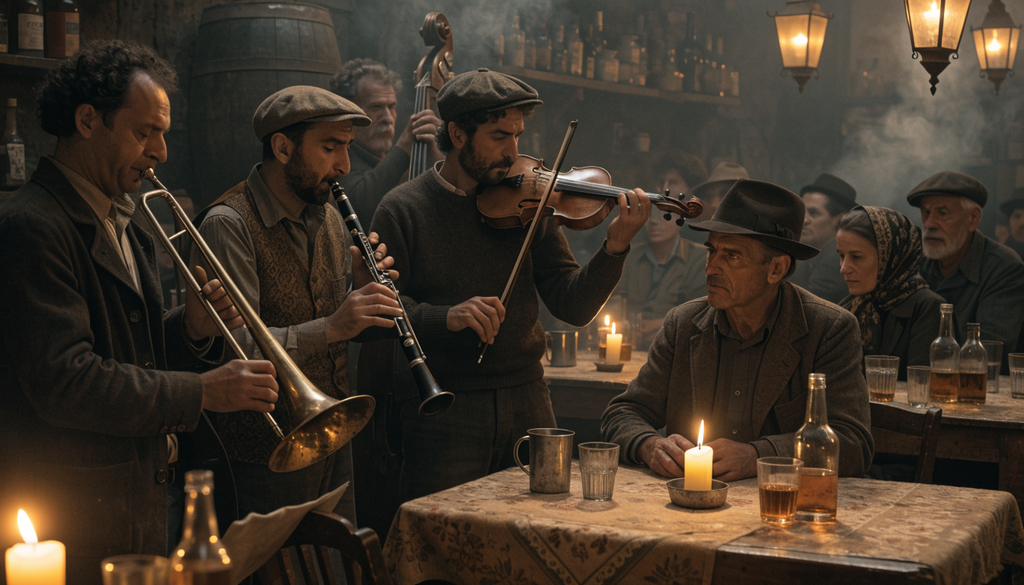
Working With Rebetiko’s Great Voices
Tsitsanis’s compositions gained much of their emotional power through collaboration with some of the genre’s most talented vocalists. As we discussed when correcting the myth that rebetiko was exclusively a man’s genre, performers like Sotiria Bellou and Marika Ninou brought Tsitsanis’s songs to life with interpretive depth that helped cement their lasting popularity.
This dynamic — a prolific composer paired with powerhouse vocalists capable of fully inhabiting his material — created some of rebetiko’s most enduring recorded moments. It also reflects something important about how the genre matured: from largely solo or small-ensemble performance toward a more defined division between songwriting and vocal interpretation, closer to how popular music functions today.
Bridging the Underworld and the Mainstream
Perhaps Tsitsanis’s most significant long-term contribution was making rebetiko palatable to segments of Greek society that had previously dismissed it outright. This wasn’t accomplished by abandoning the genre’s emotional honesty or its working-class roots — it was accomplished by demonstrating, repeatedly and undeniably, that this music could stand up to serious artistic scrutiny.
By the postwar decades, Vassilis Tsitsanis had become one of Greece’s most respected songwriters, full stop — not “respected within rebetiko,” but respected within Greek music broadly. His songs found their way into more polished, mainstream-adjacent recordings, and later composers like Mikis Theodorakis, who helped bring rebetiko instrumentation into orchestral and theatrical settings, built directly on the legitimacy Tsitsanis had helped establish.
Vamvakaris gave rebetiko its founding voice. Tsitsanis gave it staying power.
A Legacy Still Being Performed
Tsitsanis continued composing and performing well into the later 20th century, remaining an active creative force until his death in 1984. Unlike some historical figures whose relevance fades into pure scholarship, his songs remain genuinely, actively performed today — not museum pieces, but working repertoire for contemporary rebetiko and Greek folk musicians.
This ongoing performance history matters enormously. It means Tsitsanis’s contribution isn’t preserved only in academic accounts of rebetiko’s development — it’s audible, right now, anytime a modern musician chooses to play one of his hundreds of compositions rather than reaching for something else.
Why Tsitsanis’s Story Still Resonates
- He proved that rebetiko could achieve genuine artistic sophistication without losing the emotional honesty that made it meaningful in the first place
- His wartime creative output stands as a remarkable example of art persisting through genuine hardship, not despite it but often because of it
- His enormous catalog continues shaping what contemporary audiences understand “classic” rebetiko and Greek folk music to sound like
Every time a modern rebetiko musician reaches for a Tsitsanis composition rather than writing something new, it’s a quiet acknowledgment of just how thoroughly he expanded what this genre was capable of.

Illustrations in this article were created using AI in a photorealistic style.
Want to hold a piece of this history in your hands? Visit our official shop for digital albums, CDs, and restored vinyl records celebrating the golden era of rebetiko.
1 thought on “Vassilis Tsitsanis: The Man Who Made Rebetiko Impossible to Ignore”