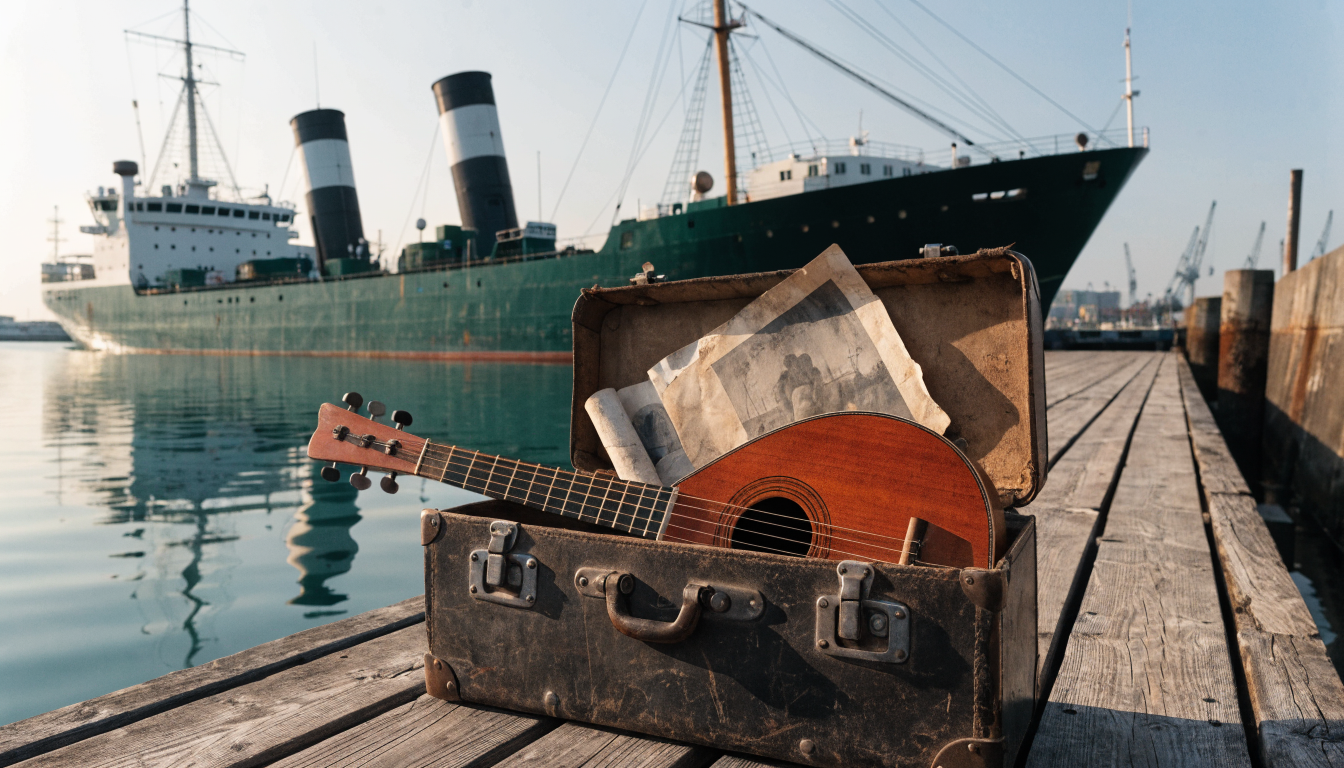
A song written in a smoke-filled Piraeus taverna in 1935 shouldn’t, by any reasonable expectation, still be sung in Melbourne, Chicago, or Hamburg nearly a century later. And yet it is — carried not by record labels or marketing campaigns, but by ordinary families who packed their memories along with their suitcases when they left Greece behind. This is the story of how the Greek diaspora became rebetiko’s most unlikely and most devoted caretaker.
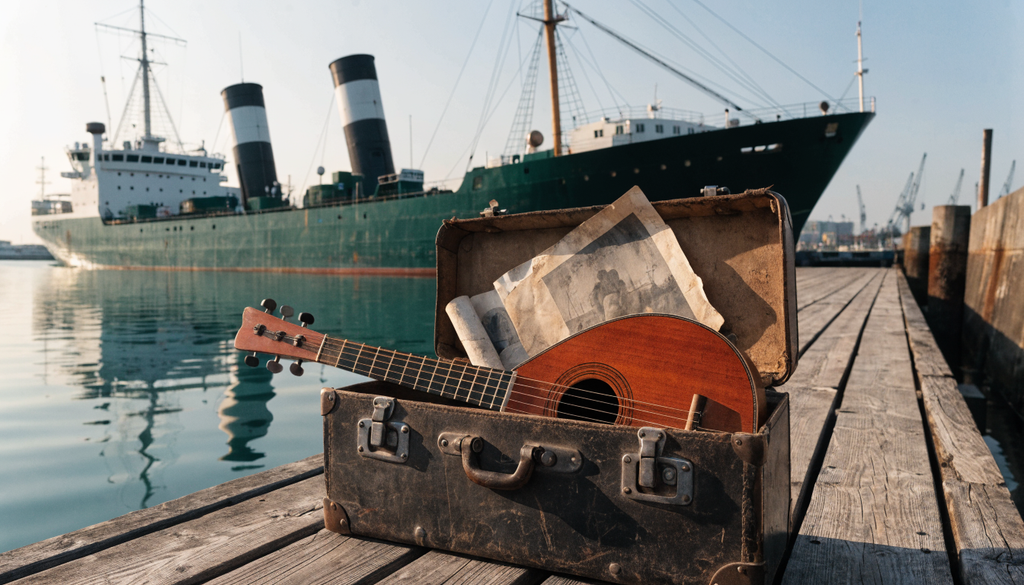
Then: A Genre Confined to Piraeus and Athens
For much of its early history, rebetiko was a distinctly local phenomenon. Its audience lived within a fairly narrow geographic radius — the neighborhoods we’ve written about before, like Drapetsona and Kaminia, and the taverna scenes of central Athens. Recordings existed, but distribution was limited, informal, and almost entirely domestic.
If you wanted to hear rebetiko performed live in this era, you needed to be physically present in Greece, in the right neighborhood, at the right kind of gathering. The genre’s emotional world — displacement, poverty, longing — was intensely local, even as its themes were, in hindsight, universally human.
Now: Rebetiko Communities Across the Globe
That geographic confinement didn’t survive the 20th century, largely because of waves of Greek emigration that sent millions of Greeks — and their cultural memory — to new corners of the world. Major emigration waves following World War II sent enormous numbers of Greeks to Australia, the United States, Germany, and Canada, seeking economic opportunity their homeland couldn’t offer.
They didn’t leave their music behind. Quite the opposite — in many diaspora communities, rebetiko and Greek folk music became more actively preserved abroad than in Greece itself during certain periods, precisely because homesickness gave the music renewed emotional urgency.
Today, some of the most active rebetiko scenes exist far outside Greece:
| Region | Diaspora Presence |
|---|---|
| Melbourne, Australia | Home to one of the largest Greek populations outside Greece itself, with a long history of community cultural events |
| Chicago & Astoria (New York), USA | Established Greek-American communities maintaining cultural centers, churches, and social clubs that host traditional music |
| Germany | Shaped by large-scale postwar Greek labor migration, with community associations preserving musical traditions across generations |
| Egypt (historically) | Home to a significant Greek community in Alexandria for much of the 20th century, with its own musical cultural life |
Why Homesickness Became a Preservation Tool
There’s something almost paradoxical about how displacement strengthened rebetiko’s survival rather than weakening it. When you’re surrounded by your homeland’s culture constantly, there’s less urgency to consciously preserve it — it simply exists in the background. But when you’re thousands of miles away, unable to easily return, cultural traditions take on a different weight.
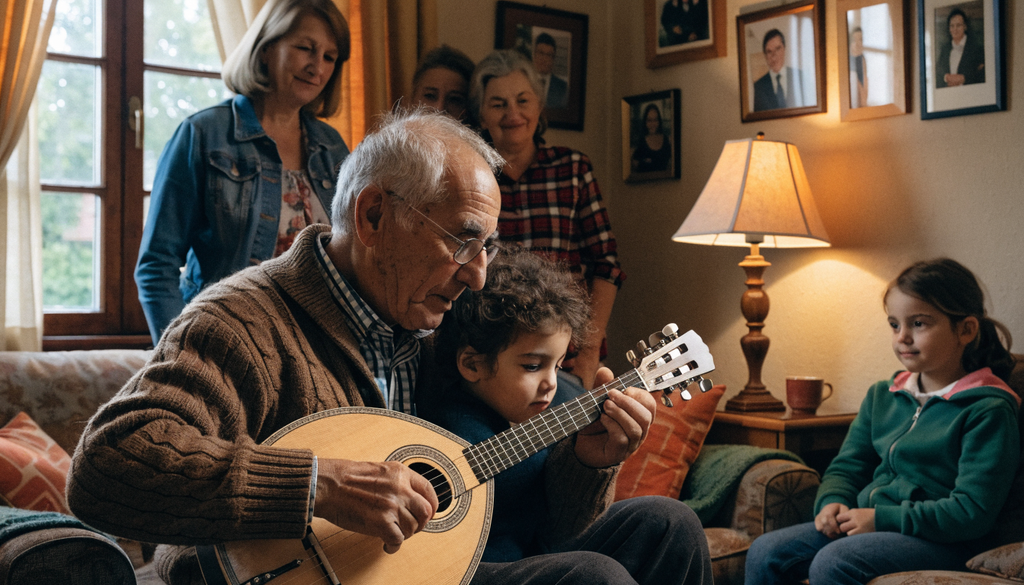
For Greek diaspora communities, gathering to sing rebetiko wasn’t just entertainment. It was an active act of holding onto identity in unfamiliar surroundings. Community centers, churches, and social clubs became informal preservation institutions, hosting gatherings where songs were taught to children who had never set foot in Greece, ensuring the tradition didn’t simply fade with the first generation of immigrants.
This mirrors something we explored when discussing the Asia Minor refugees of 1922: displacement and cultural preservation are often far more intertwined than people expect. Loss frequently sharpens the instinct to hold onto what remains, rather than letting it go.
What Changed in Translation
Diaspora rebetiko didn’t remain frozen in its 1930s form, and that’s actually part of its resilience. Second and third-generation Greek-Australians, Greek-Americans, and others often grew up bilingual, bicultural, and exposed to entirely different musical influences — jazz, rock, local folk traditions of their new homelands.
Rather than diluting rebetiko, this exposure often produced fascinating hybrid expressions: musicians blending traditional zeibekiko rhythms with instrumentation or styles borrowed from their adopted countries. The music adapted to survive, much as the people carrying it had to adapt to build new lives.
- Language retention varied significantly between families and generations, but the emotional resonance of the music often transmitted even to those with limited Greek fluency
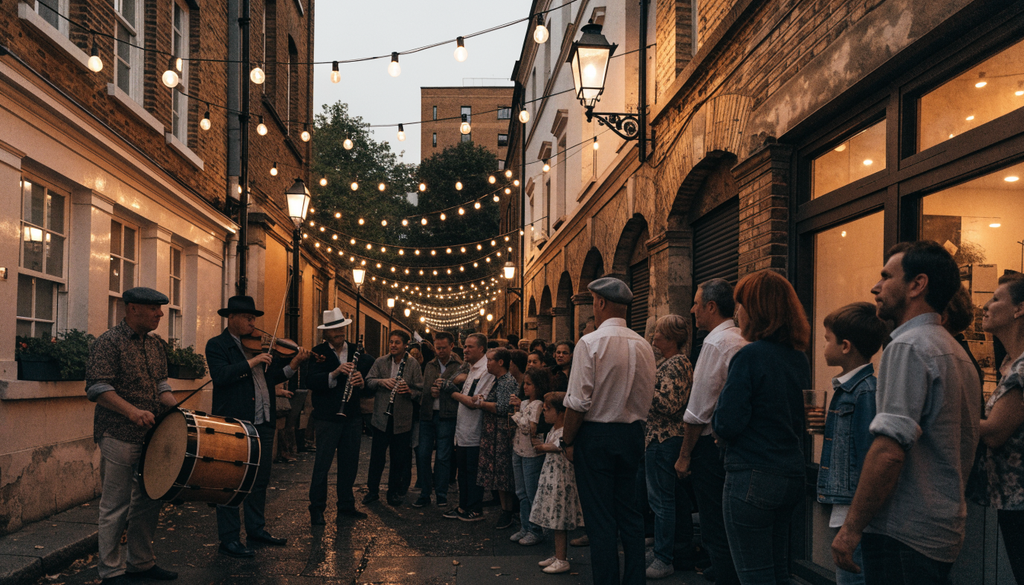
- Community festivals abroad became crucial gathering points, similar in spirit to the festivals we’ve covered happening within Greece itself
- Diaspora musicians sometimes returned to Greece specifically to study rebetiko more formally, creating a kind of cultural feedback loop between homeland and diaspora
A Two-Way Cultural Bridge
It would be inaccurate to describe this relationship as one-directional, with Greece simply exporting culture to passive diaspora communities. The relationship flows both ways. Diaspora musicians, recordings, and even financial support have, at various points, played meaningful roles in rebetiko’s preservation and revival within Greece itself.
Some of the same reissue and archival efforts we discussed in our exploration of rebetiko’s journey from vinyl to streaming drew on recordings and collections maintained by diaspora communities — evidence that preservation was never solely a homeland responsibility.
Why This Global Story Matters
- It demonstrates that cultural preservation doesn’t require physical proximity to a homeland — sometimes distance intensifies it
- It shows how a genre born from displacement in 1922 went on to comfort later generations experiencing their own displacement, decades later and oceans away
- It proves rebetiko’s emotional honesty translates across radically different contexts, from a Piraeus dockside taverna to a suburban living room in Melbourne
The next time you hear rebetiko performed somewhere far from Greece, remember: that performance likely exists because someone, at some point, refused to let distance erase what mattered to them.
Illustrations in this article were created using AI in a photorealistic style.
Want to hold a piece of this history in your hands? Visit our official shop for digital albums, CDs, and restored vinyl records celebrating the golden era of rebetiko.