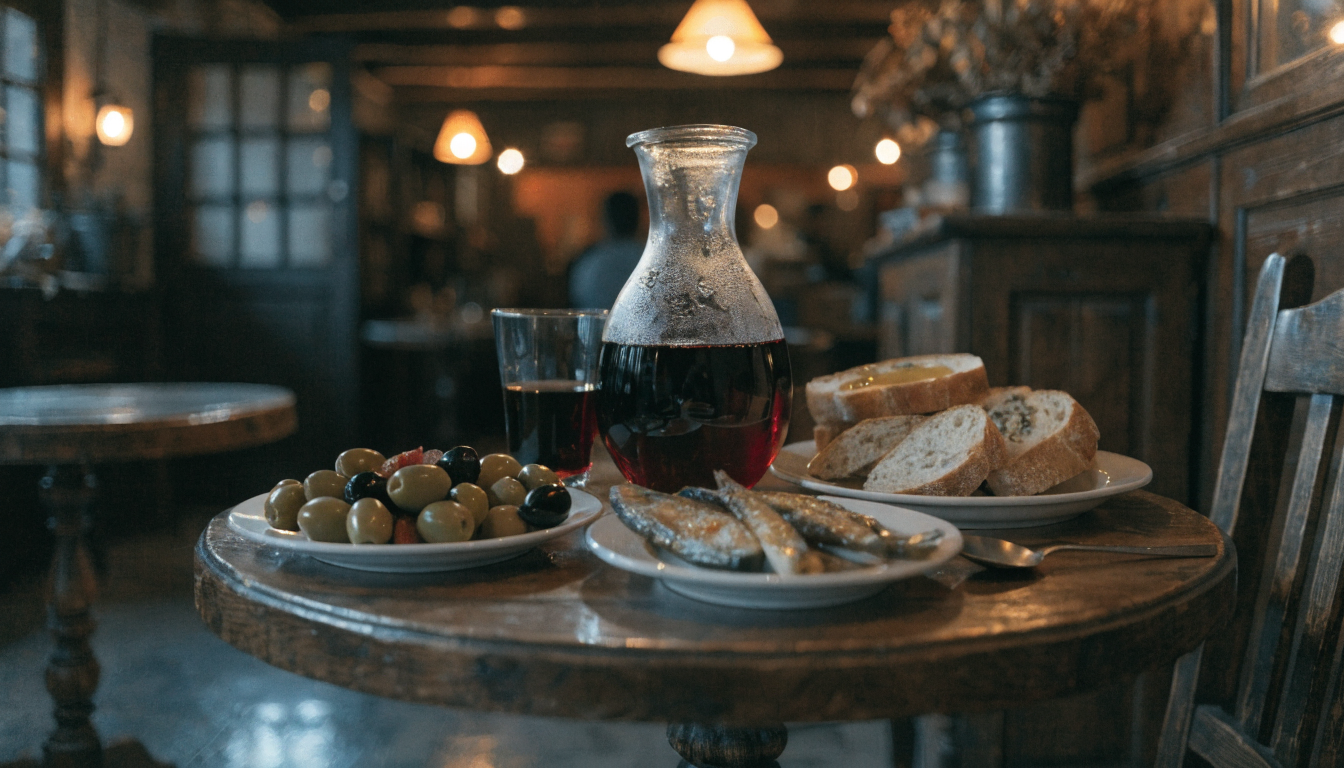
Rebetiko didn’t happen in silence, and it didn’t happen on an empty stomach. Behind every legendary taverna performance was a table — small, wobbly, probably stained with wine rings — covered in cheap, simple food that dockworkers and refugees could actually afford. If you’ve ever wondered what filled those tables while the bouzouki played, here are the answers.
1930s Tavernas: More Than Just a Backdrop for Music
It’s easy, reading about rebetiko’s history, to focus entirely on the music and forget that tavernas were, first and foremost, places to eat and drink. The food wasn’t incidental. It shaped how long people stayed, how communities gathered, and even how songs were written — plenty of rebetiko lyrics reference specific foods, drinks, and the rituals surrounding them.
What Did People Actually Eat in 1930s Tavernas?
The food was simple, cheap, and built around what the port could provide. Fish was central — not the expensive, prestigious catches served in wealthier restaurants, but small, affordable varieties like marides (tiny fried fish, eaten whole, bones and all) and sardines, often grilled or fried in enormous batches.
Beyond fish, a typical table might include:
- Olives and bread, the cheapest possible filler, present at nearly every table regardless of what else was ordered
- Feta cheese, often the only dairy item affordable to working-class patrons
- Fried potatoes, a simple, filling, inexpensive staple
- Octopus, typically grilled or stewed, taking advantage of the constant supply from the harbor
- Beans and lentils, especially in leaner periods, offering cheap protein when fish wasn’t affordable
This wasn’t refined dining. It was food built for sharing, stretching a small budget across an entire evening, and pairing naturally with drink.
Was Meze Always Part of the Experience?
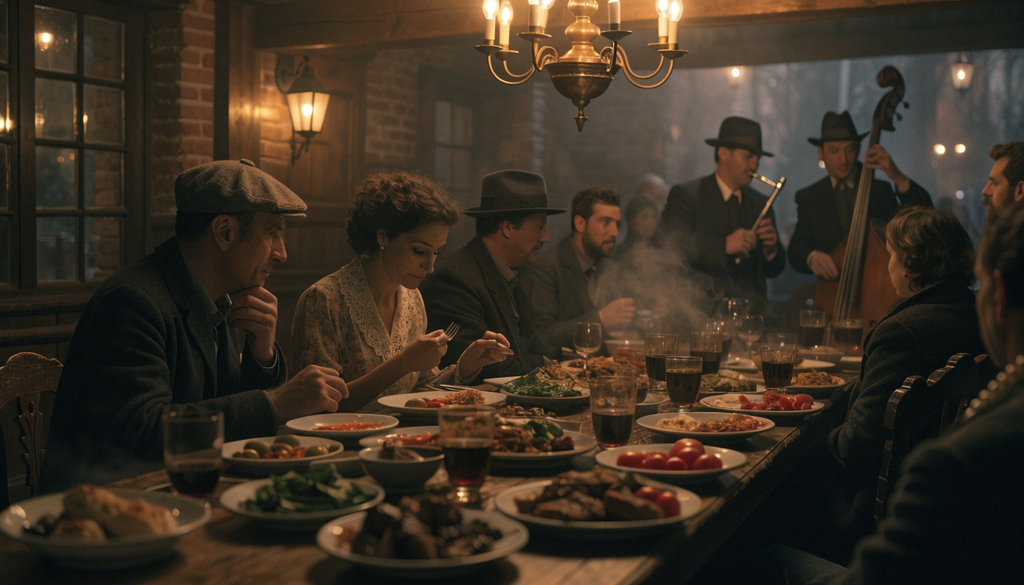
Yes, and understanding meze culture is essential to understanding how these tavernas actually functioned. Rather than one person ordering a full individual meal, groups shared small plates — a few olives here, a portion of fried fish there — passed around the table as the evening went on.
This wasn’t just a culinary preference. It was economically necessary. Dockworkers earning meager wages could pool what little money they had, order a handful of small shared plates, and stretch a modest budget across hours of conversation and music, rather than each person paying for an individual full meal they likely couldn’t afford alone.
What Did They Drink Besides Ouzo?
Ouzo gets most of the attention today, and it was indeed a taverna staple — its anise flavor and cloudy appearance when mixed with water became closely associated with this entire social ritual. But it wasn’t the only option on the table.
Retsina, a resinated wine with a distinctive sharp flavor, was another common and notably cheap choice, often served in unmarked metal carafes rather than bottles. Tsipouro, a stronger pomace brandy, also made regular appearances, particularly among those looking for something with more of a kick for less money.
Drinking in this context wasn’t primarily about intoxication — it was a social lubricant, a way of extending the evening, and, frankly, an excuse to stay in the taverna a little longer when home offered little comfort by comparison.

Could Poor Dockworkers Really Afford to Eat Out?
Barely, and that tension is exactly what makes this history interesting. Most patrons of 1930s tavernas weren’t dining out as a luxury — it was often cheaper, or at least more practical, than trying to cook properly in cramped refugee housing with minimal kitchen facilities. A shared plate of olives and a glass of retsina cost very little, and the taverna offered something home often couldn’t: warmth, company, and music.
Owners understood their customer base intimately. Prices stayed low deliberately, because a taverna that priced out its regular dockworker clientele wouldn’t survive. This created an unusual dynamic where some of the era’s most culturally significant gathering spaces were built entirely around affordability, not indulgence.
Did the Food Influence the Music Itself?
Absolutely, in ways both direct and indirect. Rebetiko lyrics frequently reference specific foods, drinks, and the rituals of the taverna table directly — a shared glass, a modest meal, a night stretched out over cheap wine. These weren’t abstract poetic choices; they were literal descriptions of the singers’ actual evenings.
More subtly, the taverna’s economic model — small shared plates, long unhurried evenings, low-pressure spending — created exactly the kind of unhurried, communal atmosphere where music could unfold organically rather than as scheduled entertainment. The food wasn’t a stage backdrop. It was part of the same economic and social ecosystem that made the music possible in the first place.
Do Any of These Dishes Still Exist Today?
Remarkably, yes — many of these same simple dishes remain staples of Greek taverna culture today, largely unchanged. Fried small fish, olives, feta, grilled octopus, and shared meze plates are still exactly what you’d find at a traditional Greek taverna in 2026, and ouzo remains as culturally significant as ever.
What’s changed is the context. These dishes have moved from purely economic necessity to celebrated culinary tradition, served in restaurants that market their “authentic” rebetiko-era atmosphere as a selling point rather than a simple fact of survival. The food outlived the hardship that originally shaped it — which, in its own way, mirrors exactly what happened to the music.
Why This History Is Worth Remembering
- It grounds rebetiko’s story in physical, everyday reality — actual meals, actual budgets, actual evenings
- It shows how economic necessity, not culinary ambition, shaped a food culture that endures today
- It reveals just how deeply intertwined food, drink, and music were in creating the taverna atmosphere rebetiko depended on
Next time you’re eating meze at a Greek taverna, pour yourself a small glass of ouzo, and let it turn cloudy — you’re taking part in a ritual that hasn’t changed much since the days when it accompanied the very first rebetiko songs ever sung.
Illustrations in this article were created using AI in a photorealistic style.
Want to hold a piece of this history in your hands? Visit our official shop for digital albums, CDs, and restored vinyl records celebrating the golden era of rebetiko.