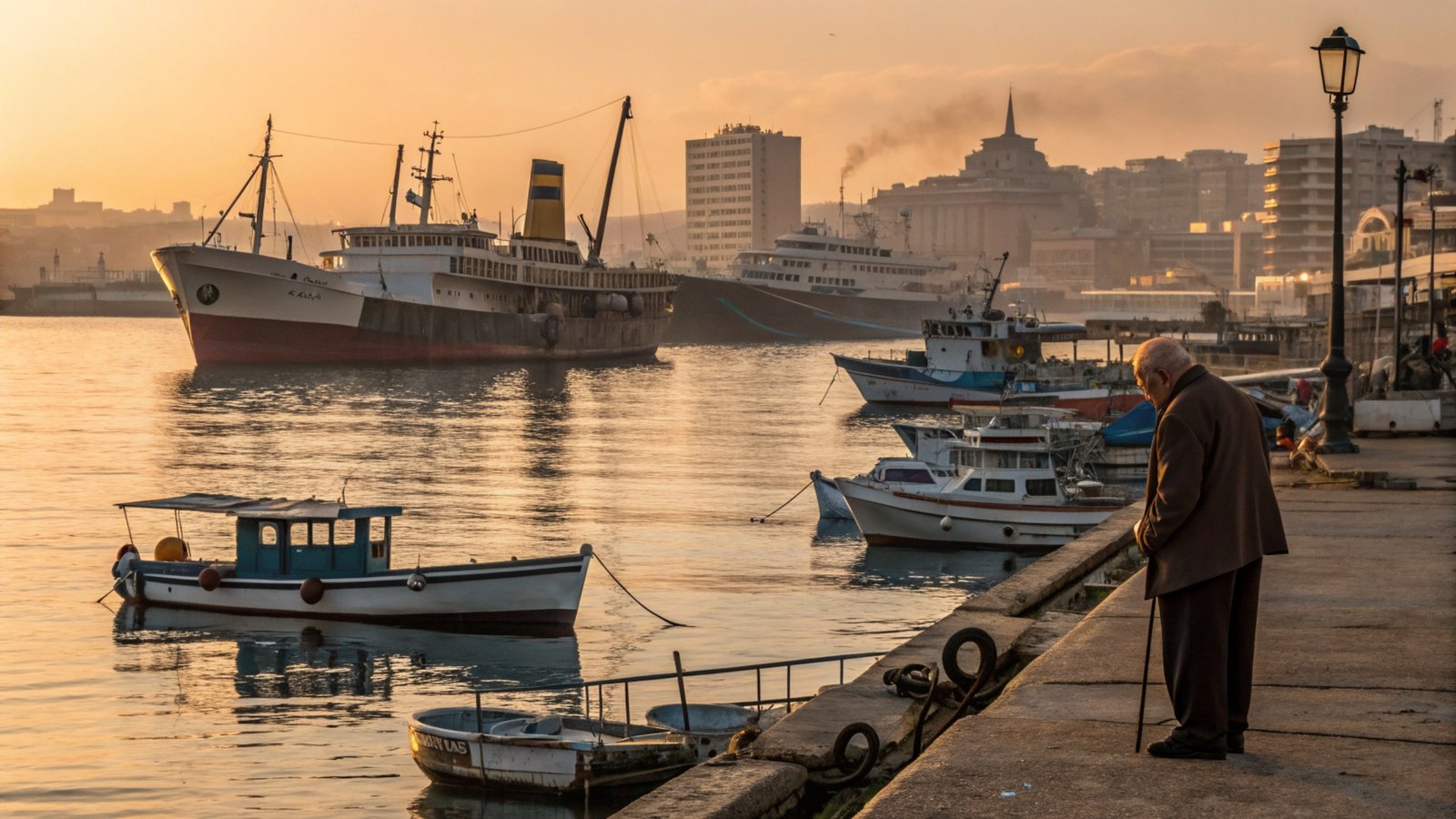
Long before it became the soundtrack of a nation, rebetiko was simply the sound of a neighborhood. To understand the music, you first have to understand the streets that made it — the crowded docks, the makeshift refugee settlements, and the narrow alleys where an entire culture took root almost overnight. This is the story of the Piraeus Golden Age: the years when a struggling port city, without meaning to, became the birthplace of Greece’s most soulful music.
Piraeus Golden Age: A City Reborn by the Sea
Piraeus had always been a working port, but everything changed in 1922. The population exchange between Greece and Turkey sent over a million refugees from Asia Minor pouring into Greek cities almost overnight, and Piraeus — with its harbor, its factories, and its endless need for cheap labor — absorbed a huge share of them.
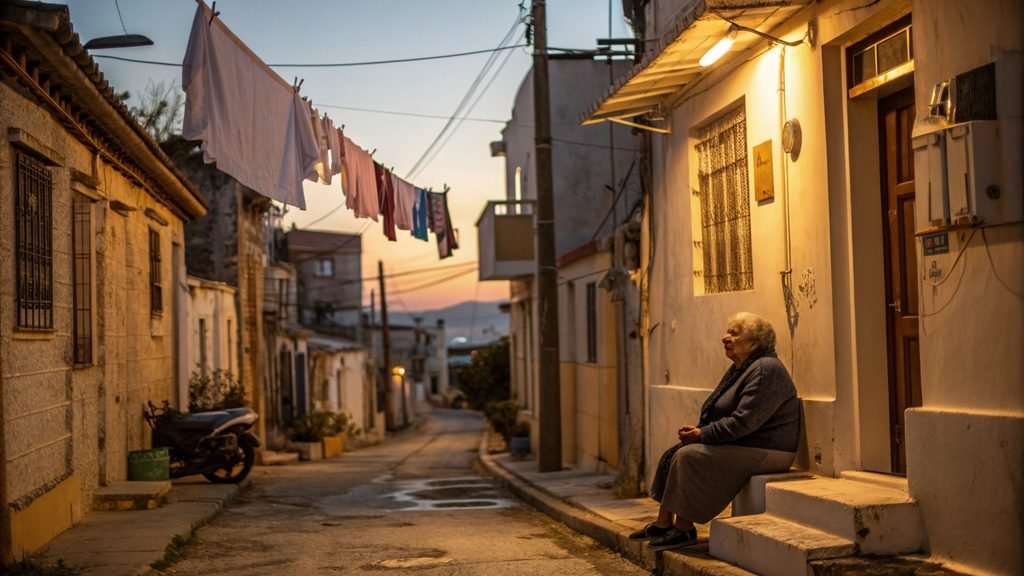
Almost instantly, the city’s population swelled far beyond what its housing, infrastructure, or economy could support. Entire neighborhoods sprang up out of necessity: tin-roofed shacks, converted warehouses, tents pitched wherever there was open ground. It was chaotic, desperate, and — against all odds — culturally explosive. This collision of displaced traditions and hard urban poverty is what defines the Piraeus Golden Age as a moment unlike any other in Greek history.
The Neighborhoods That Shaped a Sound
Certain districts of Piraeus became so closely tied to the rebetiko scene that their names are still spoken with a kind of reverence by those who know the genre’s history.
| Neighborhood | Role in Rebetiko History |
|---|---|
| Drapetsona | Home to some of the earliest and most influential tekedes (hash dens) |
| Kaminia | A dense refugee settlement where Asia Minor musical traditions took root |
| Tampouria | Known for its taverna culture and late-night musical gatherings |
| The old port itself | Provided the dockworkers, sailors, and daily hardship that filled rebetiko’s lyrics |
Each of these neighborhoods had its own character, but all shared the same underlying rhythm of life: exhausting physical labor by day, and music, community, and release by night.
Daily Life on the Docks
For most residents, life revolved entirely around the port. Men loaded and unloaded cargo ships for meager wages, often under brutal conditions, while entire families lived within earshot of the harbor’s constant noise — the creak of ropes, the shouts of foremen, the distant horns of departing steamships.
This daily grind shaped rebetiko’s lyrical obsessions almost directly:
- Poverty and debt, described with unflinching honesty rather than romanticized
- The loneliness of manual labor, especially among men separated from family by migration
- Small, stolen moments of joy — a shared drink, a late-night song, a few hours away from the docks
It’s no coincidence that so many rebetiko songs from this period read like diary entries from exhausted men trying to make sense of an unforgiving city.
Where the Music Actually Happened
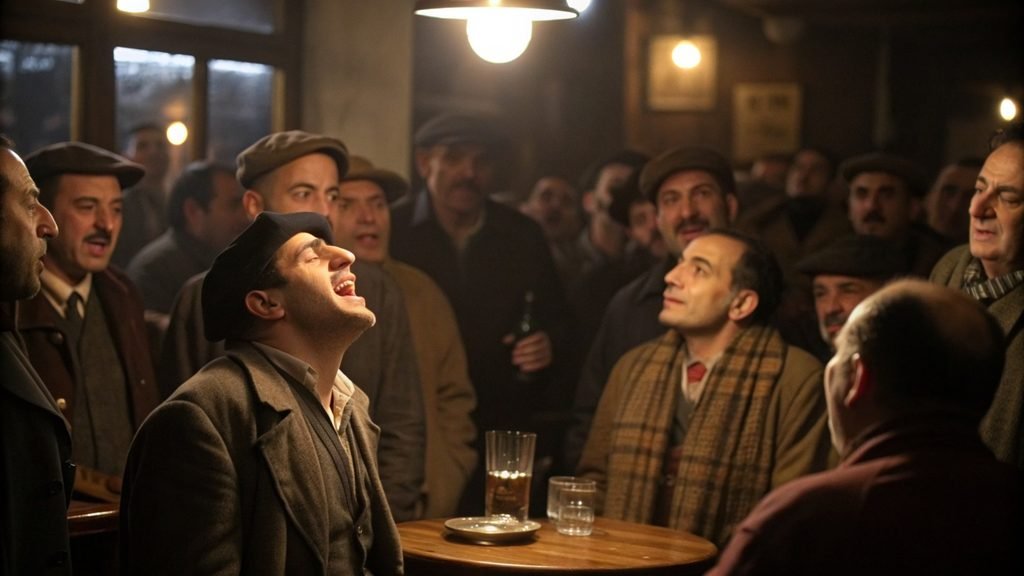
The tavernas and tekedes of Piraeus weren’t formal venues — they were improvised gathering spaces, often just a room with a few tables, some chairs, and whoever happened to bring an instrument that night. Music wasn’t a performance so much as a shared release valve for an entire community under pressure.
A typical evening in the Piraeus Golden Age might unfold like this:
- Dockworkers finishing brutal 10-to-12-hour shifts, exhausted but unwilling to go straight home
- Small groups gathering in a taverna’s back room, ordering what little they could afford
- A bouzouki player beginning almost casually, testing the room’s mood
- The gathering slowly turning into something closer to communal therapy — songs of heartbreak, prison, longing, and dark humor, sung together by people who understood exactly what those words meant
A Culture the City Didn’t Want, But Couldn’t Stop
It’s worth remembering that respectable Athenian society largely looked down on everything happening in Piraeus during this period — the refugees, the poverty, and especially the music. Newspapers of the era rarely covered this world except with suspicion or contempt.
And yet, this dismissed, overlooked corner of Greek society produced some of the most enduring art the country has ever created. The Piraeus Golden Age wasn’t recognized as historically significant while it was happening — it took decades of hindsight for Greece to understand what had actually been built in those crowded streets.
Why the Piraeus Golden Age Still Resonates
- It captures a rare moment where genuine hardship produced genuine art, without any commercial intention behind it
- The neighborhoods themselves — Drapetsona, Kaminia, Tampouria — remain physically present in Piraeus today, carrying quiet echoes of this history
- It’s a powerful reminder that some of the richest cultural movements emerge from the margins, not the mainstream
Illustrations in this article were created using AI in a photorealistic style.
Want to hold a piece of this history in your hands? Visit our official shop for digital albums, CDs, and restored vinyl records celebrating the golden era of rebetiko.
3 thoughts on “Piraeus Golden Age: The Forgotten Streets Where Rebetiko Was Born”