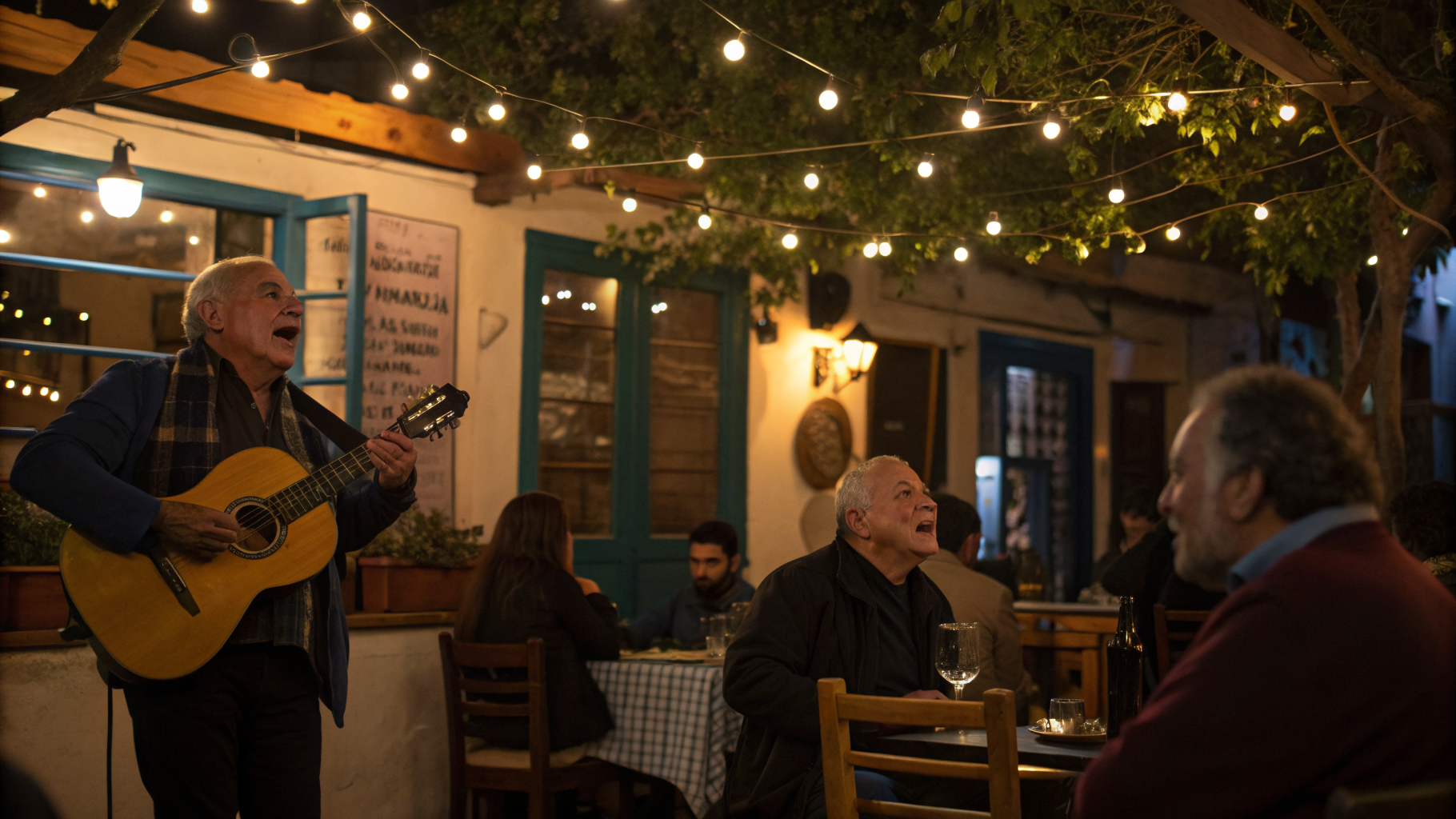
There’s a reason locals have long called Plaka the “Neighborhood of the Gods.” Nestled at the foot of the Acropolis, its narrow marble-paved streets have witnessed everything from ancient philosophers to Ottoman rule, from 19th-century revival to the smoky rebetiko tavernas that once drew Piraeus musicians across the city. If Piraeus gave rebetiko its raw voice, Plaka gave it a stage in the heart of the capital — and in doing so, became one of the truest keepers of what people mean when they talk about the soul of Athens.
Plaka: The Soul of Athens at the Foot of the Acropolis
Plaka claims a title few neighborhoods anywhere in the world can rival: it is widely considered the oldest continuously inhabited district in Athens, with roots stretching back to antiquity. Walking its streets today means walking on layers of history so dense that a single block might contain a Byzantine church, a 19th-century neoclassical mansion, and a taverna that’s been serving the same recipes for generations.
This isn’t a neighborhood frozen in a museum display case, though. Plaka has always been lived-in, worked-in, and sung-in — which is precisely why it became so important to rebetiko’s story as the genre matured beyond its rougher Piraeus origins.
Anafiotika: A Village Within a City
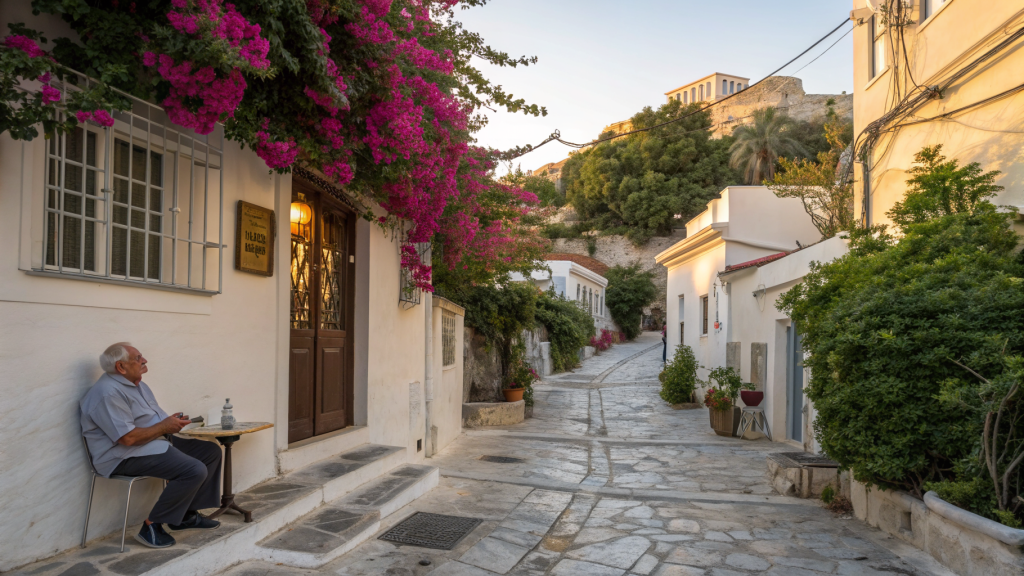
Tucked into Plaka’s upper reaches, beneath the Acropolis walls, sits one of the neighborhood’s most extraordinary secrets: Anafiotika, a tiny cluster of whitewashed, Cycladic-style houses that feels transported directly from a small Greek island.
Its origin is a story of resourcefulness. In the 19th century, skilled construction workers from the island of Anafi came to Athens to help build the new capital’s palaces and public buildings. Many settled at the base of the Acropolis, building homes in the architectural style of their home island — narrow lanes, blue doors, flowering courtyards — almost overnight, and largely without formal permission from the city.
That unlikely village still stands today, a living reminder that the soul of Athens has always been shaped as much by ordinary migrants and workers as by emperors and architects.
| Era | What Defined It |
|---|---|
| Antiquity | Home to philosophers, artisans, and everyday Athenian life beside the Acropolis |
| Ottoman period | A residential quarter shaped by Ottoman-era architecture and daily commerce |
| 19th century | Cycladic island workers settle Anafiotika while helping build modern Athens |
| Early–mid 20th century | Rebetiko tavernas flourish, drawing musicians from Piraeus into the capital |
| Today | A protected historic district blending ancient ruins with daily neighborhood life |
When Rebetiko Came to the Capital
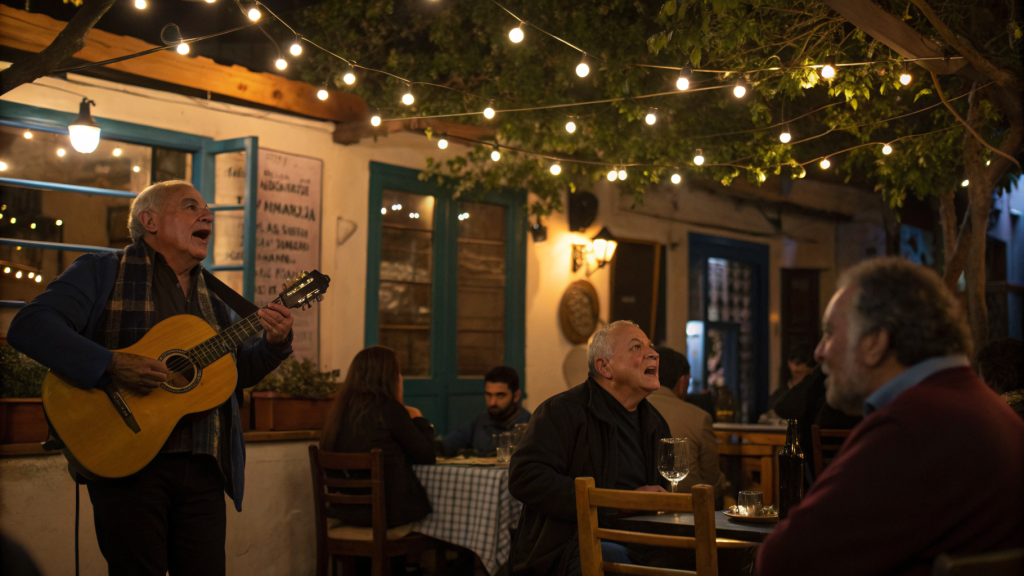
For years, rebetiko remained firmly associated with Piraeus — a music of dockworkers and refugees, largely ignored by respectable Athenian society. But as the genre slowly gained wider acceptance through the mid-20th century, its musicians began finding stages in Plaka’s tavernas, drawn by the neighborhood’s central location and its own long tradition of music and nightlife.
This mattered enormously for rebetiko’s evolution. Plaka’s tavernas offered:
- A more visible, central stage, exposing the music to a broader cross-section of Athenian society
- A slightly more polished performance setting, compared to the improvised gatherings of Piraeus tekedes
- Proximity to a growing recording and entertainment industry, which helped rebetiko musicians reach wider audiences
In many ways, Plaka became the bridge between rebetiko’s underground origins and its eventual embrace as a defining piece of Greek cultural identity.
Daily Life Among the Ruins
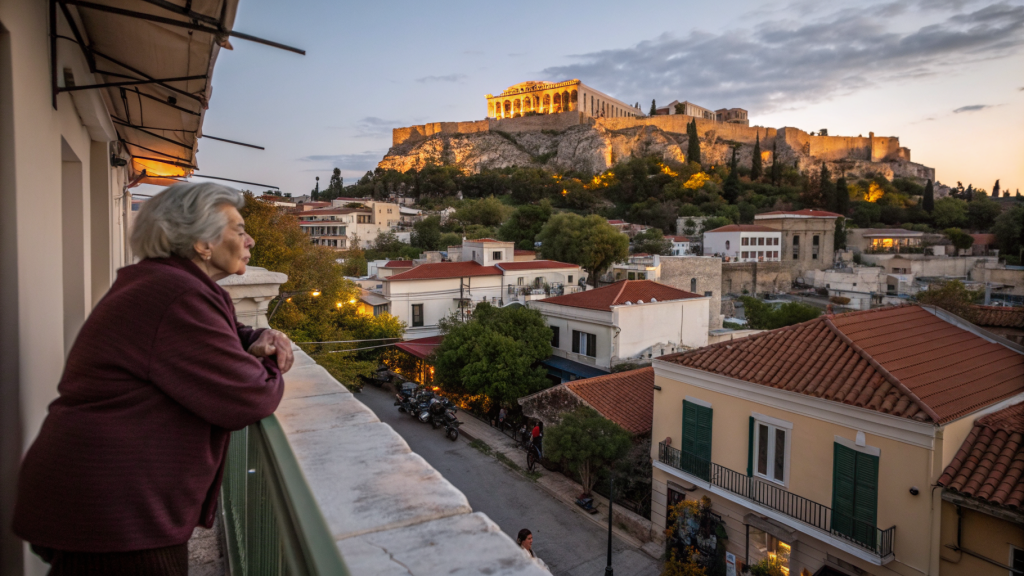
What makes Plaka genuinely remarkable isn’t just its history — it’s how ordinary daily life continues to unfold directly alongside it. Grandmothers hang laundry on lines strung above 2,000-year-old foundations. Children play football in courtyards overlooked by Byzantine church domes. Café owners set up morning tables within sight of columns older than most nations on Earth.
This everyday coexistence between the ancient and the ordinary is, for many, the truest expression of the soul of Athens — not a city that has preserved its past behind glass, but one that simply keeps living inside it.
- Residents often describe a deep, almost unconscious familiarity with the ruins around them, treated as neighbors rather than monuments
- Local tavernas frequently double as informal community gathering spaces, much as they did in rebetiko’s heyday
- Small artisan workshops, some family-run for generations, still operate in the same buildings their grandparents used
Why Plaka Still Matters to Rebetiko’s Story
- It represents the moment rebetiko moved from the margins toward the mainstream, without losing its emotional core
- Its layered history mirrors rebetiko’s own layered identity — ancient, immigrant, working-class, and enduring all at once
- It remains, to this day, one of the few places where you can still hear live rebetiko performed in something close to its traditional setting
Illustrations in this article were created using AI in a photorealistic style.
Want to hold a piece of this history in your hands? Visit our official shop for digital albums, CDs, and restored vinyl records celebrating the golden era of rebetiko.